6 Best Cedar Sachets For Wool Protection To Use
Protect your woolens with these six top-rated cedar sachets. Learn how natural aromatic oils effectively repel moths and keep your seasonal garments fresh.
Every knitter knows the heartbreak of pulling a finished heirloom sweater from storage only to find tiny, moth-made holes in the delicate wool fibers. Protecting your hand-knit stash requires more than just a hope and a prayer; it demands a proactive, natural defense strategy. Cedar is the gold standard for deterring pests, offering a chemical-free way to preserve the integrity of your hard-earned stitches. Here are the best cedar options to ensure your wool remains as pristine as the day you bound off.
Woodlore Cedar Fresh Sachets: Best Overall Choice


These sachets are a staple in my own knitting studio because they combine the potency of aromatic red cedar with a breathable fabric casing. The design allows the natural oils to permeate your storage bins without the risk of wood shavings snagging on delicate lace or mohair fibers.
When you spend weeks working on a complex cable-knit project, you don’t want to worry about wood dust migrating into your yarn. These sachets are clean, contained, and incredibly effective at keeping the air in your sweater boxes smelling fresh and unappealing to hungry insects.
Bottom line: If you want a "set it and forget it" solution that protects your investment without making a mess, these are the gold standard.
Household Essentials Cedar Blocks: Best Value Set

If you have a large collection of hand-knits, the cost of cedar can add up quickly. These solid blocks offer the most economical way to protect a vast stash of wool, from bulky weight sweaters to fine fingering weight socks.
I prefer using these in the corners of my storage totes or tucked between stacks of finished garments. Because they are solid, they provide a concentrated dose of cedar scent that lasts longer than thinner, decorative pieces.
Just remember to place a small piece of acid-free tissue paper between the block and your wool. Even smooth cedar can occasionally catch on a loose ply if you aren’t careful, so a simple barrier is a smart, low-cost insurance policy.
Cedar Fresh Hanging Bags: Best for Hanging Knits
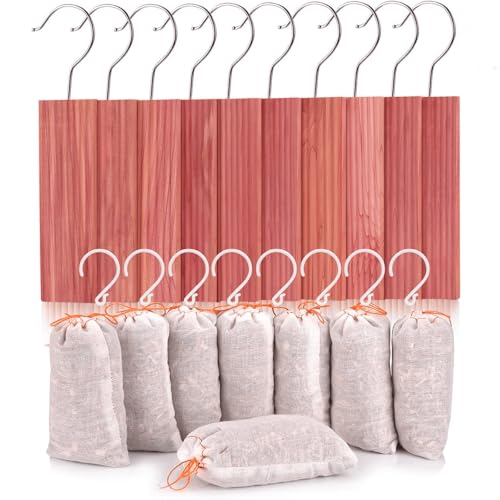
Not every garment belongs in a folded stack. If you have cardigans or heavy wool coats that are prone to stretching, you likely keep them on hangers, which leaves them vulnerable to airborne pests.
These hanging cedar bags are designed to hook directly onto your closet rod. They create a protective scent barrier around your hanging items, ensuring that even the shoulders of your sweaters—which are often the first place moths attack—are well-defended.
The trade-off here is that the scent dissipates faster in an open closet than in a sealed bin. Be prepared to rotate or sand these more frequently to keep the protective oils active.
Scented Cedar Cubes: Best for Small Drawer Spaces

When you have a dedicated drawer for your hand-knit socks or delicate shawls, you need something compact. These small cubes are perfect for tucking into the tight corners of a dresser without taking up valuable real estate.
I find these particularly useful for organizing my "in-progress" notions bags or small accessories like hats and mittens. They are unobtrusive and don’t interfere with the way your garments lay, which is essential if you are trying to keep your hand-knits from getting creased.
The main takeaway is to distribute them evenly throughout the drawer. Don’t just cluster them in one spot; space them out to ensure consistent coverage across all your fibers.
Richards Homewares Cedar Balls: Best for Storage

Cedar balls are the most versatile tool in a knitter’s arsenal. Because they are small and round, they can be easily tucked into the sleeves of a sweater or inside a shoe-knit sock to maintain the shape while providing protection.
Their shape is a significant advantage because they have no sharp edges. You can safely drop them directly into a bin of yarn or a drawer of sweaters without worrying about snagging your delicate gauge or pulling at a loose end.
If you are packing away a project for the season, toss two or three of these into the storage bag with the garment. It’s an effortless way to ensure your wool stays safe until the weather turns cold again.
Cedarline Cedar Drawer Liners: Best for Coverage

Sometimes, spot protection isn’t enough, especially if you live in an area with a high moth population. Drawer liners provide a continuous layer of cedar protection across the entire bottom surface of your storage area.
These are excellent for lining the shelves where you keep your hand-dyed, untreated wool stash. By creating a cedar-scented base, you ensure that every item sitting on that shelf is shielded from the bottom up.
The downside is that they can be a bit stiff to work with in smaller drawers. Measure your space carefully before purchasing, and don’t be afraid to trim them down to fit your specific furniture dimensions.
Why Cedar is Essential for Protecting Wool Stash
Cedar works by releasing natural aromatic oils that act as a deterrent to moths and silverfish. Unlike mothballs, which rely on toxic chemicals that can linger in your fibers for years, cedar is a safe, natural, and pleasant-smelling alternative.
For a knitter, the value of cedar lies in its ability to protect the fiber’s structural integrity. Moths are attracted to the protein in animal fibers like wool, alpaca, and silk; cedar makes your stash a much less inviting buffet.
However, keep in mind that cedar is a deterrent, not an exterminator. It won’t kill an existing infestation, so always ensure your items are clean and pest-free before you put them into storage.
How to Properly Refresh Your Cedar Wood Products
Cedar is not a permanent solution; the oils that protect your wool will eventually evaporate. If you notice the scent fading, it doesn’t mean the product is useless—it just needs a quick tune-up.
Take a piece of fine-grit sandpaper and gently rub the surface of your cedar blocks, balls, or sachets. This simple action opens the pores of the wood and releases a fresh layer of aromatic oils, effectively "recharging" your protection.
I recommend doing this every three to six months, or whenever you rotate your seasonal wardrobe. It’s a small maintenance task that significantly extends the lifespan of your cedar products.
Common Moths and Pests That Threaten Your Knits
The two primary culprits are the webbing clothes moth and the case-bearing clothes moth. These pests aren’t interested in your finished sweater; they are looking for the protein-rich keratin found in wool, cashmere, and mohair.
They thrive in dark, undisturbed environments, which is exactly why your closet or a long-term storage box is the perfect habitat. They are also drawn to residual sweat, skin oils, or food spills on your garments, which is why cleaning is your first line of defense.
If you see tiny, irregular holes in your knitwear, you are likely dealing with an infestation. At that point, cedar alone won’t help; you will need to bag the items and freeze them for several days to kill the larvae.
Best Practices for Storing Your Hand-Knit Items
Never store a sweater that has been worn, even once. The microscopic traces of skin cells and body oils are like a dinner bell for moths, and even the best cedar cannot mask those attractants.
Always use breathable storage containers like cotton bags or acid-free cardboard boxes. Avoid plastic bins unless you are absolutely certain the items are 100% clean and dry, as plastic can trap moisture and lead to mildew, which is just as damaging as moths.
Finally, store your items in a cool, dry place. Moths love warmth and humidity, so keeping your stash in a climate-controlled environment is the most effective way to ensure your hand-knits survive for decades to come.
Protecting your wool stash is a labor of love that honors the hours you spent at the needles. By incorporating cedar into your storage routine and staying diligent about cleaning, you can prevent pest damage before it starts. Remember, your hand-knits are meant to be passed down, so treat them with the care they deserve. Happy knitting, and may your stash remain moth-free for years to come.