6 Best Fingering Weight Yarns For Delicate Cords
Discover the 6 best fingering weight yarns for delicate cords. Learn which fibers offer the ideal strength, drape, and texture for your intricate projects.
Crafting delicate cords requires a specific kind of yarn that balances structural integrity with a refined aesthetic. Whether you are creating drawstrings for a garment, decorative trims, or sturdy jewelry, the fiber choice dictates how the cord will hold its shape under tension. Selecting the right fingering weight yarn is the difference between a cord that sags and one that maintains a crisp, professional finish. This guide explores the best options to ensure your next project stays as beautiful as the day you cast it off.
Quince & Co. Finch: The Best Wool for Cords
Finch is a 100% American wool that offers a uniquely crisp, round structure. Because it is a high-twist yarn, it provides the necessary "bite" to hold a stitch pattern tightly, which is essential when you are knitting a narrow i-cord or a braided trim.
The matte finish of this wool is a standout feature for those who want a classic, rustic look. Unlike superwash yarns, which can be slippery and prone to stretching, Finch has a slight tackiness that helps the stitches lock into place. It behaves predictably, making it an excellent choice for beginners who need to see their stitch definition clearly.
However, keep in mind that this is not a soft, next-to-skin yarn. If your cord will be rubbing against the neck or wrists, you might find the wool a bit coarse. Bottom line: Use Finch when you need a cord that will stand up on its own and maintain a firm, non-stretchy structure.
Knit Picks Palette: Best Value Color Variety


Palette is the workhorse of the fingering weight world, boasting an expansive color palette that is hard to beat. When you are creating cords for decorative purposes, color accuracy and availability are often the primary drivers of your decision.
The fiber content is 100% Peruvian Highland wool, which is slightly softer than domestic wools but still retains excellent memory. Because the yarn is relatively inexpensive, it is the perfect choice for practicing complex cord techniques or making multiple prototypes. You won’t feel guilty about cutting a length to test the drape or tension.
One trade-off is that Palette can be a bit more prone to pilling if the cord is subjected to heavy friction. It is best reserved for decorative applications rather than high-wear items like heavy-duty drawstrings. Bottom line: Choose Palette when you need a specific color match without breaking the bank.
Malabrigo Mechita: Best Hand-Dyed Silk Blend

Mechita is a single-ply, superwash merino yarn that feels like liquid silk in the hands. While single-ply yarns are generally less durable than plied yarns, the addition of a subtle sheen gives cords a luxurious, high-end appearance.
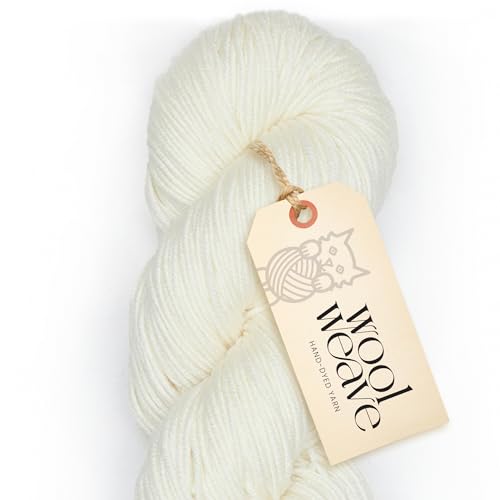
Because it is a superwash fiber, it has more "drape" than structure. If you are knitting a cord that you want to hang gracefully—like a decorative tassel tie or a jewelry piece—this is your best option. The hand-dyed colors add a depth and variation that machine-dyed yarns simply cannot replicate.
Be aware that because it is a single-ply, it can be delicate and prone to snagging if handled roughly. You must be careful with your needle tips; blunt wooden needles are safer than sharp metal ones to avoid piercing the yarn while working. Bottom line: Select Mechita when aesthetics and softness are more important than structural rigidity.
Cascade Heritage: Best Durable Sock Yarn Pick
Heritage is a classic blend of 75% merino wool and 25% nylon, designed specifically to withstand the wear and tear of socks. This makes it an incredibly resilient choice for cords that will be pulled, tied, and knotted repeatedly.
The nylon content provides a "memory" that keeps the cord from sagging over time. Even if you tug on the cord to tighten a hood or a waistline, the fibers will work to return to their original state. It is a reliable, no-nonsense yarn that performs exactly as expected.
The only downside is that it lacks the "woolly" character of pure wool yarns. It has a slightly more synthetic, polished feel, which might not suit every aesthetic. Bottom line: Use Heritage for functional cords that need to survive daily, heavy-duty use.
Shibui Knits Koan: Best Linen for Structure
If you are tired of woolly textures, Koan offers a sophisticated blend of linen and silk that is unparalleled for structural integrity. Linen does not stretch, which makes it the gold standard for cords that need to maintain a precise length.
The silk adds just enough softness to make the yarn pleasant to work with, preventing the harshness often associated with pure linen. When you knit a cord with this blend, the result is crisp, defined, and remarkably strong. It will not grow or sag, even under significant weight.
Working with linen can be tough on the hands because it lacks the elasticity of wool. You may find that your tension feels tighter than usual, so you might consider going up a needle size to compensate. Bottom line: Reach for Koan when you need a cord that will never stretch out of shape.
Isager Alpaca 2: Best for Soft Drape Cords
Alpaca 2 is a blend of 50% alpaca and 50% wool, offering a beautiful, fuzzy halo that softens the look of any cord. It is incredibly lightweight, making it ideal for delicate jewelry or fine garment finishes that shouldn’t feel bulky.
The alpaca fiber gives the cord a lovely, soft drape that feels luxurious against the skin. Unlike wool, which has a springy bounce, alpaca tends to settle and drape, creating a more fluid aesthetic. It is perfect for projects where you want a cord to look elegant and refined.
Because alpaca is a hollow fiber, it can be a bit slippery. If you are knitting a very thin cord, you might find that the stitches slide off your needles easily. Bottom line: Use Alpaca 2 when you want a cord that is soft, lightweight, and has a sophisticated drape.
Why Twist Matters for Strong Knitting Cords
The "twist" of a yarn refers to how the individual strands are spun together. For cords, a higher twist—often referred to as a "tight twist"—is almost always preferable.
- High-twist yarns: These are more durable, resist pilling, and maintain a crisp stitch definition.
- Low-twist yarns: These are softer but prone to fuzzing and stretching, which can lead to a limp cord.
When you hold a yarn, look at the angle of the plies. If they are wound tightly like a rope, the yarn will be strong and hold its shape. If the plies are loose, the yarn will be soft but likely to lose its form under tension.
Selecting the Best Fiber Content for Cords
The fiber you choose should be dictated by the intended use of the cord. Not all yarns are built for the same level of stress.
- For functional drawstrings: Choose high-twist wool or wool/nylon blends for durability and memory.
- For decorative trims: Consider luxury fibers like silk, alpaca, or linen for their unique textures and drape.
- For jewelry: Look for plant fibers like linen or cotton, which offer zero-stretch properties and a clean finish.
Always consider the "memory" of the fiber. Wool has high memory and will snap back into shape; plant fibers like linen have low memory and will hold whatever shape they are forced into.
How to Prevent Cord Stretching Over Time
Even the best yarn can stretch if the cord is worked too loosely. The most effective way to prevent this is to use a needle size that is smaller than what is recommended on the ball band.
By working with smaller needles, you create a tighter fabric that resists elongation. If you are knitting an i-cord, pull the final stitch of every row firmly before moving to the next. This simple action helps "set" the stitch and creates a denser, more uniform cord.
Finally, consider the weight of the item the cord is holding. If the cord must support a heavy garment, you may need to incorporate a core—like a piece of cotton twine or a sturdy thread—inside the cord as you knit.
Essential Tips for Even Tension in Cords
Consistent tension is the secret to a professional-looking cord. If your tension fluctuates, the cord will look lumpy and uneven, which is magnified in narrow projects like i-cords.
Practice your tension by knitting a long, simple i-cord and focusing on the transition between the needles. Many knitters find that the tension is loosest at the point where they move the stitches from one needle to the other. To fix this, tug the working yarn slightly after the first stitch of every row.
If you find that your hands are cramping, you are likely holding the yarn too tightly. Switch to a more relaxed grip, or try using bamboo needles, which provide more friction and help keep the stitches from sliding off unintentionally.
Finding the perfect yarn for your cords is a rewarding process of balancing fiber properties with your specific project needs. By considering the twist, the fiber content, and the intended function, you can ensure your cords are as durable as they are beautiful. Take the time to swatch, experiment with needle sizes, and trust your hands to guide you toward the right choice. Happy knitting!