6 Best Stainless Steel Double Pointed Needles For Speed
Boost your knitting speed with these 6 top-rated stainless steel double-pointed needles. Discover smooth, durable picks for faster, effortless projects.
Achieving high speed in knitting isn’t just about moving your hands faster; it’s about choosing tools that minimize friction and maximize point precision. Stainless steel double pointed needles (DPNs) provide the slick surface and structural integrity required for rapid, repetitive stitch manipulation. Whether you are racing through a pair of socks or tackling a complex lace project, the right steel needle can shave significant time off your process. This guide explores the top stainless steel options that prioritize efficiency and professional results.
ChiaoGoo Red Lace DPNs: The Precision Choice


ChiaoGoo Red Lace DPNs are the gold standard for knitters who demand a sharp, surgical point. The stainless steel is machined to a high degree of accuracy, ensuring that every needle in the set is perfectly uniform.
These needles are particularly effective for lace work or intricate cables where you need to pick up multiple stitches at once. The tapered point allows you to slide into tight stitches without splitting the yarn ply, which is a common frustration with duller, rounded needles.
Because they are made of high-quality surgical-grade steel, they are incredibly durable and will not bend or warp over time. If you prioritize consistent gauge and want a needle that can handle high-tension projects without fatigue, these are a top-tier choice.
Addi CraSyTrio Needles: Speed for Small Rounds
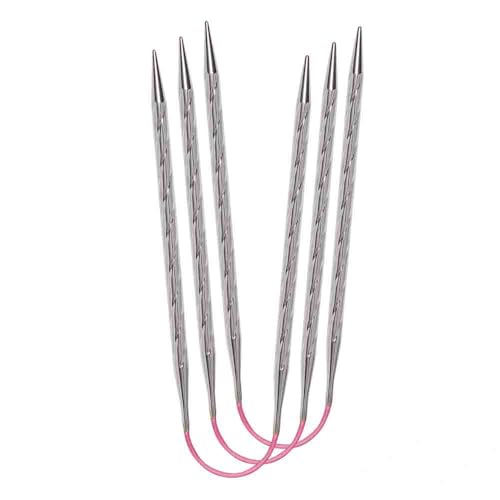
The Addi CraSyTrio is a revolutionary departure from the traditional DPN format. These flexible, short needles are connected by a cord, allowing you to distribute stitches across two needles while using the third to work the round.
They are designed specifically to eliminate the "fiddly" nature of working with four or five separate DPNs. By reducing the number of needle changes per round, you can maintain a much more fluid, consistent rhythm, which is the secret to increasing your knitting speed.
However, they do have a learning curve. If you are used to the rigidity of standard steel DPNs, the "flop" of the corded middle might feel strange at first. Once mastered, they are arguably the fastest tool for knitting socks and sleeves in the round.
Knitter’s Pride Nova Platina: Smooth Efficiency
Knitter’s Pride Nova Platina needles are known for their exceptionally smooth, chrome-plated finish. This surface is designed to be as "slick" as possible, allowing your stitches to glide effortlessly from one needle to the next.
For knitters who tend to be "tight" workers, these needles are a godsend. The slick surface encourages your stitches to relax, which can help you maintain an even gauge throughout your project.
They are also remarkably lightweight, reducing hand strain during long knitting sessions. If you find that your current needles cause your hands to cramp, the combination of the smooth finish and ergonomic weight of the Nova Platina can significantly improve your endurance.
HiyaHiya Sharp Steel DPNs: Ultimate Point Profile

HiyaHiya Sharp needles feature a distinctively pointed tip that is engineered for speed and precision. They are arguably the sharpest stainless steel DPNs on the market, making them ideal for complex maneuvers like k3tog (knit three together) or complicated bobbles.

The hollow construction of these needles makes them surprisingly light, which is a major advantage for speed. You aren’t fighting the weight of the metal as you flick the needles, allowing for faster, more ergonomic movements.
The trade-off for such a sharp point is that they can be "stabby" if you have a habit of pushing the needle tip with your finger. If you are a "pusher," you may want to keep a leather thimble nearby to protect your skin during long sessions.
Signature Needle Arts: Premium Stiletto DPNs
Signature Needle Arts are the luxury option for the serious knitter who views their tools as a long-term investment. These American-made needles are precision-engineered with a unique "stiletto" point that balances sharpness with a smooth, snag-free transition.
What sets them apart is the superior finish of the steel. They feel incredibly solid in the hand, providing a level of feedback that lets you feel exactly when a stitch is mounted correctly on the needle.
These are not just tools; they are instruments designed for performance. If you are knitting with high-end, luxury fibers like silk or fine merino, the quality of a Signature needle prevents the micro-snagging that can occur with cheaper, mass-produced steel.
Clover Takumi Steel DPNs: Best for Beginners

Clover Takumi steel needles are the reliable workhorse of the knitting world. While they may not have the extreme sharpness of a HiyaHiya or the luxury finish of a Signature, they offer a consistent, predictable experience that is perfect for those new to DPNs.
They are slightly less "slick" than chrome-plated options, which provides a bit more control. This is a massive benefit for beginners who are still learning how to manage the "laddering" that often occurs at the needle joins.
If you are intimidated by the idea of switching to steel needles, starting with Clover is a low-risk, high-reward move. They are affordable, widely available, and provide a gentle introduction to the benefits of metal knitting surfaces.
Why Stainless Steel Beats Wood for Fast Knitting
The primary reason to choose stainless steel over wood or bamboo is friction coefficient. Wood has a natural "tooth" or grip that is excellent for slippery yarns like mohair or silk, but it inherently slows down your knitting speed.
Stainless steel, by contrast, is engineered for minimal drag. When you are knitting at high speeds, you want the yarn to slide off the needle with as little resistance as possible.
- Steel: Best for high-speed, repetitive stockinette or lace.
- Wood: Best for slippery yarns or very loose, uneven knitters.
- Hybrid: Some knitters use a steel needle in the right hand for speed and wood in the left for control.
Ultimately, if your goal is to increase your stitches-per-minute, the slickness of steel is your best ally.
How Needle Surface Affects Your Knitting Speed
The surface of your needle dictates how much "work" your hands have to do to move the yarn. A matte or textured needle requires you to physically push the yarn along the shaft, which adds seconds to every single stitch.
A polished stainless steel surface allows the yarn to "dance" across the needle. This reduction in physical effort translates directly to less muscle fatigue, allowing you to knit for longer periods without needing to stop and stretch your hands.
However, remember that slicker is not always better. If you are knitting with a very slippery superwash wool, a needle that is too slick can cause stitches to fall off accidentally. Match your needle surface to your yarn’s natural "grab."
Essential Tips for Preventing Laddering on DPNs
Laddering—the appearance of loose, elongated stitches at the points where you join your DPNs—is the most common complaint among new DPN users. It happens because the tension is not being distributed evenly across the transition.
To combat this, try the "tug and shift" method. Every time you switch to a new needle, pull the first two stitches slightly tighter than usual, and make sure your stitches are pushed well away from the very ends of the needles.
Another pro-tip is to rotate your stitches. Don’t always start your round at the exact same spot on the same needle; moving the "join" by a few stitches every round will prevent any single area from becoming loose and stretched out.
Choosing the Right DPN Length for Your Project
The length of your DPNs should be dictated by the circumference of your project. For small-diameter projects like socks or mittens, a 5-inch or 6-inch needle is ideal because it keeps the needles from getting in each other’s way.
If you are knitting a hat or a larger sleeve, an 8-inch needle provides more room to distribute your stitches comfortably. Using a needle that is too long for the project will result in a "sword fighting" situation where the needles constantly clash.
Always err on the side of a shorter needle for small rounds. It reduces the weight and makes the entire process feel more compact and manageable.
Selecting the right stainless steel DPNs is a balance between the needle’s point profile, the slickness of the finish, and the physical length of the tool. By understanding how these factors interact with your specific yarn and knitting style, you can significantly boost your speed and comfort. Start with a reliable pair, focus on your tension at the joins, and enjoy the effortless glide that only high-quality steel can provide. Happy knitting!