6 Best Stitch Fixers For Dropped Stitches To Own
Dropped stitches are a knitter’s nightmare. Discover the 6 best stitch fixers to easily repair loops and restore your project’s integrity with precision.
We have all felt that sudden, sickening lurch in our stomachs when a stitch slips off the needle and begins its downward trek through our hard work. A dropped stitch is not a disaster, but it is a test of patience that requires the right tool to rectify quickly. Having a reliable repair tool in your notions bag transforms a potential project-ruiner into a simple five-second fix. These six tools are the industry gold standards for rescuing your knitting from the brink.
Clover Kacha-Kacha Stitch Counter: Best Overall


The Kacha-Kacha is a legendary companion for a reason, though its primary function is counting, its design makes it a surprisingly effective "fixer" companion. When you drop a stitch, you need to know exactly which row you are on to pick it up correctly.
Keeping track of your row count while you repair a ladder of dropped stitches prevents you from accidentally adding or losing a row. This tool is tactile and satisfying, ensuring you don’t lose your place during the high-stress moment of a repair.
It is lightweight and durable enough to toss into any project bag without worry. While it doesn’t "pick" the stitch itself, it is the essential brain behind the repair process.
Susan Bates Steel Crochet Hook: The Classic Choice
If you have been knitting for more than a decade, you likely have one of these tucked into a notions tin. These steel hooks are the workhorses of the fiber world, offering a sharp, precise head that glides into tight stitches without splitting the yarn ply.
The inline design of these hooks is the secret to their success. Unlike tapered hooks, the inline head pulls the yarn through the loop with consistent tension, which is vital when you are trying to recreate a stitch that has been stretched out by a dropped ladder.
They are incredibly affordable and virtually indestructible. If you are working with fine-gauge sock yarn or delicate lace, the smaller sizes in this line are non-negotiable for clean repairs.
ChiaoGoo Stainless Steel Crochet Hook for Lace
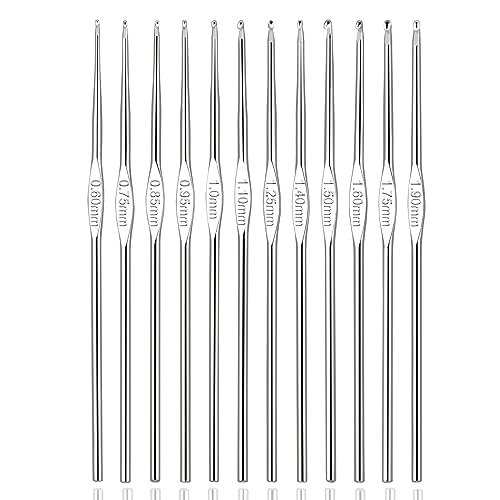
When you are working with high-twist lace weight or metallic yarns, you need a hook that won’t snag. ChiaoGoo’s stainless steel construction provides a surface so smooth that it practically slides through the most stubborn, sticky fibers.
The tip of these hooks is slightly more tapered than a standard steel hook. This makes it easier to navigate through intricate lace patterns where you might need to pick up a yarn-over or a complex decrease.
Because they are made of high-grade steel, they won’t bend under pressure. If you find yourself frequently dropping stitches in complex mohair lace, the strength and precision of these hooks will be your best friend.

Lantern Moon Ebony Wood Hook: Smooth and Gentle

Sometimes, the yarn you are working with is prone to splitting, such as single-ply wool or delicate alpaca. A metal hook can sometimes be too "grabby" or sharp, causing the hook to pierce the fiber rather than pulling it through the loop.
Ebony wood provides a natural, silky finish that is exceptionally gentle on delicate fibers. It has just enough "grip" to hold onto slippery silk or rayon blends without letting the stitch slide away at the wrong moment.
These are a luxury investment, but they offer a tactile experience that metal simply cannot match. If you are a knitter who prefers the warmth and feel of natural materials, this hook will make your repairs feel like a seamless part of the knitting process.
Addi Swing Crochet Hook: Ergonomic Stitch Fixer
Repetitive strain is a real concern for knitters, especially when you are hunched over trying to fix a dropped stitch in a complex colorwork project. The Addi Swing features a unique, ergonomic handle that rests comfortably in the palm of your hand.
The handle design forces a more relaxed grip, which is essential when your hands are already tired from a long knitting session. It reduces the tension in your wrist, allowing for the precise, delicate movements required to pick up a ladder of stitches.
While the hook head itself is standard, the comfort level is unmatched. If you struggle with hand fatigue, this is the tool that will keep you knitting through the inevitable mistakes.
Knitter’s Pride Ginger Hook: Best for Slippery Yarn

Slippery yarns like bamboo, silk, or superwash merino can be a nightmare when a stitch drops, as the ladder can unravel in a heartbeat. The Ginger series uses a polished wood finish that offers just the right amount of friction to keep the yarn in place while you work.
The wood is warm to the touch, which provides a bit of extra "tack" compared to polished nickel or aluminum. This helps you control the tension of the stitch you are picking up, ensuring it matches the surrounding fabric perfectly.
They are beautiful, well-balanced tools that feel substantial in the hand. For those who find metal hooks too slick to manage a messy drop, the Ginger hook provides the control you need to stay calm and collected.
Essential Anatomy of a Reliable Stitch Fixer Tool
A good stitch fixer must have a throat that is deep enough to hold the yarn securely, but not so deep that it becomes bulky. The head of the hook should be smooth and free of any burrs or manufacturing seams that could snag your yarn.
- The Head: Should be rounded to avoid splitting fibers.
- The Throat: Needs to be open enough to catch the yarn easily.
- The Shaft: Should be smooth to allow the loop to slide off without resistance.
- The Handle: Must provide enough grip for precise, controlled movements.
Avoid tools with sharp, pointed heads, as these are designed for piercing fabric, not for picking up knitting stitches. A blunt, rounded head is always safer for your yarn.
Why Crochet Hooks Outperform Standard Needles
While you can use a spare knitting needle to fix a dropped stitch, a crochet hook is vastly superior because of its mechanical advantage. A needle is just a stick; a hook is a tool designed specifically to pull loops through other loops.
When you use a crochet hook, the head captures the yarn and holds it securely as you pull it through the ladder. This eliminates the "fiddling" that often causes the stitch to drop again halfway through the repair.
A crochet hook also allows you to work from the front of the fabric, which makes it much easier to see the pattern and ensure that your stitches are not twisted. Using a needle often forces you to work from the back, which is a recipe for errors.
How to Match Hook Size to Your Yarn Weight
The golden rule is to choose a hook that is slightly smaller than the needles you used to knit the project. This ensures that the hook can easily pass through the loops without stretching them out of shape.
- Lace/Fingering: Use a 1.5mm to 2.25mm steel hook.
- Sport/DK: Use a 2.5mm to 3.25mm hook.
- Worsted/Aran: Use a 3.5mm to 4.5mm hook.
- Bulky: Use a 5.0mm or larger hook.
If you find that your repair looks "loose" or creates a visible line in your knitting, you are likely using a hook that is too large. Always test the fit by holding the hook against the needle you used for the project; it should look just a hair thinner.
Troubleshooting Dropped Stitches in Complex Lace
Fixing a dropped stitch in lace is intimidating because you aren’t just picking up a knit stitch; you are often dealing with yarn-overs and decreases. The key is to identify the "ladder" of yarn and trace it back to the point where the stitch actually dropped.
If you have a yarn-over involved, remember that a yarn-over is just a loop of yarn that hasn’t been knitted yet. You must treat it as a separate stitch in your ladder, or your lace pattern will be off by one count.
Work slowly and use a locking stitch marker to secure the live stitch at the top of the ladder before you start. If the repair looks wrong after you finish, don’t be afraid to drop it back down and try again; the yarn is resilient, and practice is the only way to master the rescue.
Dropped stitches are an inevitable part of the knitting journey, but they are also a fantastic opportunity to understand the structure of your fabric. With the right crochet hook in your kit, you can approach these repairs with confidence rather than panic. Choose a tool that feels comfortable in your hand and matches the weight of your yarn, and you will find that no mistake is truly permanent. Keep your hook close, breathe through the repair, and remember that every stitch you save makes you a more capable maker.