6 Best Rotary Cutters For Straight Edges To Try
Achieve precision in every quilt and craft project. Explore our top six rotary cutter picks designed for effortless, straight edges and superior control.
Achieving a perfectly straight edge on your fabric is just as critical as maintaining consistent tension in your knitting. While we often focus on the perfect cast-on or bind-off, the tools used to prepare your materials—especially when working with backing fabrics for quilted projects or felted pieces—can make or break the final result. A sharp, reliable rotary cutter is the secret weapon that ensures your cuts are crisp, clean, and professional. Here are the top six rotary cutters that will help you achieve precision every single time you head to the cutting table.
Olfa RTY-2/DX Splash: Best Rotary Cutter Overall
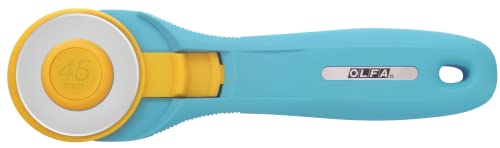

The Olfa Splash is a workhorse in the fiber arts world, balancing reliability with a user-friendly design. It features a quick-change blade mechanism that saves you time when you’re in the middle of a marathon cutting session.
For those of us who spend hours prepping fabric for backing a hand-knit heirloom quilt, this cutter feels like an extension of the hand. The handle is weighted perfectly, allowing for a steady, controlled stroke that prevents the blade from skipping or veering off the line.
The bottom line: It’s the industry standard for a reason. If you want a dependable tool that handles everything from thin cottons to heavier wool blends without fuss, this is your best bet.
Fiskars 45mm Comfort Loop: Best Ergonomic Choice
If you suffer from hand fatigue or have dealt with repetitive strain from years of knitting, the Fiskars Comfort Loop is a lifesaver. The unique loop handle design allows you to keep your hand in a more natural, relaxed position while cutting.
This is particularly helpful when you are cutting multiple layers of fabric for a complex project. By distributing the pressure across your entire palm rather than just your fingers, it mimics the relief you feel when switching from thin metal needles to ergonomic wooden ones.
However, keep in mind that the loop design can feel a bit bulky for those with very small hands. It’s a trade-off between comfort and maneuverability, so consider your grip style before purchasing.
Clover Rotary Cutter 45mm: Best For Precision Work

Clover is synonymous with attention to detail, and their rotary cutter is no exception. This tool is designed for the maker who needs absolute accuracy, especially when trimming selvages or squaring up blocks.
The blade guard is exceptionally responsive, providing a sense of safety without feeling like it’s getting in the way of your line of sight. When you’re working with delicate fabrics that require a light touch, this cutter allows you to maintain a consistent, gentle pressure.
It’s the ideal tool for the perfectionist. If your project requires tight tolerances and clean edges, the Clover will reward your precision with a flawless cut.
Kai 45mm Rotary Cutter: Best For Smooth Cutting

Kai is legendary for their blade sharpness, and this rotary cutter feels like it’s gliding through butter. The blade quality is superior, which means you spend less time fighting the fabric and more time creating.
When you are cutting high-density fabrics or multiple layers of felted wool, a dull blade can cause the material to bunch or fray. The Kai’s sharpness ensures that every fiber is severed cleanly, leaving a crisp edge that won’t unravel easily.
While the blades are a bit of an investment, the longevity is unmatched. If you value a smooth, effortless cutting experience, you won’t regret choosing Kai.
Gingher 45mm Rotary Cutter: Best Premium Option
The Gingher name carries a weight of history and quality that is hard to ignore. This cutter feels substantial in the hand, offering a level of stability that lighter plastic models simply cannot replicate.
It is a beautiful piece of equipment that is built to last for decades. Much like a high-end pair of forged knitting needles, it feels like a tool you will pass down to the next generation of makers.
The trade-off is the weight; it is heavier than your average cutter. If you prefer a lightweight tool, you might find it tiring, but for those who like a solid, grounded feel, it is the gold standard.
Martelli 45mm Ergo Rotary Cutter: Best For Comfort

The Martelli Ergo is designed specifically to address the mechanics of the wrist and forearm. Its unique shape allows you to hold the cutter in a way that minimizes strain, making it perfect for long cutting sessions.
Many knitters find that their hands get tight after hours of stranded colorwork; this cutter is designed to prevent that same tension from building up while you work. It requires very little downward pressure to get a clean cut.
It does have a steeper learning curve than a standard straight-handle cutter. Once you master the ergonomic grip, however, it is arguably the most comfortable tool on this list.
How To Select The Right Rotary Cutter Blade Size
The 45mm blade is the industry standard for a reason, as it offers the best balance between maneuverability and stability. A 28mm blade is better for tight curves or small, intricate pieces, while a 60mm blade is ideal for cutting through thick batting or multiple layers of heavy fabric.
Think of it like choosing needle sizes: you wouldn’t use a 2.0mm needle for bulky yarn, and you shouldn’t use a 60mm blade for delicate lace-weight fabric. Match your blade size to the thickness and complexity of your material.
Always keep a variety of sizes on hand if your projects vary greatly in scale. It prevents the frustration of trying to force a large blade into a tight corner.
Essential Safety Tips For Using Rotary Cutters

Rotary cutters are incredibly sharp and demand your full attention. Always engage the safety lock the moment you finish a cut, even if you’re just reaching for a cup of tea.
Never cut toward your body, and always ensure your fingers are well away from the path of the blade. A good rule of thumb is to treat your cutter with the same respect you give a sharp pair of embroidery scissors.
If you are tired or distracted, put the tool down. Much like dropping a stitch when you’re exhausted, accidents with rotary cutters happen when our focus shifts away from the task at hand.
Maintaining Your Rotary Cutter For Sharp Edges
A dull blade is a dangerous blade because it requires more force, which increases the likelihood of slipping. Change your blade as soon as you notice you have to press harder than usual to get a clean cut.
Clean the blade housing regularly to remove lint and fabric fibers that accumulate over time. A buildup of debris can cause the blade to wobble, leading to uneven edges that will ruin your carefully planned layout.
Consider using a dedicated blade sharpener if you want to extend the life of your blades. However, when in doubt, a fresh blade is always the safest and most effective option for your project.
Choosing The Best Cutting Mat For Your Projects
A self-healing cutting mat is non-negotiable for rotary cutting. It protects your table and, more importantly, ensures that your blade stays sharp for longer by providing a forgiving surface.
Look for a mat with clear, accurate grid lines that help you align your fabric perfectly. I personally prefer a mat that is large enough to accommodate the full width of my fabric, so I don’t have to shift the material mid-cut.
Remember to rotate your mat regularly to avoid wearing out the same spot in the center. A well-maintained mat is just as vital to your success as a high-quality rotary cutter.
Selecting the right rotary cutter is a personal journey that depends on your hand health, project types, and preference for weight and grip. By investing in a high-quality tool and maintaining it with care, you ensure that your fabric preparation is as precise as your knitting. May your edges always be straight and your cuts always be clean. Happy making!