6 Best Fabric Steamers For Finished Knitwear
Discover the top six fabric steamers for knitwear. Our guide highlights safe, effective tools to remove wrinkles while maintaining the texture of your knits.
After spending two decades at the knitting table, I have learned that the difference between a "homemade" sweater and a professional-grade garment often comes down to the finishing. Steam blocking is the final, transformative step that evens out your stitches and gives your fabric a polished, intentional drape. Choosing the right steamer is just as important as selecting the right yarn for your project. Here are my top recommendations for keeping your finished knitwear looking its absolute best.
Conair Turbo ExtremeSteam: Best Overall Choice
This handheld powerhouse is the gold standard for most home knitters because it balances raw power with maneuverability. It heats up in seconds, which is a lifesaver when you are eager to see the final drape of a colorwork yoke or a lace shawl.
The variable steam settings are the real standout feature here. If you are working with a delicate fingering-weight wool, you can dial it down to prevent over-stretching the fibers. Conversely, for a heavy, aran-weight cable sweater, the higher setting helps relax the stitches so the pattern detail truly pops.
The only real trade-off is the water tank capacity, which is smaller than a floor-standing unit. You will likely need to refill it once if you are blocking a full-sized adult sweater. However, for the convenience and the consistent steam flow, it remains my top recommendation for the average knitter.
Jiffy J-2000 Pro Steamer: Best For Heavy Use


If you run a small knitwear business or you are a prolific knitter who finishes multiple sweaters a month, stop looking at handhelds. The Jiffy J-2000 is a workhorse that provides a constant, steady stream of moisture without the need for constant refills.
This unit excels at "opening up" fibers like alpaca or mohair, which often look a bit fuzzy or uneven straight off the needles. Because the steam is so consistent, you get an even distribution of heat across the entire garment, which is critical for preventing patchiness in your blocking.
It is a significant investment and takes up dedicated floor space in your craft room. But if you value longevity and performance over portability, this is the machine that will last you for the next decade.
PurSteam Elite Fabric Steamer: Best Value Pick
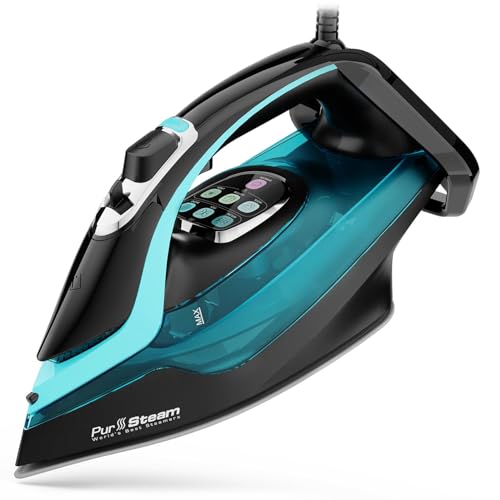
Not every knitter wants to drop a fortune on a specialized tool, and the PurSteam Elite proves that you don’t have to. It offers a surprisingly robust steam output for the price point, making it excellent for beginners who are just starting to experiment with blocking.
It is lightweight and easy to handle, which is a huge benefit when you are trying to steam a large garment while it is pinned to a blocking board. You won’t get the bells and whistles of high-end models, but it gets the job done effectively.
Be aware that it can occasionally spit water if you tilt it too aggressively. My advice is to keep the steamer moving in a steady, sweeping motion to ensure that the steam stays dry and the fabric remains safe.
Rowenta X-Cel Handheld: Best For Travel Needs

We’ve all been there: you pack your favorite hand-knitted sweater for a trip, only for it to arrive at your destination looking crushed and lifeless. The Rowenta X-Cel is compact enough to throw into a suitcase, ensuring your hard work never looks neglected.
Despite its small footprint, it packs enough punch to handle most wools and blends. It is particularly good for quick touch-ups on the go, like smoothing out the hem of a cardigan or refreshing the sleeves of a pullover.
The trade-off is that it lacks the steam pressure of the larger units, so it won’t be your primary tool for a deep, initial block. Think of this as your "emergency kit" for maintaining your knitwear while you are away from your home studio.
Fridja F1000 Steamer: Best For Delicate Fibers
When you are working with luxury fibers like silk, cashmere, or high-end angora, you need a steamer that is gentle yet precise. The Fridja F1000 is designed with a focus on temperature control, which is the most important factor when dealing with expensive, delicate yarns.
It features a unique design that allows you to get right into the corners of intricate lace patterns or tight ribbing. I find this especially useful for garments with complex construction, where you need to guide the steam precisely into a specific gusset or neckline.
Because it is so gentle, it takes a bit longer to achieve a deep block compared to the heavy-duty models. For the knitter who prioritizes the integrity of their fiber over speed, this is a perfect match.
Steamery Cirrus 3: Best For Modern Aesthetics
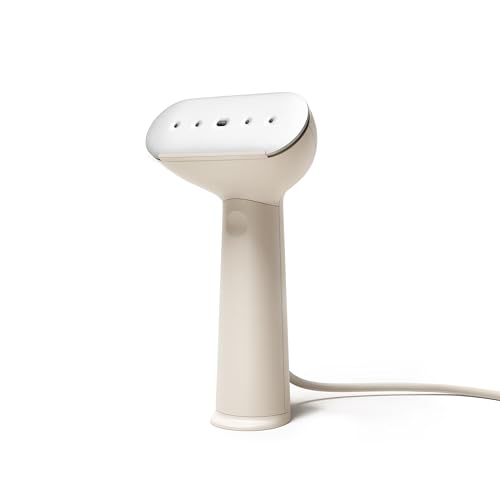
The Steamery Cirrus 3 is a beautiful piece of design that looks right at home in a modern, minimalist craft space. It is not just about looks, though; it features a heated ironing plate that helps dry the fabric as you steam it.
This is a massive advantage for knitwear, as it prevents you from over-saturating the fibers with excess moisture. If you’ve ever accidentally "felted" a section of a project by getting it too wet and hot, this feature will give you peace of mind.
It is priced at a premium, and you are definitely paying for the design and the brand. If you want a tool that is as aesthetically pleasing as your hand-dyed yarn stash, this is the one to choose.
Why Steam Blocking Is Essential For Knitwear
Steam blocking is the secret bridge between a garment that looks "handmade" and one that looks "hand-knit." It relaxes the tension in your stitches, allowing the yarn to bloom and fill in the gaps created by the knitting process.
- Evens out tension: Helps hide small variations in gauge caused by fatigue or changing needles.
- Improves drape: Allows the fabric to settle into its final, intended shape.
- Sets the stitch pattern: Crucial for lace, where the full beauty of the design only emerges after a proper block.
Don’t skip this step. Even if your knitting is perfect, a quick steam will unify the fabric and make your hard work look intentional and professional.
Safe Steaming Techniques For Natural Fibers
When working with natural fibers like wool, alpaca, or cotton, the golden rule is: never touch the steamer head directly to the yarn. You want the steam to do the work, not the heat of the metal plate.
Hold the steamer about an inch away from the fabric, moving in smooth, consistent sweeps. If you are working with a superwash wool, be extra careful, as these fibers are prone to stretching significantly when wet and warm.
Always start on a hidden area, like the inside of a hem or a spare swatch, to see how the fiber reacts. If the yarn starts to look shiny or feels "dead," you are too close or applying too much heat.
Preventing Heat Damage On Synthetic Yarns
Synthetic fibers like acrylic and nylon react very differently to heat than animal fibers. They don’t "bloom" in the same way; instead, they can melt or permanently lose their structure if exposed to too much direct steam.
- Use low settings: Always start at the lowest possible temperature.
- Keep distance: Increase the gap between the steamer and the garment.
- Test first: Never skip the swatch test, especially with acrylics.
If you are working with a blend, treat the garment as if it were 100% synthetic. It is much better to under-steam a blend than to accidentally ruin the texture of the entire piece.
How To Maintain Your Steamer For Longevity
Your steamer is a precision tool, and like your best knitting needles, it deserves proper care. The biggest enemy of any steamer is mineral buildup from tap water, which can clog the internal pipes and cause the unit to spit or fail.
Always use distilled water if possible, especially if you live in an area with "hard" water. If you notice the steam output slowing down, run a descaling solution through the unit according to the manufacturer’s instructions.
Finally, always empty the tank after you are finished blocking. Leaving water sitting in the reservoir is a recipe for mold and mineral accumulation that will eventually ruin the internal components.
Investing in a good steamer is one of the most practical upgrades you can make for your knitting practice. It transforms the final steps of your project from a chore into a rewarding reveal. Take your time, test your fibers, and enjoy the process of turning your stitches into a finished garment you will be proud to wear for years. Happy knitting!