
6 Best Weaving Scissors For Clean Cuts To Own
Achieve perfect edges with our top 6 weaving scissors. This guide highlights the best tools for clean, precise cuts essential for every fiber artist’s kit.
There is nothing more frustrating than mid-project momentum being halted by a pair of dull scissors that fray your yarn ends instead of slicing them. A clean, crisp cut is the difference between an invisible weave-in and a bulky, visible knot that ruins the drape of your fabric. Over two decades at the loom and knitting needles, I have learned that your choice of snips is just as vital as your choice of yarn. These six tools are the gold standard for achieving professional-grade finishes on every fiber type.
Gingher 4-Inch Featherweight Embroidery Scissors


These scissors are a rite of passage for many serious fiber artists. Their knife-edge grind allows them to glide through everything from delicate lace-weight mohair to sturdy worsted wool without catching or pulling.
The "featherweight" moniker isn’t just marketing; they are remarkably light in the hand. This reduces fatigue during long finishing sessions, such as weaving in ends on a large colorwork sweater where you might have dozens of tails to manage.
However, they are precision instruments that require respect. If you use them to cut paper or wire, you will ruin that delicate factory edge instantly. Keep these strictly for your fiber work to maintain their longevity.
Kai 7100 4-Inch Professional Series Scissors

If you prioritize ergonomic comfort and industrial-grade steel, the Kai 7100 is your best friend. These are made from high-carbon stainless steel, which holds an incredibly sharp edge for a long time.
I often recommend these to knitters who struggle with hand strain or arthritis. The tension adjustment screw allows you to customize the "feel" of the blades, ensuring they aren’t too loose or too stiff for your specific grip.
They perform exceptionally well on slippery fibers like silk or bamboo blends, which often slide away from standard, cheaper blades. You are paying for professional-grade engineering here, and it shows in every single snip.
Fiskars Micro-Tip Easy Action Craft Scissors

Sometimes, you need a tool that does the heavy lifting for you. The spring-action design of these Fiskars makes them ideal for knitters with limited hand strength or those who are doing high-volume finishing work.
The micro-tip is the real star of the show. It allows you to get right up against the fabric surface to trim a yarn end without accidentally nicking your stitches. This is a lifesaver when you are finishing a delicate baby blanket or a pair of intricate socks.
Don’t let the plastic housing fool you; the blades themselves are quite robust. While they aren’t as "heirloom" as the Ginghers, they offer the best value-to-performance ratio for a daily-use tool.
Westcott Titanium Bonded Embroidery Scissors

Titanium bonding makes these blades three times harder than untreated steel. In practice, this means they resist the sticky residue that can build up if you are working with waxed linen or certain synthetic, coated yarns.
They are also surprisingly corrosion-resistant. If you live in a humid climate or frequently take your knitting to the beach or the pool, these are less likely to develop that annoying surface rust that plagues lesser tools.
The handles are comfortable, though they lack the refined finish of higher-end Italian or Japanese steel. For the price, they are an excellent, durable workhorse that can handle the occasional "oops" without losing their edge.
Havel’s Sewing 4.5-Inch Serrated Craft Snips

Serrated blades are a game-changer for slippery, high-twist yarns. If you have ever tried to cut a strand of mercerized cotton only to have it slide right through the blades, you know exactly why these exist.
The tiny teeth on the blade "grip" the fiber, holding it in place while the cutting action happens. This ensures a clean, single-pass cut every time. It is particularly useful for multi-ply yarns that tend to untwist when cut with a standard blade.
Because of the serrations, they aren’t ideal for fine-trimming tiny, delicate ends on mohair or angora. They are, however, the absolute best tool for heavy-duty finishing on bags, rugs, or home decor projects.
Dritz Precision Needlework Scissors for Fiber
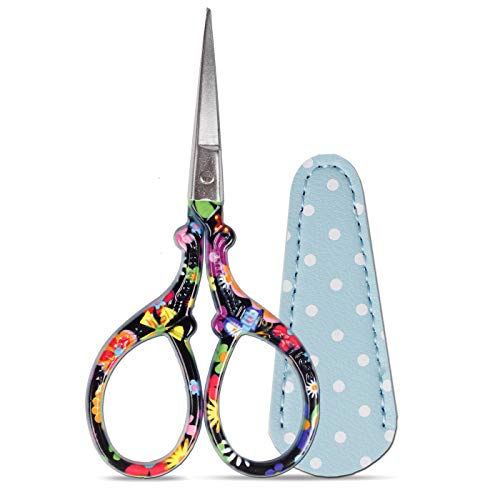
These are the classic, reliable choice that you find in almost every well-stocked local yarn shop. They are compact, sharp, and get the job done without any unnecessary bells or whistles.
The pointed tips are perfect for picking at a stitch if you need to perform a minor repair or untangle a snag. They are also small enough to fit easily into a notions pouch or a travel knitting bag.
While they may need sharpening more frequently than the professional-grade Kai or Gingher models, they are easy to replace. They are a solid, no-nonsense choice for the knitter who wants a dependable tool at an accessible price point.
Anatomy of a Perfect Snip for Weaving Projects
A perfect snip is defined by the "pivot point" and the "grind." You want a pair of scissors where the blades meet at a precise, tight angle, ensuring the fiber is sheared rather than crushed.
Look for a "knife-edge" grind, which is flatter and sharper than the beveled edge found on standard office scissors. This grind allows the blade to slice through the fiber structure cleanly, rather than pushing it aside.
Finally, consider the tip. A fine, needle-like point is essential for weaving in ends on the wrong side of your work. If the tip is too blunt, you will struggle to tuck those last few millimeters of yarn into the fabric.
Why Blade Sharpness Matters for Clean Yarn Cuts
Dull blades are the enemy of a professional finish. When a blade is dull, it compresses the yarn fibers before cutting them, which leads to frayed, fuzzy ends that are difficult to weave in securely.
A clean cut, by contrast, leaves the fibers intact at the point of severance. This makes it much easier to thread your tapestry needle and ensures that your woven-in ends stay hidden and secure over the life of the garment.
Think of it like pruning a plant; a clean cut heals better and looks better. Your knitting is no different. A sharp blade ensures that your "invisible" ends truly remain invisible.
Essential Maintenance Tips for Your Craft Shears
The golden rule of fiber scissors is simple: never cut anything but fiber. Paper, cardboard, and especially wire will dull your blades faster than years of knitting ever could.
Keep your scissors clean by wiping the blades with a soft cloth after every session. If you are working with a particularly fuzzy yarn, use a small brush to remove any lint that might have gathered near the pivot screw.
Every year or so, you might consider having them professionally sharpened. A good sharpening service can restore the factory edge, making a $30 pair of scissors perform like a $100 pair for just a few dollars.
How to Select the Right Scissors for Your Craft
Start by evaluating your primary project type. If you mostly work with fine lace, prioritize a pair with ultra-fine, sharp tips like the Ginghers. If you work with bulky, high-twist wools, the serrated Havel’s are a better investment.
Consider your hand health as well. If you find your hands cramping after a few hours of work, look for spring-loaded options like the Fiskars or scissors with larger, more ergonomic finger loops.
Lastly, don’t be afraid to own more than one pair. Keep a small, sharp pair in your notions bag for travel and a larger, more robust pair at your main knitting station. Your tools are an investment in the quality of your finished work.
Investing in quality scissors is one of the most underrated ways to improve the professional look of your finished knitting projects. By choosing a tool that suits your specific fiber preferences and hand comfort, you eliminate the frustration of frayed ends and messy finishes. Treat your scissors with the same care you give your favorite needles, and they will serve you faithfully for decades. Happy knitting, and may your ends always be perfectly trimmed.
