6 Best Dpn Sets For Sock Knitting To Try Today
Discover the 6 best DPN sets for sock knitting. We compare materials and grip to help you choose the perfect needles for your next cozy, handmade project.
Choosing the right set of double-pointed needles (DPNs) can transform your sock-knitting experience from a frustrating struggle into a rhythmic, meditative flow. Whether you are battling slippery stitches or fighting against hand fatigue, the material and geometry of your needles dictate your tension and speed. This guide explores the top-tier options currently available to help you find the perfect match for your unique knitting style. Investing in the right tools now will save you countless hours of rework and ensure your handmade socks stand the test of time.
ChiaoGoo Patina Stainless Steel DPNs: Best Overall


These needles are the gold standard for a reason, offering a perfect balance between slickness and control. The Patina finish provides just enough grip to keep your stitches from sliding off accidentally, while the stainless steel core ensures they never warp or bend.
If you are working with fine, high-twist sock yarns, the precision-machined tips allow for effortless picking of stitches. They are incredibly durable, meaning you won’t have to worry about the tips wearing down after knitting dozens of pairs.
The downside is that they can feel cold in the hands during long winter knitting sessions. However, for sheer reliability and consistent gauge, they remain the most versatile choice in any knitter’s kit.
HiyaHiya Sharp Steel DPNs for Precision Knitting

When you are working with complex lace patterns or tiny cables on a sock cuff, you need a needle that can navigate tight spaces. HiyaHiya Sharps feature an aggressive, tapered point that makes increasing and decreasing effortless.
Because the tips are so sharp, they are fantastic for complex stitch manipulations but can be unforgiving if you have a habit of pushing the needle tip with your index finger. I recommend using a leather thimble or a silicone fingertip protector if you find yourself snagging your skin.
These needles are exceptionally lightweight and smooth, allowing for rapid-fire knitting. They are the ideal choice for experienced knitters who prize speed and accuracy above all else.
Knitter’s Pride Karbonz DPNs: The Durable Choice
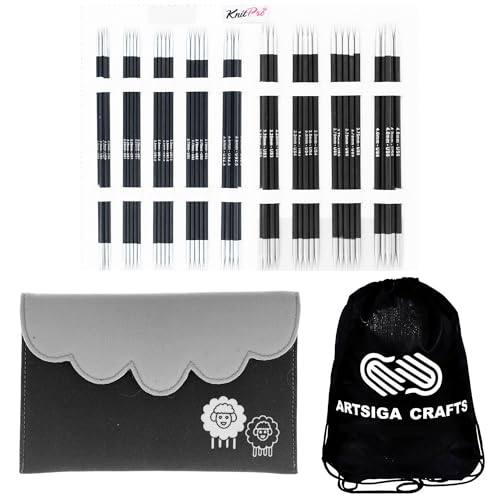
Karbonz needles are a marvel of modern materials engineering, combining a carbon fiber shaft with nickel-plated brass tips. This unique construction provides a warm, flexible feel while maintaining the structural integrity of steel.
The carbon fiber body is slightly grippy, which is a lifesaver if you are using slippery silk-blend sock yarns. The brass tips, however, are polished to a high sheen, ensuring that your yarn slides off easily when you are working the stitch.
Because of their durability, these are excellent for travel knitting where needles might get crushed in a bag. Just be aware that they are not as "slick" as pure metal needles, so they may slow you down slightly if you are a very fast knitter.
Lykke Driftwood DPNs: Smooth and Warm to Touch

If you find metal needles too cold or too slippery, Lykke Driftwood needles are the perfect antidote. Made from high-quality birch, they are warm to the touch and provide a gentle drag that keeps your stitches firmly in place.
These needles are particularly well-suited for beginners who are still mastering their tension. The wood provides enough friction to prevent "yarn barf"—where stitches slide off the needles when you set your project down.
However, because they are wood, they are more fragile than their metal counterparts. Avoid using them with very fine, high-tension sock yarns, as the tips can snap if you are a particularly tight knitter.
Addi CraSyTrio Needles: The Modern DPN Alternative
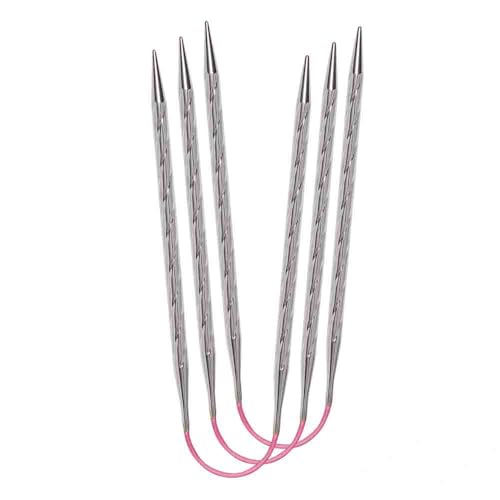
Addi CraSyTrio needles aren’t traditional DPNs, but they have revolutionized how many of us knit socks. These are essentially three flexible, corded needles that allow you to knit in the round with the ease of a circular needle but the maneuverability of DPNs.
By using only two needles to hold your stitches and the third to knit, you eliminate the awkwardness of juggling four or five needles. This setup significantly reduces the dreaded "laddering" that often occurs at the transitions between needles.
While they take a moment to get used to, they are a game-changer for knitters who struggle with hand strain. They are essentially the best of both worlds: the comfort of circulars and the convenience of DPNs.
Brittany Birch DPNs: Sustainable Wooden Quality

Brittany Birch needles are a classic for a reason, crafted from sustainably harvested birch wood in the USA. They offer a beautiful, natural aesthetic that makes every sock project feel like a special occasion.
These needles are polished to a satin finish, which is smooth enough for most yarns but provides a consistent, reliable grip. They feel substantial in the hand and have a slight "give" that is much kinder to your joints than rigid metal.
They are an excellent choice for knitters who prefer natural materials and want a tool that develops a lovely patina over time. Treat them with a little wood wax occasionally, and they will last for years.
Choosing the Right DPN Material for Sock Projects
The material of your needle will fundamentally change the character of your fabric. Metal needles encourage speed and are best for sticky wools, while wood or carbon fiber provides the grip needed for slick, luxury fibers.
- Stainless Steel: Best for speed and durability; can be cold to the touch.
- Birch Wood: Best for grip and comfort; prone to snapping if too thin.
- Carbon Fiber: Best for structural strength and a "warm" feel; moderate grip.
If you are a "tight" knitter, a slicker metal needle will help you work your stitches more easily. If you are a "loose" knitter, a wooden needle will add the necessary friction to help your stitches look more even.
Understanding Needle Lengths for Sock Knitting
The length of your DPNs should be dictated by your hand size and the circumference of your project. Most sock knitters prefer 5-inch or 6-inch needles, as they are compact enough to be manageable but long enough to hold the stitches for a standard adult sock.
If you are knitting a larger project, like a sweater sleeve, you might want a 7-inch or 8-inch needle. However, for socks, longer needles are often cumbersome and prone to getting caught on your clothing or furniture.
Remember that you don’t need the needles to hold all your stitches at once. You only need enough length to hold the stitches for one side of the sock comfortably while you work the other.
How to Prevent Laddering Between DPN Transitions
Laddering occurs when the yarn is stretched too tightly at the point where you move from one needle to the next. This creates a visible vertical line of loose stitches, which can ruin the look of an otherwise perfect sock.
To fix this, try the "two-stitch shift" method. Every few rounds, knit two stitches onto the next needle; this ensures that the transition point is constantly moving, preventing a permanent gap from forming in your fabric.
Alternatively, pull your yarn slightly tighter on the first two stitches of every new needle. This extra tension compensates for the natural stretching that happens at the transition point.
Essential Tips for Maintaining Your Needle Sets
Your needles are an investment, and proper care will ensure they perform for a lifetime. For metal needles, keep them clean by wiping them down with a soft cloth to remove skin oils that can cause them to become "sticky."
For wooden needles, avoid leaving them in extreme heat or humidity, which can cause them to warp or crack. If they start to feel dry or rough, a tiny drop of mineral oil or wood wax will restore their smooth finish.
Always store your needles in a case that keeps them straight. Storing needles in a pile can lead to bending, especially with the thinner sizes (like 2.0mm or 2.25mm) commonly used for socks.
Finding your perfect set of DPNs is a journey of trial and error, but it is one that will pay dividends in your knitting satisfaction. Don’t be afraid to mix and match materials or try unconventional tools like the CraSyTrio to see what works best for your hands. Ultimately, the best needle is the one that allows you to lose yourself in the rhythm of your stitches. Happy knitting, and may your heels always turn perfectly.