7 Best Storage Racks For Organizing Thread Spools
Tired of tangled thread? We review the 7 best storage racks to keep your spools organized, accessible, and clutter-free for any sewing or embroidery project.
Every fiber artist knows that the beauty of a project often starts with the thread or yarn we choose to work with. As your collection of specialty threads, embroidery floss, and sewing staples grows, keeping them accessible becomes as important as your tension control. Without a dedicated storage system, you risk tangled messes and color confusion that can derail even the simplest project. Here are the best storage solutions to keep your workspace as organized as your stitch library.
Simthread 60-Spool Wall Mount: Best Overall Choice


If you find yourself constantly reaching for neutral tones or standard sewing weights, this rack is a workhorse. It offers a clean, vertical display that keeps your most-used colors right at eye level.
The wall-mount design is a game-changer for small studios where surface space is at a premium. By utilizing vertical wall space, you keep your table clear for blocking mats or spreading out complex charts.
The build quality is sturdy enough to handle various spool sizes without wobbling. Just be aware that the pegs are spaced for standard sewing spools; if you use bulky decorative threads, you might need to skip every other peg.
Brother 104-Spool Rack: Best for Large Collections

When your thread collection starts to rival the inventory of a local shop, you need a high-capacity solution. This rack is designed for the serious maker who keeps a massive palette on hand for intricate embroidery or quilting.
Having 104 spools visible at once allows you to audition colors against your fabric or yarn before you even thread your needle. It eliminates the "digging" factor that often leads to frayed ends and lost spools.
Because of its size, this rack requires a dedicated wall area that isn’t exposed to direct sunlight. UV rays can weaken fibers over time, causing your high-quality threads to snap mid-project.
Sewtech Folding Stand: Best for Small Workspaces
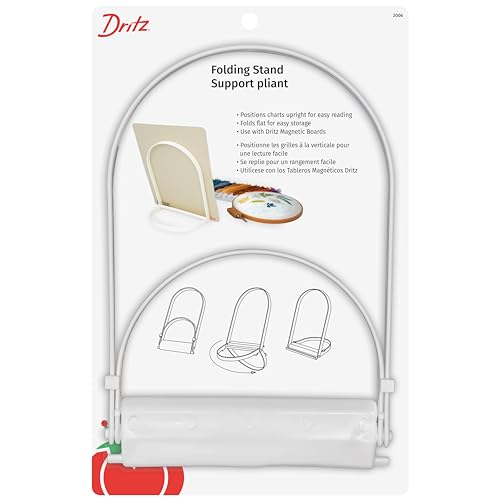
Flexibility is the hallmark of a good studio, and this folding stand delivers exactly that. It’s perfect for the knitter or sewer who works on a kitchen table and needs to pack everything away when the project is done.
The folding mechanism is surprisingly robust, allowing you to move your entire thread library from the closet to the table in seconds. It’s a great way to keep your tools organized without permanently claiming wall space.
However, keep in mind that the footprint is wider than a wall mount. Ensure your workspace has enough clearance so you don’t accidentally knock it over while reaching for your scissors or measuring tape.
ThreadNanny Wooden Rack: Best Budget-Friendly Pick

Sometimes, simple is better, and this wooden rack is a classic for a reason. It provides a sturdy, no-frills home for your spools that fits into almost any decor style.
The natural wood finish is durable and won’t snag delicate threads like some cheaper plastic alternatives might. It’s an excellent entry-level choice for beginners who are just starting to build their stash.
While it lacks fancy features, it does exactly what it’s supposed to do. For those on a budget, this allows you to spend more of your hard-earned money on high-quality fibers rather than expensive storage furniture.
ArtBin Thread Cabinet: Best for Dust Protection
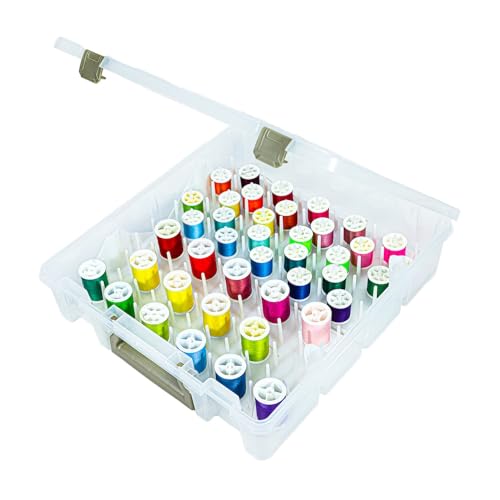
If you live in a dusty environment or have pets, an open rack might be a nightmare for your thread. This cabinet offers a closed environment that keeps lint and debris away from your delicate embroidery or serger threads.
The clear lid allows you to see your colors without opening the box, which is a major time-saver. It keeps your thread clean, ensuring that when you go to start a new project, your supplies are as pristine as the day you bought them.
The tradeoff here is accessibility; you have to lift a lid to grab a spool. If you are someone who switches colors every five minutes, you might find the cabinet slightly less convenient than an open wall rack.
Creative Options Spool Box: Best for Portability
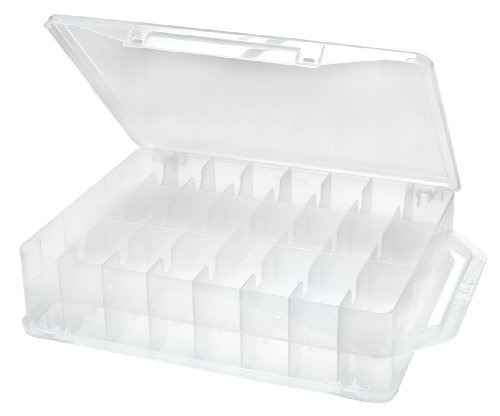
For the maker who travels to workshops or knitting retreats, this box is an essential tool. It keeps your spools locked in place so they don’t roll around and tangle during transit.
The internal dividers are adjustable, which is a huge plus for those of us who use everything from tiny silk spools to larger cones. It’s the closest thing to a "go-bag" for your thread collection.
Always check that the latches are fully clicked shut before throwing it in your tote bag. A spill in your luggage is a headache you definitely want to avoid when you’re already traveling.
Sulky 64-Spool Rack: Best for Varied Spool Sizes
One of the biggest frustrations in fiber arts is when your storage rack doesn’t fit your favorite brand’s unique spool shape. This rack is engineered with a bit more clearance, making it much more versatile.
If you regularly switch between different weights and brands, this is a lifesaver. It accommodates a wider variety of diameters, so you aren’t forced to stick to one manufacturer just to keep your threads organized.
Think of this like having a set of interchangeable needles; it gives you the freedom to choose the best material for the job. It’s a smart investment if your project requirements change frequently.
How to Select the Right Rack for Your Thread Type
- Standard Sewing Thread: Most racks work well here, as these spools have a uniform size.
- Embroidery/Decorative Thread: Look for racks with longer pegs to accommodate the wider bases of these spools.
- Serger Cones: These usually require a specialized freestanding cone holder rather than a standard peg rack.
- Delicate Silks: Prioritize enclosed storage to prevent snagging and fiber degradation.
Wall-Mounted vs. Freestanding: Which Suits You?
Wall-mounted racks are the gold standard for permanent studio setups. They keep your floor and table clear, which is vital if you work with large-scale projects like quilts or heavy garments.
Freestanding racks offer the benefit of mobility. If your "studio" is actually the corner of your living room, being able to tuck your thread away in a closet is worth the extra table space it occupies.
Consider your workflow honestly. If you are a "leave it out" type of maker, wall mounts will keep you inspired; if you are a "clean slate" type, go for a rack that can be hidden away.
Tips for Organizing Threads by Color and Weight
Organizing by color is visually satisfying, but don’t ignore weight. Keep your lightweight basting threads separate from your heavy-duty topstitching threads to avoid grabbing the wrong spool in a rush.
- Group by Hue: Arrange in a rainbow gradient to make finding the perfect match for your fabric easier.
- Weight Matters: Keep your heavy-duty threads on the bottom rows of a wall rack to keep the center of gravity low.
- Labeling: If you have multiple brands, use a small label on the rack peg to help you restock the right thread when you run low.
Investing in a proper thread rack is about more than just aesthetics; it is about respecting your materials and your time. By choosing a system that matches your space and your specific fiber needs, you ensure that your creative process remains fluid and frustration-free. Take the time to evaluate your collection, pick the rack that fits your lifestyle, and get back to the joy of making. Your future projects will thank you for the order you’ve brought to your studio.