7 Best Wooden Display Ladders For Finished Blankets
Organize your throws stylishly with our top 7 wooden display ladders. Discover durable, space-saving designs perfect for showcasing your finished blankets.
After spending hundreds of hours perfecting the tension on a complex cable-knit throw, the last thing you want is for your hard work to end up in a crumpled heap on the closet floor. Display ladders offer a way to keep your hand-knits both accessible and beautifully aired, preventing the crushing that ruins loft. Choosing the right wooden ladder is as much about fiber safety as it is about interior aesthetics. Let’s explore the best ways to showcase your craft while keeping those delicate stitches pristine.
Yamazaki Home Tower Lean Ladder: The Top Choice


This ladder is a masterclass in minimalist engineering, perfect for those who appreciate the clean lines of a well-blocked lace shawl. Its slim profile ensures the focus remains entirely on your yarn choice and stitch definition rather than the hardware itself.
Because it is incredibly lightweight, it’s easy to move around your studio or living room as your project rotation changes. However, keep in mind that its narrow footprint means it isn’t designed for heavy, multi-ply wool blankets that might cause a less stable unit to wobble.
If you have a collection of lightweight fingering-weight projects, this is your best bet. It respects the drape of your fabric without adding unnecessary bulk to your display.
Design Within Reach Lean Ladder: Best Modern Look

The DWR ladder brings a sculptural quality to your home, acting almost like a piece of furniture that happens to hold your fiber art. Its construction is incredibly solid, which is vital if you tend to knit with heavy, rustic wools that carry significant weight.
The rungs are spaced with a sophisticated rhythm that allows for excellent airflow between layers. This is crucial for hand-knits, as trapped moisture can lead to unwanted odors or, in extreme cases, fiber degradation.
While the price point is higher, the finish is exceptionally smooth. You won’t find any rough edges here that could catch on a delicate mohair halo or a loose strand of hand-dyed silk.
Pottery Barn Stratton Blanket Ladder: Best Value
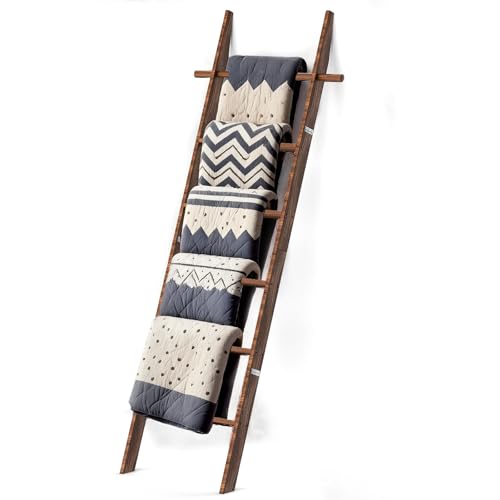
Pottery Barn’s offering strikes a balance between traditional craftsmanship and everyday utility. It feels substantial under the hand, much like a well-turned wooden needle, providing a sense of security for your heavier cabled afghans.
The wood is finished to a satin sheen, which is ideal for preventing snagging. If you’ve ever had a splinter catch on a loose twist of singles yarn, you know exactly why this smooth finish is non-negotiable.
It’s a reliable workhorse for the knitter who wants a classic look without the custom-furniture price tag. It holds its own even when loaded with dense, aran-weight blankets.
Wayfair Basics Wood Blanket Ladder: Best Budget

Sometimes you need a simple solution that gets the job done so you can spend your budget on more hand-dyed hanks. This basic ladder is functional and straightforward, providing a dedicated space for your finished works.
Since the finish on budget pieces can sometimes be a bit porous, I recommend a quick check for any rough spots before hanging your knits. A light sanding with a high-grit paper can fix a minor imperfection in seconds, ensuring your delicate wools stay safe.
It’s a great entry-level choice for a knitter just starting to build their collection of display pieces. It does exactly what it promises without unnecessary bells and whistles.
West Elm Mid-Century Blanket Rack: Best Design

The tapered legs and warm tones of this rack evoke a classic, mid-century aesthetic that pairs beautifully with earthy, natural-fiber knits. It feels intentional and curated, making your blankets look like they belong in a design magazine.
The spacing of the rungs is slightly wider than average, which is perfect for displaying the texture of a complex stitch pattern. You can drape a blanket so that the cables or lace are clearly visible from across the room.
If your home decor leans toward the curated and retro, this is the piece that ties your knitting projects into the overall room design. It treats your blankets like the art they truly are.
Ballard Designs Entryway Ladder: Best Sturdy Pick

When you are dealing with heavy, oversized throws made from chunky-weight yarns, stability is your primary concern. This ladder is built with a wider base and thicker rungs to handle the weight of substantial projects.
The structural integrity here is reminiscent of a well-built floor loom; it doesn’t shift or lean precariously under a heavy load. This gives you the peace of mind to hang your most prized, time-intensive blankets without worrying about the ladder tipping.
It is a heavier piece, so it’s best suited for a permanent spot in your home. Once you place it, it stays put, providing a solid foundation for your heaviest fiber creations.
Crate & Barrel Teak Blanket Ladder: Best Quality
Teak is a superior choice for fiber storage because of its natural oils and smooth, dense grain. It is incredibly durable and inherently resistant to the minor fluctuations in humidity that can affect other types of wood.
For your most precious hand-knits—perhaps those made from rare breed wool or delicate cashmere—this ladder provides a safe, non-reactive environment. The wood is naturally snag-free, which is the ultimate goal for any knitter.
While it is an investment, the quality of the material ensures it will last for decades. It is a tool that will support your knitting journey for as long as you continue to create.
How to Select the Right Ladder for Your Knitwear
- Check the finish: Always run your hand along the rungs; if you feel a snag, your yarn will too.
- Assess the weight: Match the ladder’s sturdiness to the weight of your heaviest project.
- Consider the rung diameter: Thicker rungs create less of a "crease" in the fabric over time.
- Evaluate the lean angle: A steeper angle is better for small spaces, but a shallower angle is more stable.
Protecting Your Hand-Knits from Ladder Snagging
If you find a ladder you love but the wood feels slightly "grabby," don’t despair. A light application of furniture wax or a quick pass with 400-grit sandpaper can turn a potentially dangerous surface into a smooth, fiber-friendly one.
Always be mindful of the "drape" when hanging your knits. If a piece is exceptionally heavy, avoid hanging it by a single corner, as this can distort the stitch gauge and stretch the yarn over time.
Instead, fold the blanket over the rung so the weight is distributed evenly across the width of the wood. This preserves the integrity of your blocking and keeps the fabric looking fresh.
Tips for Organizing Blankets on Display Ladders
I like to organize my ladders by fiber weight and color, much like I organize my stash. Keep your lightest, most delicate lace projects on the top rungs where they get the most light and the least handling.
Place your heavier, sturdier wool or cotton blends on the bottom rungs. This keeps the center of gravity low and makes the ladder more stable while creating a visually pleasing gradient.
Remember to rotate your blankets every few months. This prevents the fabric from "setting" into a permanent fold and gives you a chance to inspect your work for any signs of moth activity or fiber fatigue.
Displaying your hand-knits is the final, rewarding step of the long process from raw fiber to finished object. By choosing a wooden ladder that respects the delicate nature of your yarn, you ensure your blankets remain as beautiful as the day you cast off. Treat your display space with the same care you give your needles, and your work will be enjoyed for years to come. Happy knitting, and enjoy the beautiful gallery you are creating in your home.