6 Best Metal Yarn Feeders For Multi-strand Work
Optimize your multi-strand projects with our top 6 metal yarn feeders. Discover durable, precision tools that ensure smooth tension and prevent tangling.
Managing multiple strands of yarn while knitting colorwork or holding a lace-weight yarn double can quickly turn into a tangled, uneven nightmare. Metal yarn feeders act as a third hand, providing the consistent tension necessary to keep your stitches uniform and your hands fatigue-free. Whether you are tackling a complex Fair Isle sweater or simply holding a strand of mohair with your wool, the right tool makes all the difference. This guide explores the best metal tension rings and guides to help you achieve professional-level results with ease.
Clover Adjustable Yarn Guide: Best Overall Choice
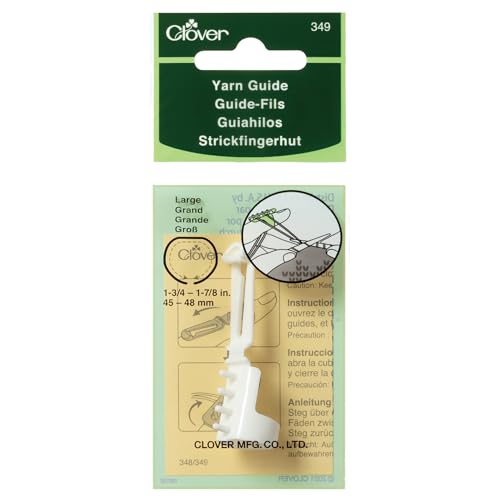

The Clover Adjustable Yarn Guide is a staple in many knitting bags for good reason. Its simple, functional design allows you to thread multiple strands through a single, sturdy metal loop that sits comfortably on your finger.
Because it is fully adjustable, it fits a wide range of finger sizes without feeling restrictive. This is vital when you are working on a long project, as your fingers may swell slightly during extended knitting sessions.
The primary benefit here is the consistent tension control it provides across different yarn weights. If you are holding a fingering weight yarn with a strand of silk, this guide keeps them from twisting around each other. It is the reliable "workhorse" of the bunch.
KnitPro Yarn Tension Ring: Best for Ergonomics

If you find that traditional tension rings dig into your skin or cause cramping, the KnitPro Yarn Tension Ring is a game-changer. It features a unique, open-style design that prioritizes comfort during long-haul knitting.
The metal is polished to a high sheen, ensuring that even delicate yarns like alpaca or cashmere glide through without snagging or pilling. This is critical for preventing the "fiber fatigue" that occurs when yarn is constantly dragged against a rough surface.
This ring is particularly effective for those who knit with a high-tension grip. By offloading the tensioning work to the ring, you can relax your index finger, which significantly reduces the risk of repetitive strain during marathon knitting sessions.
Cocoknits Metal Yarn Guide: Best Minimalist Pick

Cocoknits is known for their sleek, modern approach to knitting tools, and their metal yarn guide is no exception. It is designed to be worn like a ring, featuring a subtle loop that keeps your yarn strands perfectly separated.
This guide is ideal for knitters who prefer an unobtrusive tool that doesn’t get in the way of their natural hand movements. It feels like a piece of jewelry rather than a bulky piece of hardware, which helps maintain a natural rhythm.
Because it is so minimalist, it requires a bit of practice to master the threading technique. However, once you get the hang of it, it offers the most fluid yarn flow of any option on this list, making it perfect for speed knitters.
Tulip Yarn Tension Ring: Best for Smooth Feeding

The Tulip Yarn Tension Ring is engineered with a focus on precision and smoothness. The metal guide is shaped in a way that minimizes friction, allowing the yarn to travel from the ball to your needles with zero resistance.
This is an essential feature when working with sticky fibers like sticky wool or high-twist cotton. If your yarn catches even slightly, your gauge will fluctuate, leading to visible unevenness in your finished garment.
The ring is also quite durable, resisting the bending and warping that often plagues cheaper, thinner metal rings. If you are a high-volume knitter who produces several sweaters a year, this is an investment that will pay for itself in longevity.
Boye Adjustable Metal Guide: Best Budget Option
The Boye Adjustable Metal Guide is a classic, no-nonsense tool that is widely available and incredibly affordable. It is a simple metal band that you can squeeze or expand to fit your finger, making it a great entry point for beginners.
While it lacks the refined finish of more expensive options, it does exactly what it promises: it keeps your yarn strands organized. It is perfect for those who want to experiment with multi-strand knitting without committing to a premium price tag.
Keep in mind that the metal can be a bit sharp at the edges. A quick pass with a fine-grit nail file can smooth out any rough spots, ensuring your yarn stays pristine while you work on your project.
Prym Ergonomic Yarn Ring: Best for Multi-Strands

The Prym Ergonomic Yarn Ring is specifically designed for complex colorwork where you need to manage two or more strands simultaneously. It features multiple loops, allowing you to feed different colors without them tangling at the source.
This is a massive advantage for Fair Isle or Intarsia projects. By keeping your strands separated at the finger level, you eliminate the constant need to untwist your yarn balls, allowing you to focus entirely on your pattern.
The ergonomic shape ensures that the ring stays in place, even when you are moving your hands quickly. It is a robust, well-thought-out tool that bridges the gap between simple tension guides and complex knitting machines.
How Metal Feeders Improve Your Tension Control
Metal feeders work by acting as a fixed point of resistance between your yarn source and your needles. By forcing the yarn through a specific path, they smooth out the variations in tension caused by your finger movements.
This is especially helpful when you are shifting between knit and purl stitches. Since knit and purl stitches naturally have different tension profiles, a guide helps normalize the pull on the yarn, resulting in a much more consistent fabric.
Ultimately, these tools help you achieve a "professional" look where every stitch appears uniform. If you struggle with inconsistent gauge—where some rows look tighter than others—a metal feeder is often the simplest fix.
Why Multi-Strand Knitting Requires Yarn Guides
Multi-strand knitting involves holding two or more yarns together as if they were a single strand. Without a guide, these strands tend to twist around each other, creating a "cabled" effect that can ruin the intended texture of your project.
Guides keep the strands parallel, ensuring that the finished fabric has the drape and thickness you expect. This is critical for projects like mohair sweaters, where the halo of the yarn can easily become matted if the strands are constantly tangling.
Furthermore, guides allow you to maintain an even tension across all strands. If one strand is pulled tighter than the other, it will "pucker" the fabric, leading to a distorted, wavy surface that no amount of blocking can fully correct.
Essential Tips for Using Metal Tension Rings

- Test your tension: Always knit a small swatch with the ring before starting your main project to ensure your gauge hasn’t changed.
- Keep it clean: Occasionally wipe your metal ring with a soft cloth to remove any fiber dust or oils that can build up and increase friction.
- Adjust for fiber: If you are using a slippery silk, you may need to wrap the yarn around the guide an extra time to maintain the necessary tension.
- Mind your grip: Don’t press the ring against your finger too tightly; it should be snug but comfortable enough that it doesn’t restrict circulation.
Troubleshooting Common Yarn Snagging Problems
If your yarn is snagging, the first thing to check is the guide itself for any microscopic burrs or sharp edges. Use a magnifying glass to inspect the loop; if you find a rough spot, gently buff it with fine-grit sandpaper.
Another common cause is the angle at which the yarn enters the guide. If the yarn is being pulled at a sharp, unnatural angle, it will increase friction and cause the fiber to catch. Try adjusting your hand position to create a straighter path for the yarn.
Finally, consider the fiber content. Highly textured or "hairy" yarns like mohair or unspun wool are prone to snagging on any guide. In these cases, a wider, smoother loop is always better than a tight, restrictive one.
Investing in a quality metal yarn feeder is one of the most effective ways to elevate your knitting practice and reduce hand fatigue. By providing a stable, consistent path for your yarn, these tools allow you to focus on the joy of creating rather than the frustration of tangled strands. Remember that the "best" tool is the one that feels most natural to your unique knitting style. Take the time to experiment with these options, and you will likely find that your stitches become more uniform and your knitting sessions far more enjoyable.