6 Best Project Logs For Documenting Colorwork Techniques
Mastering colorwork requires precision. Discover our top 6 project logs to track tension, yarn floats, and pattern repeats for perfect, professional results.
Mastering stranded colorwork is as much about precise record-keeping as it is about nimble fingers and rhythmic tension. When you are juggling multiple colors and navigating complex floats, a reliable project log becomes your most valuable tool for troubleshooting and future success. These specialized notebooks allow you to capture the subtle nuances of your technique that standard patterns simply cannot document. By tracking your progress, you transform every project into a personalized reference guide for your evolving craft.
The Knitters Pride Mindful Collection Project Log


This logbook is designed for the knitter who values a calm, methodical approach to their craft. It offers a structured, serene layout that encourages you to slow down and record the details of your session rather than just rushing to finish a row.
The pages are beautifully organized to include spaces for needle sizes, yarn weights, and even a dedicated section for swatching. For colorwork, the clear layout helps you note which color was held in the left hand versus the right, a detail often forgotten once the project is blocked.
The paper quality is excellent, holding up well to both ink and pencil without bleed-through. If you prefer a tactile, meditative record-keeping experience, this is the gold standard.
Cocoknits Maker’s Journal: Best For Organization
The Cocoknits system is built for the knitter who treats their craft like an engineering project. It is highly modular, allowing you to rearrange pages to suit your specific workflow, which is a massive advantage when juggling multiple colorwork charts.
The journal includes specialized worksheets for tracking gauge, which is vital when your colorwork tension differs from your stockinette tension. You can easily tuck in yarn labels or small swatches using their clever adhesive pockets.

The primary trade-off is the initial learning curve of the system. However, once you master the layout, it becomes an indispensable hub for your entire knitting library.
Fringe Supply Co. Field Notes: Best Minimalist Log
Sometimes, the best log is the one that doesn’t get in your own way. These slim, portable notebooks are perfect for the knitter who wants to jot down a quick note about a float length or a color change while on the go.
Because they are so compact, you can easily carry one in your project bag alongside your circular needles and stitch markers. They don’t have pre-printed fields, which gives you the freedom to sketch out your own colorwork motifs or shorthand notes.
They are best for knitters who find pre-formatted journals too restrictive. Keep one in every project bag to ensure you never lose track of a crucial modification.
The Yarn Journal: Best For Detailed Colorwork Data
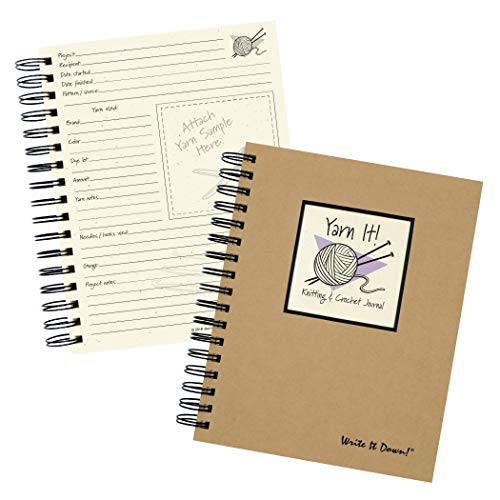
If you are a data-driven knitter, this journal will feel like a dream come true. It provides dedicated space for recording the specific WPI (wraps per inch) of your yarn, which is essential for predicting how your colors will interact in a stranded fabric.
The journal encourages you to document the specific "carry" method you used for your floats, such as trapping every three stitches or using a specific color-dominance technique. This level of detail is what separates a good colorwork piece from a professional-grade garment.
It is a substantial book, best suited for your home studio rather than a portable project bag. Use it to build a comprehensive library of your colorwork experiments.
Making Magazine Daily Project Planner: Best Layout

This planner excels at bridging the gap between daily life and your knitting practice. Its layout is incredibly intuitive, offering a bird’s-eye view of your progress that helps you manage long-term colorwork projects without feeling overwhelmed.
The visual space provided for sketching charts is generous, allowing you to map out complex motifs before you ever cast on. It also includes helpful prompts that remind you to check your tension after a long break from the needles.
It is the perfect choice for the knitter who balances multiple projects simultaneously. The layout keeps your colorwork goals front and center.
The Knitter’s Project Notebook: Best For Beginners

This notebook strips away the complexity of advanced charting and focuses on the essentials. It is an excellent starting point for a knitter just beginning to explore the world of stranded colorwork.
The prompts are simple and direct, asking you to record the basics: yarn fiber, needle size, and the result of your first swatch. By documenting these simple elements, you begin to understand how fiber content—like the difference between a bouncy wool and a slippery alpaca—affects your colorwork tension.
The bottom line is accessibility. It provides a gentle introduction to the habit of record-keeping without feeling like homework.
Why Documenting Colorwork Strands Is Essential
Colorwork is notoriously sensitive to changes in tension, fiber elasticity, and even the humidity of your knitting environment. If you don’t document your process, you are essentially reinventing the wheel every time you start a new chart.
When you record your strand management, you learn exactly why a particular motif might have puckered or why your floats were too loose. This documentation allows you to replicate your successes and effectively troubleshoot your failures.
Without a log, your knitting growth remains anecdotal. With one, it becomes a documented, repeatable skill set.
Essential Data Points For Complex Colorwork Charts
To truly master colorwork, you must track more than just the pattern name. Focus on documenting your color dominance strategy, noting which color you held in the dominant position to ensure your motifs pop against the background.
- Float length: Note how many stitches you carried a color before trapping it.
- Fiber blend: Document the "memory" of the yarn; wool holds tension better than cotton.
- Needle material: Record if you used wood (grippy) or metal (slick) tips, as this significantly impacts float tension.
Consistently tracking these variables will reveal your personal "knitting signature." This is the key to achieving professional-looking results every time.
How To Track Float Lengths And Tension Changes
Tracking float lengths is the most effective way to prevent the dreaded "puckered" colorwork. If you notice your fabric pulling, document the exact point in the row where you stopped trapping your floats.
You might find that you need to go up a needle size for your colorwork sections to compensate for the "tightness" of the floats. Record these needle changes clearly in your log, as it is easy to forget them once you switch back to plain stockinette.
Always swatch, and always log the results of that swatch. A swatch is a small, low-stakes environment where you can test your float management before committing to a full sweater.
Tips For Archiving Your Swatches And Yarn Samples
Archiving your swatches is like creating a physical library of your knitting history. Use small, acid-free bags or a dedicated binder to store your swatches, attaching a tag with the yarn brand, colorway, and needle size used.
When you revisit a project years later, seeing the physical swatch is far more informative than reading a note. It allows you to feel the drape and see how the colors have settled after blocking.
Treat your swatches as reference material. A well-archived swatch is a shortcut to your next successful project.
Investing time in a project log is the hallmark of a knitter who is serious about their craft’s longevity and quality. By documenting your colorwork journey, you move from simply following instructions to truly understanding the mechanics of the fabric you create. Choose a log that fits your personal style, stay consistent with your entries, and watch your colorwork skills flourish. Happy knitting, and may your floats always be perfectly tensioned.