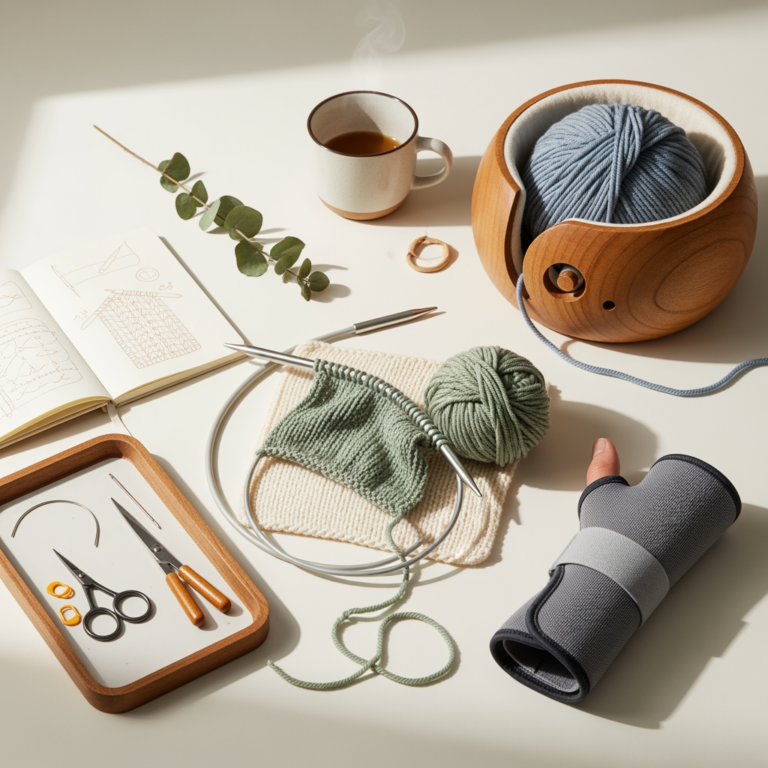
6 Best Wrist Rests For Long Loom Sessions
Enhance your loom weaving with these 6 top-rated wrist rests. Discover ergonomic designs that reduce strain and boost comfort during long, creative sessions.
Hours spent at the loom or working through intricate colorwork can take a toll on your wrists, often leading to the kind of fatigue that turns a relaxing hobby into a painful chore. Finding the right wrist rest is not just about comfort; it is about maintaining the fluid, repetitive motions required for consistent tension and gauge. This guide explores the best ergonomic supports to keep your hands moving smoothly through every row. By investing in the right gear, you ensure that your passion for fiber arts remains a sustainable, lifelong practice.
Delta Hub Carpio 2.0: Best Ergonomic Loom Support


The Carpio 2.0 is a radical departure from traditional, long-pad wrist rests because it only supports the base of your palm. For loom knitters, this design is brilliant because it moves with your hand as you navigate across the pegs.
It effectively lifts your wrist to a neutral position, which is critical when you are performing the repetitive "hook and lift" motion for hours. By keeping your wrist elevated, you reduce the pressure on the carpal tunnel, which is often aggravated by the constant flicking of the wrist during loom knitting.
However, this design requires a bit of an adjustment period. If you are used to resting your entire forearm on a soft surface, the Carpio might feel too minimal at first. It is best suited for makers who maintain a steady, anchored posture while working.
Kensington Memory Foam Rest: Best for Long Hours

When you are tackling a massive project like a weighted blanket or a series of chunky scarves, you need a wrist rest that doesn’t lose its shape. The Kensington Memory Foam rest is a classic for a reason: it provides a consistent, cushioned foundation that cradles the wrists during long sessions.
The memory foam is firm enough to provide support but soft enough to prevent "pressure points" from developing during a marathon knitting day. If you find your wrists getting sore after working with heavier, high-ply wools, this cushioning can be a lifesaver.
The trade-off here is heat retention; memory foam can get warm against the skin. If you are working in a drafty studio, this is a benefit, but in the heat of summer, you might find yourself needing a break to let your skin breathe.
Gimars Gel Wrist Pad: Best Value for Loom Crafters

If you are just starting out with loom knitting and don’t want to break the bank, the Gimars gel pad is an excellent entry point. It offers a cooling sensation that is quite refreshing when your hands are working hard to manipulate yarn through tight gauge patterns.
The gel material is inherently easier to clean than fabric-covered rests, which is a major perk if you’re working with loose fibers or dusty natural yarns. A quick wipe-down keeps it sanitary and ready for your next project.
Be aware that the gel can feel a bit "bouncy" compared to foam. If you prefer a very rigid, immovable surface, this might feel slightly unstable, but for most hobbyists, it strikes the perfect balance between comfort and cost.
Razer Ergonomic Wrist Rest: Best Firm Feel Choice

The Razer rest is designed with a high-density foam core that feels significantly firmer than the competition. For those who find that "sinking in" to a soft rest causes their wrists to collapse into an awkward angle, this firm support is a game-changer.
This firmness helps maintain a straight line from your elbow to your fingertips, which is the gold standard for preventing repetitive strain. When you are doing intricate work like managing multiple yarn colors on a round loom, that structural stability is vital.
It is wrapped in a smooth leatherette finish, which is excellent for sliding your hands across the loom without snagging. Just keep in mind that the firm surface is less forgiving if you have sensitive skin or bony wrists.
HyperX Wrist Rest: Best Cooling Gel Technology

The HyperX rest utilizes a specialized cooling gel layer that is specifically designed to dissipate heat during intense, repetitive activity. If you tend to get "hot hands" while knitting, this is the most effective way to stay comfortable without sacrificing support.
The base is made of anti-slip rubber, which ensures the rest stays exactly where you need it, even if you are working on a slick table surface. This is particularly useful if you are using a heavy-duty loom that requires a bit of force to manage.
It is a thicker, more substantial rest, which means it works best if your workspace is at a standard desk height. If your loom is elevated or on a lap tray, ensure the height of this rest aligns with your natural hand position to avoid creating a new strain point.
3M Leatherette Wrist Rest: Best Durability Pick

The 3M Leatherette rest is built to last through years of constant use. The material is resistant to the oils and debris that naturally accumulate during fiber arts projects, making it the most low-maintenance option on this list.
Its profile is relatively low, which is ideal for knitters who prefer to keep their hands closer to the workspace. If you have been knitting for years and have developed a very efficient, low-impact technique, you likely don’t need a massive cushion.
The only downside is that the leatherette can feel a bit "tacky" if your hands get sweaty. A simple trick is to keep a small cotton cloth nearby to drape over the rest, which adds a layer of breathability while maintaining the support of the firm core.
Why Wrist Support Matters for Loom Knitting Pros
Loom knitting may seem less taxing than needle knitting, but the repetitive nature of the hook-and-lift motion is deceptive. Over thousands of stitches, even a slight misalignment in your wrist can lead to inflammation or tendonitis.
A good wrist rest acts as a buffer, forcing your body into a more neutral, ergonomic posture. When your wrist is properly supported, your muscles don’t have to work as hard to stabilize your hand, allowing you to knit for longer periods with less fatigue.
Think of it as the ergonomic equivalent of choosing the right needle material; just as you wouldn’t use slick metal needles for slippery mohair, you shouldn’t neglect your wrist support when you are putting in serious hours at the loom.
Essential Ergonomics for Repetitive Loom Motions
Ergonomics in knitting isn’t just about the rest; it is about the entire kinetic chain from your shoulder to your fingertips. The goal is to minimize tension, which is the enemy of both your joints and your final stitch gauge.
Ensure your loom is at a height where your shoulders can remain relaxed and your elbows are at roughly a 90-degree angle. If your shoulders are hunched, no amount of wrist support will prevent pain.
Take frequent "micro-breaks" every thirty minutes to drop your hands and shake them out. This simple act resets your nervous system and prevents the buildup of tension that leads to long-term fatigue.
How to Position Your Wrists for Loom Efficiency
Your wrists should remain in a "neutral" position, meaning they are neither bent up, down, nor sideways. Imagine a straight line running from your forearm through your knuckles; this is the position of least resistance.
When using a wrist rest, your wrist should hover or gently touch the surface, not dig into it. If you find yourself pressing down hard, you are likely using too much tension in your hands, which can lead to overly tight stitches.
Adjust your loom’s angle or your chair height until your hands can move freely across the pegs without having to reach or over-extend. Efficiency in knitting is all about making the smallest, most precise movements possible.
Best Stretches to Prevent Loom Knitting Fatigue
Before and after a long session, perform gentle wrist rotations to keep the tendons supple. Slowly rotate your wrists in circles, then flex them forward and backward, holding each stretch for ten seconds.
Another effective stretch is the "prayer stretch," where you place your palms together in front of your chest and slowly lower your hands until you feel a gentle pull in your forearms. This helps counteract the tightening that occurs when you spend hours holding a hook.
Finally, don’t forget to stretch your fingers and thumbs, as they do the heavy lifting in loom knitting. Gently pulling each finger back individually can release the tension that builds up from holding the loom steady.
Choosing the right wrist rest is a personal journey that depends on your unique anatomy and your specific knitting style. Whether you prefer the firm support of a 3M rest or the targeted elevation of the Carpio, the goal is always to protect your hands so you can keep creating for years to come. Listen to your body, experiment with your posture, and never underestimate the value of a little extra support. Happy knitting, and may your rows always be smooth and your tension perfectly consistent.