6 Best Needle Identifiers For Worn Markings To Try
Struggling with faded needle sizes? Discover the 6 best needle identifiers that restore clarity, ensuring your sewing projects remain precise and organized.
We have all been there: pulling a well-loved pair of needles from the bag only to find the size markings completely worn away by friction and time. Without a reliable way to verify your needle diameter, you risk ruining your gauge and ending up with a sweater that doesn’t fit or a sock that’s far too loose. Investing in a dedicated needle identifier is one of the most practical steps you can take to protect your project outcomes. Here are the best tools to ensure you never have to guess your needle size again.
Susan Bates Knit Chek: The Classic Standard
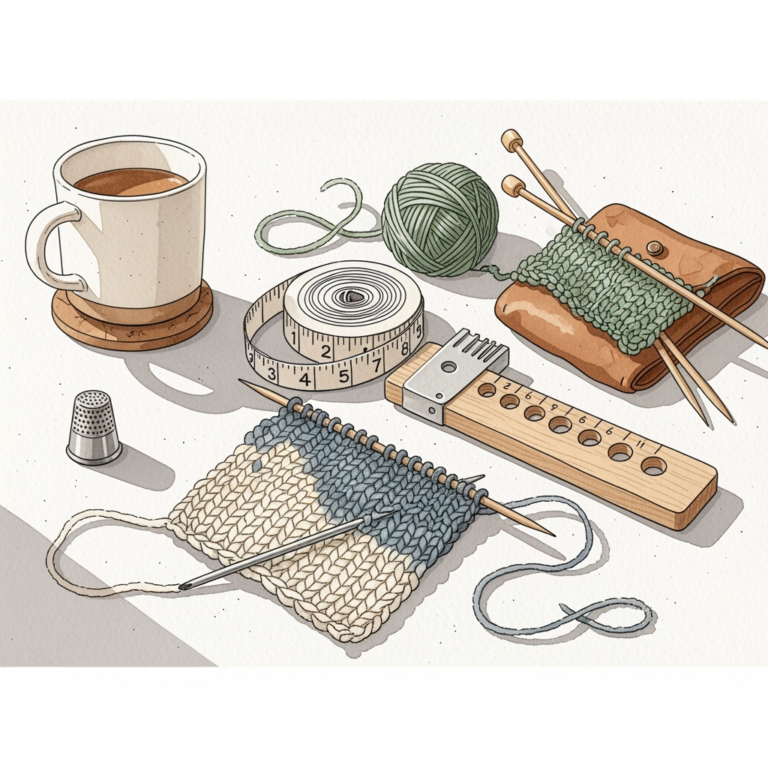
The Susan Bates Knit Chek is a staple in almost every seasoned knitter’s notions bag for a reason. It is a simple, flat, plastic ruler that provides both metric and US sizing holes, along with a built-in stitch gauge.
Because it is thin and lightweight, it doesn’t add bulk to your project bag. It is an incredibly affordable, no-frills option that gets the job done without any fuss.
However, the plastic can become brittle over many years of heavy use. If you are looking for a lifelong tool, this may eventually need replacing, but for the price, it remains the gold standard for utility.
Clover Knitting Needle Gauge: Precision Tool
Clover’s gauge is widely respected for its high-contrast, easy-to-read markings. When you are working in low light or dealing with eye strain, the clarity of the numbers printed on this tool is a massive advantage.
It is particularly useful for those who frequently switch between different needle materials, like slippery nickel-plated tips or grippy bamboo. The holes are precisely calibrated, ensuring that even your finest lace needles won’t slip through incorrectly.
While it is made of durable plastic, the surface can scratch if it’s tossed into a bag with metal scissors or cables. Keep it in a small notions pouch to ensure the numbers stay legible for years to come.
ChiaoGoo Needle Gauge: Durable Metal Choice
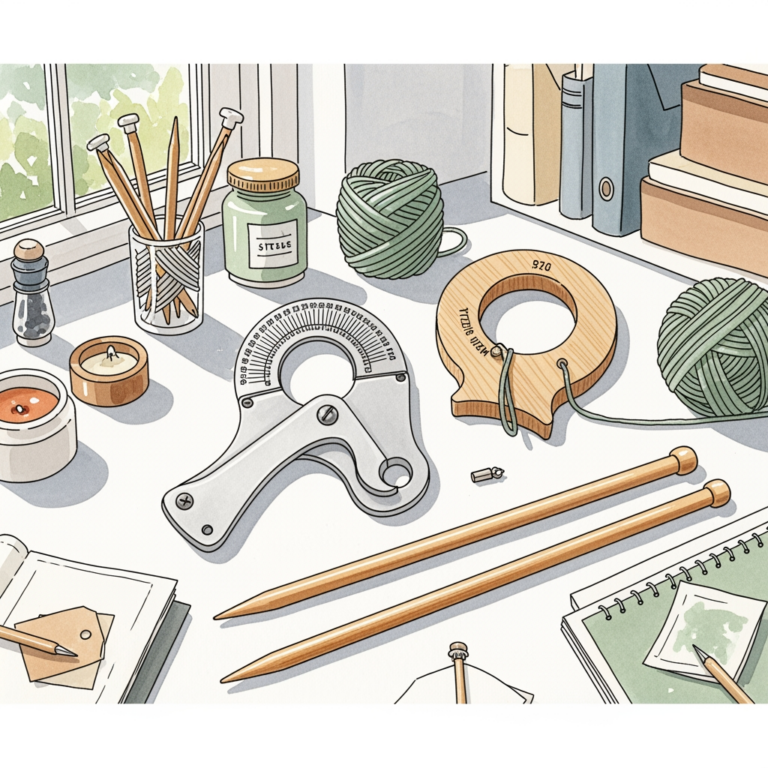
If you are tired of plastic gauges snapping or warping, the ChiaoGoo metal gauge is a fantastic upgrade. It feels substantial in the hand and is virtually indestructible under normal knitting conditions.
This tool is exceptionally helpful for measuring circular needles, as the metal won’t bend when you are trying to maneuver a long cord through the sizing hole. It is a "buy it once" kind of tool that will likely outlive your current collection of needles.
The only downside is that the metal can be slightly noisy if it clinks against your needles while you work. It is a small trade-off for the peace of mind that comes with a tool that will never break.
Knitter’s Pride Needle Sizer: Easy Reading


Knitter’s Pride has designed their sizer with the user’s comfort in mind, focusing on large, bold text. If you have ever squinted at a tiny, stamped number on a metal needle, you know exactly why this level of visibility matters.
The layout is intuitive, making it very easy to find the right hole quickly. It is a great choice for beginners who are still learning the difference between US and metric sizing conventions and need a clear reference point.
Because it is a bit larger than some other options, it’s best suited for a home knitting station rather than a tiny travel kit. It is a reliable, sturdy tool that prioritizes readability above all else.
Cocoknits Needle Gauge: Modern Design Pick
The Cocoknits gauge is a favorite among modern knitters for its sleek, minimalist aesthetic and clever design. It is made from a sturdy, eco-friendly material that feels great to the touch and looks beautiful on your craft table.
Beyond just sizing, it includes a handy cutout for measuring your gauge swatch. This is a vital feature, as knowing your stitches per inch is the difference between a garment that fits and one that ends up in the "oops" pile.
It is definitely a more premium item, but the added functionality makes it worth the investment. It’s perfect for the knitter who appreciates tools that are as functional as they are stylish.
Brittany Birch Needle Gauge: Natural Option

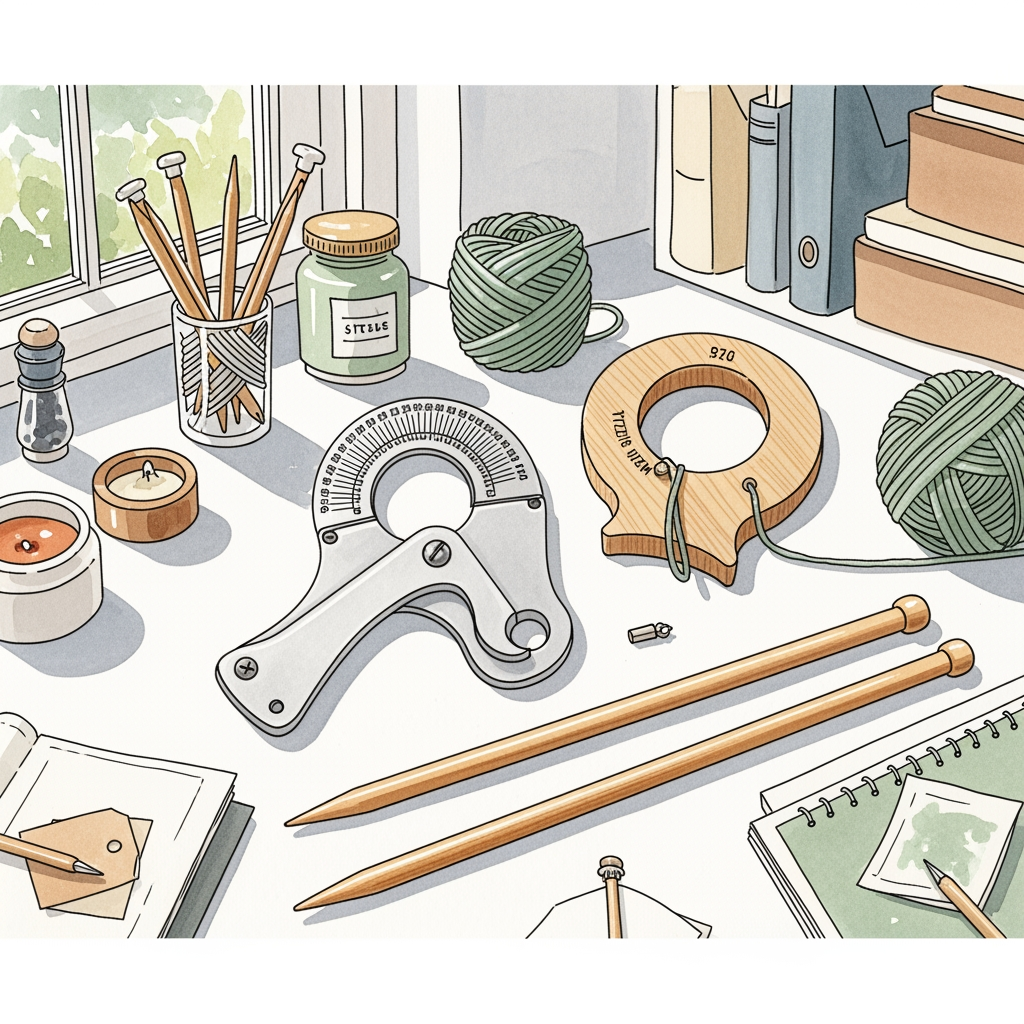
If you prefer to work with natural materials, the Brittany Birch gauge is a delightful addition to your kit. It is crafted from sustainably harvested birch, offering a warm, tactile experience that plastic tools simply cannot replicate.
Because it is wood, it is gentle on your needles and won’t scratch the finish of your favorite wooden or resin tips. It also has a lovely, classic look that fits perfectly with a collection of high-end wooden needles.
Be aware that wood can be slightly less precise than laser-cut metal if it is exposed to extreme humidity or temperature changes. However, for most standard knitting needs, it is more than accurate enough to keep your projects on track.
Why Needle Markings Fade After Constant Use
Needle markings typically fade because of the constant friction between the needle, your hands, and the yarn fibers. Over time, the oils from your skin, combined with the abrasive nature of wool or cotton, slowly wear away the laser-etched or printed numbers.
This happens faster if you have a "tight" grip or if you tend to knit with very abrasive, rustic wools. Even high-quality needles will eventually lose their markings if they are your "go-to" pair for every project.

Don’t panic if your favorite needles go blank; it is a sign that they are well-loved and productive. Instead of trying to remark them with permanent markers, which often smear, simply keep a reliable gauge nearby.
How to Measure Needles Without Any Markings
When you find a needle with no markings, start by comparing it to a known size in your kit. If you have a pair of needles that you are sure are 4.0mm, hold them up against the mystery needle to see if they match.
If you don’t have a reference, use your needle gauge by testing the needle in progressively smaller holes until it fits snugly without forcing it. Never force a needle into a hole, as this can damage the gauge or the needle tip itself.
Always test the needle in the hole that allows it to pass through with just a hint of resistance. If it falls through the hole easily, it is too small; if it doesn’t fit at all, it is too large.
Tips for Keeping Your Needle Sizes Organized
The best way to prevent size confusion is to store your needles in a dedicated case with labeled pockets. If you use circular needles, consider using small tags or clips to label the cords so you don’t have to measure them every time you pull them out.
Try to cultivate the habit of putting your needles away immediately after finishing a project. It sounds simple, but a clean workspace is the best defense against the "mystery needle" phenomenon.
If you have a large collection, keep a master list or a digital inventory of your needles. This helps you avoid buying duplicates and ensures you always know exactly which tools you have on hand.
Essential Tools for Every Serious Knit Kit
A solid knit kit is about more than just needles and yarn; it is about the tools that make the process smoother. Beyond a needle gauge, you should always have:
- A flexible tape measure for checking body measurements and length.
- A pair of sharp snips for clean yarn cuts.
- Removable stitch markers to keep track of pattern repeats.
- A tapestry needle for weaving in ends securely.
These items turn a hobby into a craft, allowing you to focus on the rhythm of your stitches rather than hunting for misplaced tools. When you have a reliable system for measuring and organizing, your confidence as a knitter will grow significantly.
Having a reliable needle identifier is the hallmark of a knitter who values their craft and their time. Whether you choose the indestructible metal of ChiaoGoo or the natural warmth of Brittany Birch, the goal remains the same: accuracy in your gauge and peace of mind in your project. Don’t let worn markings dictate the success of your knitting; keep a gauge close by and keep creating. Happy knitting!