6 Best Desk Organizers For Winding Accessories
Keep your workspace clutter-free with these top six desk organizers. Discover efficient solutions to store cables and accessories for a more productive setup.
Winding your own yarn from hanks into cakes is a rite of passage for every dedicated knitter. While it might seem like a simple mechanical task, using the right tools can save you hours of frustration and prevent your precious fiber from becoming a tangled mess. Investing in quality winding equipment changes the way you interact with your stash, turning a chore into a seamless preparation process. Here are the best desk organizers and tools to keep your winding station efficient and stress-free.
Stanwood Needlecraft Tabletop Swift: Best Overall
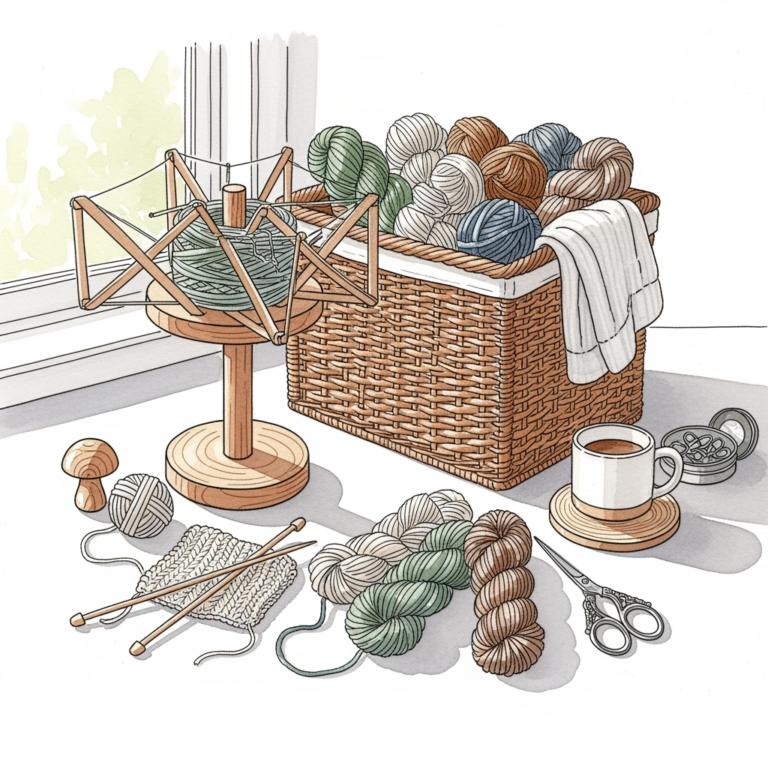
The Stanwood Needlecraft Tabletop Swift is widely considered the gold standard for home knitters. Its umbrella-style design opens smoothly, allowing you to mount hanks of various circumferences with minimal effort.
What sets this model apart is the sheer stability of its base. When you are winding a delicate, hand-dyed lace weight yarn, the last thing you want is a swift that wobbles or tips over, which often leads to uneven tension.
This swift is perfect for those who frequently switch between different yarn weights. Whether you are prepping a bulky wool for a winter sweater or a fine silk blend for a shawl, the adjustable arms handle the transition with grace.
Strauch Jumbo Ball Winder: Best For Large Skeins
If you are a fan of sweater projects, you know the pain of running out of yarn halfway through a row. The Strauch Jumbo Ball Winder is designed specifically to handle those massive 400-to-500-gram skeins that would choke a standard winder.
This tool is built like a tank, featuring a heavy-duty metal gear system that doesn’t skip a beat under pressure. It creates a large, center-pull cake that remains stable even when you reach the very end of the yarn.
While it carries a higher price tag, it is an investment for the prolific knitter. If you find yourself winding multiple hanks a week, the time saved by not having to change cakes mid-project is well worth the desk space it occupies.
Lacis Wooden Yarn Swift: Best For Delicate Yarns
For those who prioritize aesthetics and gentle handling, the Lacis Wooden Yarn Swift is a beautiful, functional choice. Crafted from high-quality wood, it offers a smooth, snag-free surface that is essential for fragile fibers like mohair or single-ply merino.
Wooden swifts provide a natural friction that can actually help prevent the yarn from sliding off too quickly. This is particularly helpful when you are working with slippery materials like bamboo or silk blends that tend to "fly" off plastic swifts.
Keep in mind that wood requires a bit more care than plastic or metal. You should store it in a temperature-controlled environment to prevent warping, which could eventually lead to uneven rotation during the winding process.
KnitPicks Yarn Ball Winder: Best Budget Choice
The KnitPicks Yarn Ball Winder is the quintessential entry-level tool for new knitters. It is compact, lightweight, and gets the job done without requiring a significant financial commitment.
It excels at winding standard 100-gram hanks into neat, manageable cakes. While it may not have the heavy-duty gears of a professional-grade model, it is more than sufficient for the occasional hobbyist who only winds yarn a few times a month.
The trade-off here is durability; the plastic gears can wear down if pushed too hard or used for massive, heavy skeins. Treat it gently, and it will serve you well for years of standard project prep.
Nancy’s Knit Knacks Heavy Duty Swift: Best Build
When precision and longevity are your top priorities, Nancy’s Knit Knacks offers a heavy-duty swift that feels almost industrial. It is engineered with high-quality materials that ensure a perfectly balanced rotation every single time.
This swift is ideal for the knitter who frequently works with hand-spun yarn or artisanal hanks that vary in twist. Because it spins so freely, it places almost zero tension on the yarn, which is crucial for maintaining the structural integrity of your fiber.
It is a significant piece of equipment that commands a dedicated spot on your table. However, for those who view knitting as a lifelong craft, the mechanical reliability of this tool is unmatched.
ChiaoGoo Yarn Winder: Best Compact Desktop Tool


The ChiaoGoo Yarn Winder is a fantastic solution for knitters with limited space. It is surprisingly small, yet it offers a level of performance that rivals much larger, more cumbersome models.
Its compact footprint makes it easy to tuck away in a drawer when you aren’t using it. Despite its size, it is capable of winding a standard-sized cake with consistent tension, making it perfect for apartment dwellers or those with a crowded craft room.
If you are a "traveling knitter" who likes to bring your gear to retreats or workshops, this is the most portable option available. It packs easily and sets up in seconds, ensuring you can always have a tidy cake ready for your needles.
Essential Features To Look For In Winding Tools
When shopping for winding tools, focus on the mechanics of rotation and the quality of the materials. A smooth, silent spin is the most important indicator of a tool that won’t cause tangles.
- Adjustability: Ensure the swift can accommodate both small lace hanks and large, bulky skeins.
- Base Weight: A heavier base or a strong clamp is necessary to keep the tool from sliding across your table.
- Gear Quality: Metal gears generally offer better longevity than plastic, especially if you wind yarn frequently.
- Snag-Free Surfaces: Always check for rough edges or burrs that could catch on delicate fibers like alpaca or cashmere.
How To Properly Set Up A Swift For Smooth Winding
The secret to a perfect yarn cake is the initial setup of the swift. Always ensure the swift is positioned far enough away from the winder to allow the yarn to flow without tension, but close enough that you can easily guide it with your hand.
Place the hank on the swift so that it is centered and balanced. If the hank is lopsided, the swift will wobble, which causes the yarn to catch or twist as it feeds into the winder.
Gently untwist the hank before putting it on the swift to remove any pre-existing tangles. Taking an extra thirty seconds to prep your yarn at this stage will save you from a "yarn barf" disaster later on.
Maintaining Your Ball Winder For Longevity
Most ball winders are mechanical, meaning they rely on internal gears that need occasional care. If you notice your winder becoming noisy or difficult to turn, it may be time for a light cleaning.
Remove any stray fibers or dust that have gathered around the spindle or inside the gear housing. These tiny bits of fluff can build up over time and create friction that wears down the plastic components.
If the manufacturer recommends it, apply a tiny drop of food-grade lubricant to the moving parts. Never use heavy oils or household sprays, as these can stain your yarn and attract more dust.
Troubleshooting Common Yarn Tangling Problems
The most common cause of tangling is winding the yarn too quickly. Even with the best equipment, rushing the process can cause the yarn to jump off the spool or get caught in the gears.
If your yarn keeps tangling, check your tension. You should be able to guide the yarn with your fingers, providing just enough resistance to keep it taut but never pulling it tight.
Finally, ensure your winder is securely clamped to the table. If the winder moves during the process, the tension will fluctuate constantly, leading to a messy cake that is prone to collapsing.
Mastering the art of yarn winding is a small but mighty upgrade to your knitting workflow. By choosing the right swift and winder for your specific needs, you protect your yarn from unnecessary stress and ensure a smoother knitting experience. Take the time to set up your station correctly, and you will find that the process becomes a meditative part of your craft. Happy winding, and may your cakes always pull from the center without a hitch.