6 Best Yarn Tension Regulators For Consistent Gauge
Achieve perfect stitch uniformity with our top 6 yarn tension regulators. Discover tools that ensure consistent gauge and professional results for every project.
Achieving a consistent gauge is the hallmark of a master knitter, yet even the most experienced hands can struggle with tension fatigue. Whether you are working with slippery silk or grippy wool, your yarn’s path through your fingers dictates the final fabric’s drape and size. Tension regulators act as a mechanical guide to ensure every stitch is formed with the exact same amount of drag. This guide explores the best tools available to help you master your stitch uniformity and elevate your finished projects.
Pony Yarn Tension Ring: Best for Beginners


The Pony Yarn Tension Ring is an approachable, low-stakes entry point for anyone struggling to keep their yarn steady. Its simple, open-coil design allows you to slip your yarn through without complex threading, making it ideal for those who find traditional tensioning methods confusing.
If you are just starting your knitting journey, your hands are likely still learning the muscle memory required to hold both needles and yarn simultaneously. This ring acts as a "third hand," providing a consistent anchor point so you don’t have to worry about your yarn slipping through your fingers too loosely.
Because it is made of lightweight metal, it doesn’t add cumbersome weight to your hand during long knitting sessions. However, it lacks the sophisticated tension control of more advanced guides, meaning it won’t solve severe tension issues caused by tight gripping. It is a fantastic tool to get comfortable with the concept of a guide before upgrading to more specialized equipment.
Clover Knitting Thimble: Best for Colorwork
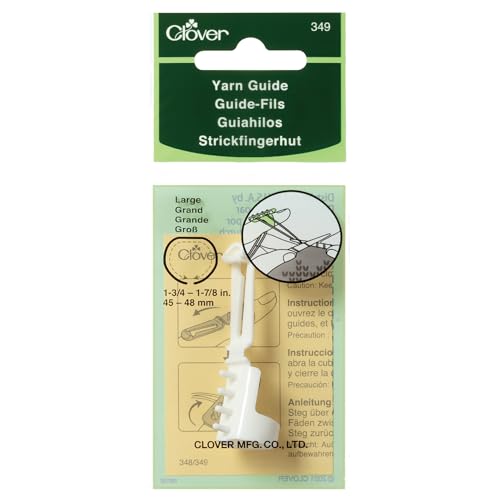
The Clover Knitting Thimble is a staple in many colorwork enthusiasts’ kits because it keeps two strands of yarn separated and organized. When you are juggling two colors, the biggest hurdle is preventing them from tangling or twisting around each other.
This thimble features small, distinct guides that allow you to feed two yarns through independently. By keeping the strands physically separated, you eliminate the friction that causes one color to pull tighter than the other, which is the primary cause of puckered stranded knitting.
One thing to note is that it requires a bit of practice to find the right finger position to avoid hand strain. If you are working on a large project like a Fair Isle sweater, the ability to maintain even tension across both colors is a game-changer for your final blocked fabric.
Tulip Yarn Guide Ring: Best Ergonomic Choice
The Tulip Yarn Guide Ring stands out for its thoughtful, sleek design that prioritizes comfort during marathon knitting sessions. Its smooth, rounded edges prevent the "digging" sensation that can occur with cheaper, stamped-metal alternatives.
If you suffer from hand fatigue or joint discomfort, this ring is an excellent choice because it sits comfortably on the finger without interfering with your natural knitting motion. It provides a gentle, consistent path for the yarn, which helps smooth out the natural fluctuations that occur when you get tired.
While it is more of an investment than a basic coil ring, the ergonomic benefit is palpable. It is particularly effective when working with high-twist yarns that tend to "jump" or snag if they aren’t guided properly.
Cocoknits Yarn Tension Ring: Best Versatility
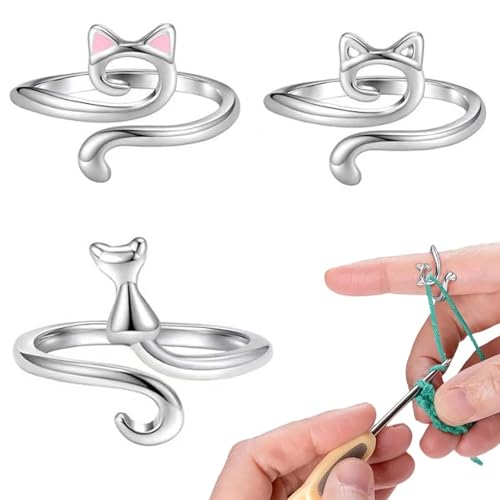
The Cocoknits Yarn Tension Ring is designed for the modern knitter who values both function and aesthetic. Its unique, adjustable design allows it to fit a wide range of finger sizes, making it a reliable choice if you tend to switch between different hand positions.
What makes this tool truly versatile is how it handles different yarn weights. Whether you are working with a delicate fingering-weight lace or a chunky, heavy-duty wool, the ring provides enough drag to keep your stitches uniform without distorting the fiber.
It is particularly useful for knitters who struggle with "rowing out"—a common issue where alternate rows look looser than others. By forcing the yarn to follow a specific path, the ring helps equalize the tension across every single stitch.
Prym Ergonomics Yarn Guide: Best for Comfort

The Prym Ergonomics Yarn Guide is a plastic-based solution that feels incredibly lightweight and unobtrusive on the finger. It is designed to be worn on the index finger, providing a smooth channel for the yarn to glide through as you knit.
This tool is perfect for those who find metal rings too cold or heavy against their skin. The plastic surface is exceptionally smooth, which is ideal for working with delicate fibers like alpaca or mohang, as it minimizes the risk of snagging or fiber breakage.
The main tradeoff is that the plastic construction is less durable than metal, but for the price, it offers a significant improvement in comfort. It’s an excellent choice for a knitter who wants a "set it and forget it" tool that doesn’t distract from the rhythm of the work.
Addi Knitting Thimble: Best for Two-Color Work

The Addi Knitting Thimble is a classic, heavy-duty tool designed specifically for the rigors of stranded colorwork. Its robust metal construction ensures that the yarn guides remain perfectly positioned even when you are working with multiple strands under tension.
If you are knitting a sweater with a complex pattern, you know that keeping your "floats" (the yarn carried across the back) at the right length is vital. This thimble helps you maintain that consistency by providing a fixed distance between the yarn source and your needle.
It is a bit more rigid than other options, which means it might take a few rows to get used to the feel. However, once you find the rhythm, the precision it offers for color-dominant knitting is unmatched.
Understanding Tension and Your Gauge Consistency
Tension is not just about how tightly you pull the yarn; it is about the interplay between your needle surface, the yarn’s fiber content, and your personal knitting style. Even if you are a "loose" knitter, you can achieve a professional-looking gauge by using a tool that creates a consistent drag.
- Slick needles: Use these with sticky wools to speed up your knitting.
- Grippy needles: Opt for wood or bamboo when working with slippery silk or bamboo yarns.
- Fiber memory: Remember that wool has high elasticity, while cotton has very little.
Your gauge is the measurement of stitches per inch, and it is the most important factor in whether a garment fits. If your tension fluctuates, your gauge will be uneven, leading to lumpy fabric or sizing disasters.
How to Properly Use a Tension Ring While Knitting
To get the most out of a tension ring, you must position it so that the yarn flows naturally from the ball to the needle without sharp angles. If the yarn has to make a harsh turn, you will create too much drag, resulting in stitches that are too tight.
Position the ring on your index finger so that the guide is pointing toward the knitting needles. Thread your yarn through the guide, then proceed with your normal knitting style, whether you are a "thrower" (English style) or a "picker" (Continental style).
You may find that you need to adjust your needle size slightly after you start using a tension ring. Because the ring provides consistent drag, many knitters find they can finally achieve the gauge specified in their pattern without having to constantly compensate for their own natural tension shifts.
Troubleshooting Common Issues With Tension Tools
The most common issue with tension tools is "over-tensioning," which happens when the yarn is forced through too many loops or guides. If your knitting feels stiff or you find it difficult to insert your needle into the next stitch, you are likely creating too much drag.
If you find that your yarn is snagging, check the guide for any small burrs or rough spots. Even high-quality tools can sometimes have manufacturing imperfections that can damage delicate fibers like cashmere or silk.
If the ring keeps sliding off your finger, try wearing it on the middle joint rather than the base. This provides a more secure fit and often aligns better with the natural movement of your knitting hand.
Tips for Maintaining Even Tension Without Tools
While tools are helpful, the foundation of good tension lies in your own hands. The most important tip is to keep your yarn path consistent; don’t let the yarn dangle or wrap around your fingers in a way that changes from row to row.
Practice "mindful knitting" by checking your stitches every few rows. If you notice a row looks looser, don’t be afraid to rip it back and re-knit it; consistency is a skill that improves with conscious repetition.
Finally, remember that blocking is the great equalizer. Even if your tension is slightly off, a proper soak and stretch can work wonders on your final fabric, smoothing out minor inconsistencies and setting your stitches into their final, beautiful place.
Investing in a tension regulator is a small change that yields significant dividends in the professional look of your handmade garments. Whether you choose a simple ring for beginners or a specialized thimble for complex colorwork, the goal remains the same: steady, rhythmic stitches. Don’t be afraid to experiment with different tools until you find the one that feels like an extension of your own hand. With the right support, you will find that your gauge becomes as reliable as your passion for the craft.