6 Best Yarn Bowls For Oversized Skeins To Try
Struggling with giant yarn cakes? Discover our top six yarn bowls designed for oversized skeins, ensuring tangle-free knitting and effortless tension control.
Nothing disrupts the flow of a complex cable pattern quite like a massive, roving-style skein tumbling off your lap and across the floor. For those of us working with bulky wool or massive, hand-dyed cakes, a standard-sized yarn bowl simply won’t cut it. Finding the right vessel is about more than aesthetics; it’s about maintaining consistent tension and preventing the dreaded "yarn barf" that happens when a center-pull cake collapses. These six selections are designed specifically to tame your largest fiber projects.
Yarn Valet Ceramic Bowl: Best for Large Skeins


This bowl is a masterclass in functional design, specifically engineered to accommodate the sheer volume of 200-gram skeins. The deep, rounded interior prevents the yarn from catching on the rim, which is a common frustration with shallower ceramic models.
When you are working on a heavy-weight sweater with a bulky, single-ply yarn, you need a bowl that doesn’t feel cramped. The Yarn Valet offers enough clearance so that even as your yarn diminishes, it doesn’t tangle against the walls of the vessel.
The ceramic weight is substantial enough to stay put, but be mindful of your surface. If you are knitting on a glass coffee table, consider a small felt coaster underneath to prevent sliding and protect your furniture.
Nagina International Wood Bowl: Best Stability
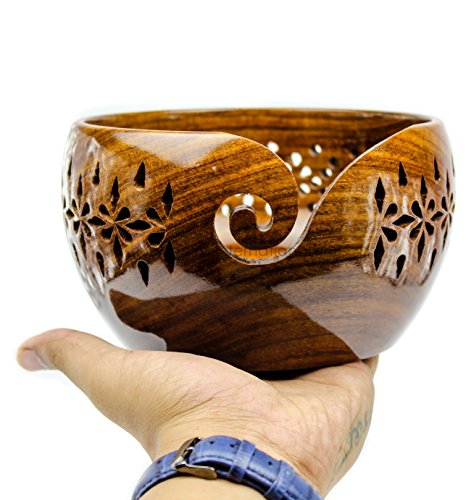
Stability is the unsung hero of the knitting experience, especially when you are working with slippery materials like silk-blend yarns. The Nagina International bowl is crafted with a wide, flat base that provides a low center of gravity.
I’ve found that wooden bowls offer a unique tactile experience that feels warmer than ceramic. Because this bowl is carved from solid wood, it has a natural density that resists the "drag" created when you pull yarn quickly during a fast-paced colorwork row.
However, check the interior finish carefully before your first use. Occasionally, natural wood can have microscopic splinters that might snag delicate fibers like mohair or lace-weight alpaca.
Fiber Artist Supply Co. Maple Bowl: Best Build

If you value craftsmanship that lasts a lifetime, this maple bowl is an investment piece. The construction is incredibly sturdy, and the spiral cutout is polished to a mirror-like smoothness to ensure your yarn glides without friction.
The beauty of maple is its durability; it won’t crack or warp easily in changing humidity levels, which is vital if you store your stash in a basement or a sunroom. It handles the weight of heavy, superwash wools with ease.
The trade-off here is the price point, which is higher than mass-produced alternatives. But for a dedicated knitter who spends hours daily at their needles, the lack of snags and the sheer longevity make it a worthwhile purchase.
Yarn Tree Wooden Bowl: Best for Jumbo Cakes
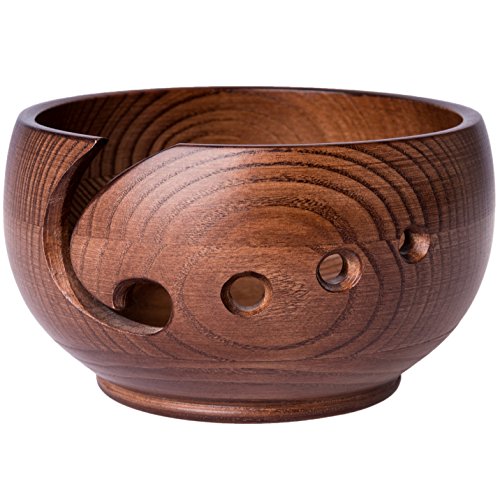
Jumbo cakes are notoriously difficult to manage because they often wobble as the yarn pulls from the center. The Yarn Tree bowl is specifically shaped to cradle these wider, flatter cakes, keeping them centered throughout the project.
This bowl is excellent for those who wind their own yarn using a large-capacity ball winder. If you are winding 400 yards of worsted weight wool, you need the extra diameter this bowl provides to prevent the cake from popping out.
Always ensure your yarn is wound with moderate tension. If your cake is wound too tightly, even the best bowl won’t stop it from jumping, as the internal tension will cause the cake to collapse inward.
All-Wood Artisan Large Bowl: Best for Weight

When you are knitting with heavy, rustic wools or cotton-blend yarns, you need a bowl that refuses to budge. The sheer mass of the All-Wood Artisan bowl acts as an anchor, which is essential if you tend to tug on your yarn while knitting.
This bowl is particularly effective for knitters who suffer from hand fatigue. Because the bowl stays perfectly still, you aren’t constantly fighting to keep your yarn supply in place, allowing you to focus entirely on your needle manipulation.
The downside is portability; this is not a bowl you want to toss in your project bag for a commute. It is a stationary tool intended for your favorite armchair or dedicated knitting nook.
Yarn Keeper Ceramic Bowl: Best for Stability

Ceramic is a fantastic material because it adds a touch of elegance to your workspace while providing a smooth, non-porous surface. The Yarn Keeper is designed with a high-friction base that mimics the grip of a weighted bowl without needing to be excessively heavy.
The spiral guide is positioned perfectly to prevent the yarn from jumping out of the bowl during a sudden pull. This is a lifesaver when you are knitting with high-twist yarns that have a tendency to "spring" or kink if they get loose.
Remember that ceramic is fragile; treat it with the same care you would a fine mug. A single drop on a hardwood floor can be catastrophic, so keep it well away from the edge of your table.
How to Size Yarn Bowls for Oversized Skeins
To determine the right size, measure the diameter of your largest yarn cake. You want at least an inch of clearance between the yarn and the wall of the bowl to ensure it can rotate freely as you pull.
- Diameter: The most important factor for preventing the cake from binding.
- Depth: A deeper bowl is better for preventing the yarn from leaping out as it gets smaller.
- Cutout Width: Ensure the spiral or J-hook is wide enough to accommodate the thickness of your yarn without creating unnecessary friction.
If you are unsure, always err on the side of a larger bowl. A small cake in a large bowl is perfectly usable, but a large cake in a small bowl is a recipe for constant frustration.
Ceramic vs Wood: Choosing Your Material Type
Ceramic bowls are generally heavier and offer a smoother surface, which is ideal for "sticky" fibers like high-wool-content yarns. They are easy to clean but are susceptible to chipping or breaking if handled roughly.
Wooden bowls offer a more organic, artisanal feel and are much more durable when it comes to accidental drops. However, they require occasional conditioning with wood oil to prevent them from drying out or developing rough spots over time.
Think about your environment: do you have pets or children who might knock things over? If so, wood is the safer, more resilient choice. If you have a dedicated, quiet space, ceramic provides a beautiful, static-free experience.
Why Weight Matters for Your Yarn Bowl Choice
A lightweight bowl will slide toward you every time you pull a length of yarn, which forces you to constantly reposition it. A weighted bowl acts as a third hand, keeping your tension consistent and your yarn supply stationary.
If you are a "tight" knitter, you likely pull harder on your yarn than a "loose" knitter. A heavier, weighted bowl is non-negotiable for you, as it will counteract the force you exert during your stitches.
If you find your bowl sliding despite its weight, try placing a rubberized shelf liner or a silicone mat underneath it. This simple, inexpensive fix can turn a mediocre bowl into a rock-solid tool.
Essential Features for Large Skein Management
When shopping for an oversized bowl, look for a continuous, smooth spiral cutout. This allows you to add or remove yarn without having to cut or re-thread, which is a major advantage during complex projects.
- Polished Edges: Essential for avoiding snags on delicate fibers like silk or mohair.
- Wide Base: Provides the stability needed to prevent tipping.
- Deep Walls: Keeps the yarn contained even when the cake is nearly spent.
Ultimately, the best bowl is one that disappears into your workflow. It should hold your yarn securely and allow for a smooth, uninterrupted pull so you can focus on the rhythm of your stitches rather than the mechanics of your supply.
Selecting the right yarn bowl is a personal journey that depends as much on your knitting style as it does on the yarn you prefer. Whether you choose the stability of a heavy wooden bowl or the sleek, snag-free surface of ceramic, the goal remains the same: to keep your yarn clean, contained, and ready to knit. By prioritizing weight, interior volume, and surface quality, you can eliminate the frustrations that hold you back from your best work. May your tension remain even and your skeins always stay right where you left them.