7 Best Magnification Glasses For Detailed Work
Discover the top 7 magnification glasses for precision tasks. This guide evaluates clarity, comfort, and lens quality to help you find the perfect tool.
Knitting with fine-gauge yarn or dark, mohair-heavy fibers often leads to eye strain that can cut your crafting session short. Finding the right magnification tool transforms how you see your stitches, allowing you to catch dropped loops or identify complex cable crossings with ease. These seven options cater to different knitting styles, from the professional bench-worker to the casual sofa knitter. Investing in optics is just as important as choosing the right needle material for your project.
Donegan OptiVISOR: The Professional Standard
The Donegan OptiVISOR is the gold standard for a reason. It features high-quality glass lenses that provide crystal-clear, distortion-free viewing, which is vital when you are working on intricate lace patterns or fine-gauge colorwork.
Because it is a headband-style magnifier, it stays securely in place while you shift your focus between your pattern and your needles. The weight is balanced well, though it can feel substantial after a few hours of knitting.
If you are a serious lace knitter who spends long evenings counting tiny stitches, this is your best investment. It is built to last a lifetime, unlike cheaper plastic alternatives that scratch easily.
Carson MagniVisor: Best Hands-Free Headset
The Carson MagniVisor offers a more modern, lightweight approach to the classic headband magnifier. It comes with multiple interchangeable lenses, allowing you to swap magnification levels depending on whether you are working with bulky wool or fine lace-weight silk.
The adjustable headband dial is a standout feature, making it easy to get a custom fit that doesn’t slip while you lean over your work. It feels less like wearing a piece of heavy equipment and more like a standard accessory.
This is the ideal choice for knitters who find traditional visors too heavy or cumbersome. It provides the freedom to move your head naturally without the optics shifting out of your focal plane.
Brightech LightView: Best Magnifying Lamp
A magnifying lamp like the Brightech LightView is a game-changer for your dedicated knitting nook. It combines a large, clear lens with a powerful LED light, effectively illuminating your work from above so you don’t have to hunch over.
This setup is particularly helpful when you are working on a large project like a sweater, where you need a wider field of view than a headset can provide. You can position the lens exactly where your needles meet the yarn, keeping your posture comfortable.
The main tradeoff is portability; this is a stationary tool that requires a side table or floor space. However, the benefit of having a constant, shadow-free light source on your project is unmatched.
Fancii LED Magnifying Glass: Best Handheld
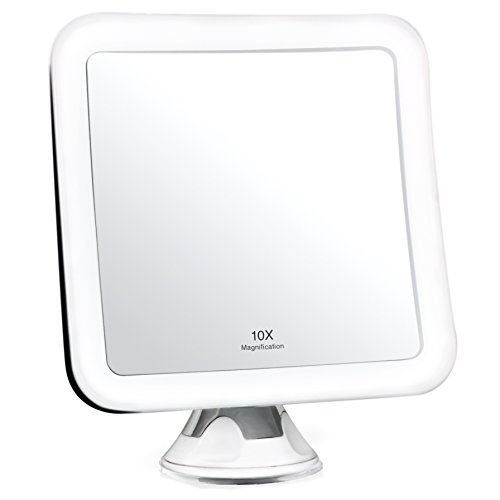

Sometimes you just need a quick look at a stitch to check for a mistake or to count a row. The Fancii LED Magnifying Glass is perfect for keeping in your project bag for those moments when you don’t want to wear a headset.
It features a built-in LED light that is surprisingly bright, making it easy to inspect dark-colored yarns. It’s lightweight and fits comfortably in your hand, though it does require you to pause your knitting to use it.
This is a great supplementary tool for any knitter. While it won’t replace a hands-free magnifier for long sessions, it is the most convenient option for quick, mid-row troubleshooting.
Imagniphy LED Head Magnifier: Best Value
The Imagniphy LED Head Magnifier is an excellent entry-level choice if you are curious about magnification but aren’t ready to commit to professional-grade gear. It offers decent optical clarity and a comfortable, lightweight frame at a very accessible price point.
The integrated LED lights are adjustable, which helps in reducing glare on shiny synthetic fibers. It is a practical, no-frills option that gets the job done without breaking the bank.
If you are a beginner knitter struggling to see your stitches on dark or fuzzy yarn, this is a low-risk way to improve your experience. It provides enough clarity to make a noticeable difference in your speed and accuracy.
Neatfi XL 2,250 Lumens: Best Desktop Choice
The Neatfi XL is a powerhouse for knitters who need a massive, distortion-free view of their work. With its extra-large lens and incredibly bright output, it is designed for those who work on high-stakes projects where detail is everything.
The sheer light output of 2,250 lumens ensures that every single fiber of your yarn is visible, which is essential for identifying split plies or uneven tension. It is a significant piece of hardware, but for a dedicated craft room, it is the ultimate luxury.
This lamp is best for knitters who struggle with depth perception or those working with extremely fine-gauge needles. It effectively turns your workspace into a bright, clear studio environment.
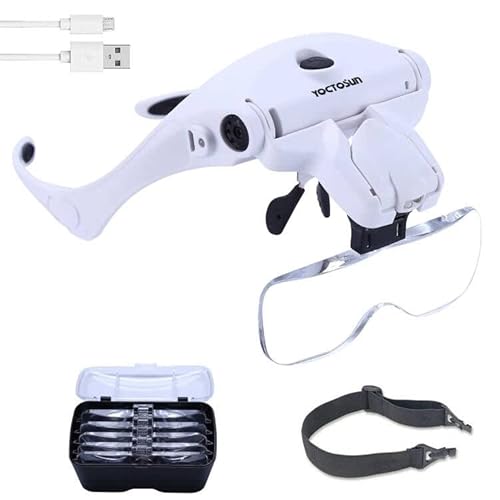
Yoctosun Rechargeable Magnifier: Best Fit
The Yoctosun Rechargeable Magnifier stands out because it eliminates the need for constant battery swaps. It is a rechargeable, comfortable headset that offers several magnification levels, making it versatile for different types of fiber arts.
The fit is highly adjustable, which is crucial for comfort during long knitting marathons. Its lightweight design ensures that you won’t feel neck fatigue after an hour of focused work.
This is a fantastic all-rounder for knitters who want a balance of comfort, performance, and convenience. It is particularly well-suited for travelers who need a reliable, battery-free solution for their project bags.
How to Choose Magnification for Fine Knitting
When selecting magnification for knitting, avoid the temptation to go for the highest power possible. Higher magnification actually reduces your field of view, making it harder to see the relationship between your needles and the fabric.
- 1.5x to 2x: Ideal for general knitting and checking your overall gauge.
- 2.5x to 3x: Best for detailed work, such as fixing dropped stitches in lace or checking cable crossings.
- Above 3x: Generally too powerful for knitting; it limits your view to just one or two stitches at a time.
Remember that your eyes need to work in tandem with the lens. If you wear prescription glasses, look for a magnifier that fits comfortably over them or offers adjustable focal lengths to accommodate your specific vision needs.
Why Lighting Matters for Dark Colored Yarns
Knitting with dark, saturated colors like navy, charcoal, or black is notoriously difficult because these yarns absorb light rather than reflecting it. Without proper lighting, your stitches essentially disappear into a dark, shapeless mass.
A high-quality LED light source is non-negotiable for dark yarn projects. You want a light that is "cool" or "daylight" balanced, as this provides the highest contrast against your needles and yarn.
Combining magnification with a dedicated light source creates a "spotlight" effect on your work. This allows you to see the individual ply of the yarn, which makes it significantly easier to maintain consistent tension and avoid accidental yarn-overs or dropped stitches.
Caring for Your Magnifiers and Optical Lenses
Optical lenses are delicate and prone to scratching, especially in a busy knitting environment filled with metal needles and scissors. Always store your magnifiers in a protective case when you aren’t using them to prevent dust and debris from settling on the surface.
Use only a microfiber cloth designed for eyeglasses to clean your lenses. Avoid using paper towels or tissues, as these can contain wood fibers that leave microscopic scratches on the optical coating over time.
If you use a headband-style magnifier, wipe down the sweatband regularly to keep it fresh. Keeping your tools clean ensures that you have a clear, unobstructed view of your work every time you sit down to knit.
Choosing the right magnification tool is a personal journey that depends on your eyesight, your preferred yarn weight, and your knitting environment. Whether you opt for a heavy-duty desk lamp or a lightweight headset, the goal is to make your knitting more enjoyable and less straining on your eyes. Don’t be afraid to experiment with different levels of magnification until you find the sweet spot that makes your stitches pop. With the right optics, you’ll find that even the most complex patterns become much more manageable and significantly more fun to knit.