7 Best Project Journals For Tracking Bead Usage
Optimize your jewelry workflow with our top 7 project journals. Track bead usage, manage inventory, and organize designs efficiently with these expert picks.
Integrating beads into your knitting adds a layer of texture and light that can elevate a simple garment into a true heirloom piece. However, keeping track of your bead counts and placement often feels like a secondary chore that distracts from the rhythm of your stitches. Using a dedicated project journal allows you to document these details so you never have to guess how many size 6/0 seed beads you need for your next lace shawl. These seven journals offer structured ways to bring order to your beaded projects and ensure your supplies remain perfectly managed.
The Knitters Pride Bead Organizer Journal
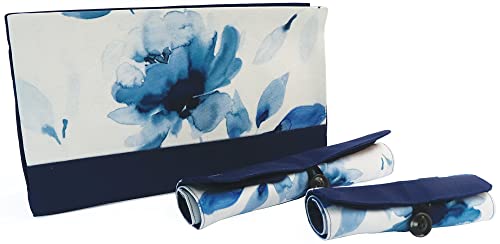

This journal is built specifically for the knitter who values portability and quick reference. Its compact size fits easily into a project bag alongside a set of interchangeable needles and a few spare stitch markers.
The layout focuses heavily on the relationship between bead size and yarn weight. It provides dedicated columns to record the specific bead finish—such as silver-lined or matte—which is crucial when you are trying to match beads to a specific yarn fiber like silk or merino.
The trade-off here is space; if you are working on a massive project with complex bead charts, you might find the pages a bit cramped. Bottom line: This is ideal for the knitter who needs a reliable, grab-and-go solution for socks or small accessories.
Mindful Making Beaded Project Logbook
The Mindful Making logbook treats the act of documentation as a part of the creative process. It encourages you to slow down and note not just the bead counts, but the "why" behind your color choices.
This journal excels at helping you track bead placement within intricate lace repeats. By mapping out where the beads fall in relation to your yarn overs and decreases, you can avoid the frustration of uneven bead distribution.
Some knitters find the reflective prompts a bit excessive, preferring a more sterile, data-driven approach. Bottom line: Choose this if you want a keepsake that captures the history of your project alongside the technical data.
The BeadSmith Professional Crafting Diary
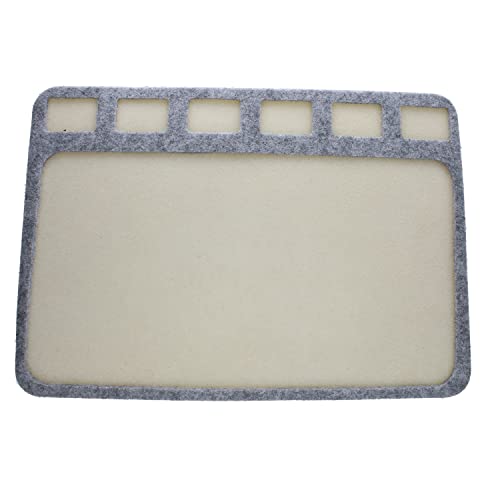
If you treat your knitting studio like a professional workshop, this diary will feel right at home. It is less of a "pretty" journal and more of a technical ledger designed for rigorous data collection.
The pages are robust enough to handle ink, graphite, or even swatches of yarn taped directly to the surface. It allows you to document your tension and gauge alongside the specific bead count, which is vital when bead weight might influence how a fabric drapes.
The lack of decorative elements might bore those looking for inspiration, but its utility is unmatched for complex, multi-stage projects. Bottom line: Use this if you are a data-driven knitter who prioritizes precision over aesthetics.
Knitters Journal Deluxe Bead Edition
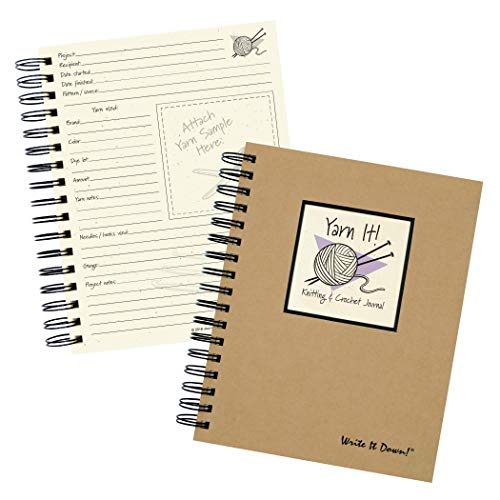
This journal is designed to handle the specific headaches of incorporating beads into stranded colorwork. It features specialized grids that allow you to mark bead placement directly onto your color charts.
Because beads can alter the way a fabric stretches, this journal includes sections for pre- and post-blocking measurements. Knowing how a beaded section behaves after a soak and a pin is essential for getting the fit right on a sweater cuff or neckline.
The binding can be a bit stiff at first, requiring some "breaking in" just like a new pair of wooden needles. Bottom line: This is the best choice for intermediate knitters moving into advanced beaded colorwork.
BeadBuddy Master Project Tracker Notebook
The BeadBuddy is all about the inventory side of things. It features clear, plastic-lined pockets that allow you to store a small sample of your beads directly in the journal.
This is a game-changer when you are shopping for matching yarn or additional supplies. You can hold your bead sample against a potential yarn choice to check for color harmony before you commit to a purchase.
The trade-off is that the notebook can become bulky once you fill all the pockets with samples. Bottom line: Perfect for the knitter who struggles with color matching and needs physical samples on hand.
Erin Condren LifePlanner for Bead Artists

While not strictly a "knitting" journal, the modular nature of the Erin Condren system makes it highly adaptable for fiber artists. You can customize the layout to track your bead stash alongside your project deadlines.
This is particularly useful if you are working on a long-term project like a beaded wedding shawl. You can map out your progress over weeks, ensuring you have enough beads for each section of the pattern.
It requires a bit of DIY effort to set up the categories, which might be a deterrent for those who want a "plug-and-play" system. Bottom line: Ideal for the organized planner who wants to manage their whole knitting life in one place.
Moleskine Passion Journal for Crafting

Moleskine provides a high-quality, archival-grade experience that feels luxurious in the hand. The paper quality is excellent, meaning your ink won’t bleed through when you are sketching out bead placement ideas.
It is surprisingly flexible; you can use the blank pages for freehand charting and the lined pages for documenting your bead brand, size, and quantity. It feels less like a chore and more like a sketchbook for your fiber arts journey.
Because it is a general crafting journal, it lacks specific knitting-focused templates, so you will need to create your own system for tracking gauge and needle sizes. Bottom line: Best for the artistic knitter who wants a beautiful, high-quality space to document their work.
Why Tracking Bead Counts Improves Your Design
Tracking your bead usage prevents the dreaded "run-out" scenario where you are three rows from finishing a project and suddenly realize you are short by a dozen beads. When you document exactly how many beads are required per repeat, you can calculate your total needs with 100% accuracy before you buy.
Beyond the math, tracking helps you understand how beads affect the "hand" of your fabric. If you notice a specific bead size makes your lace feel too heavy, the journal becomes a reference point for future design choices.
Don’t rely on your memory; even experienced knitters forget the specific bead finish they used on a project from three years ago. Bottom line: Documentation turns your knitting from a guessing game into a repeatable science.
Essential Methods for Cataloging Your Beads
Start by categorizing your beads by size (e.g., 6/0, 8/0, 11/0) and then by finish. A matte bead will behave differently than a transparent or metallic one, and knowing the difference is key to matching them with your yarn’s luster.
When cataloging, always include the manufacturer and the specific color code. If you ever need to source more of that exact bead, you will be grateful you wrote down the specific product number rather than just "blue."
Consider including a small swatch of the yarn you paired with the beads. Seeing the two together provides a tactile reference that a simple list of numbers can never replicate. Bottom line: Keep it simple, but be specific enough to avoid future confusion.
How to Manage Bead Inventory in Your Journal
Your journal should act as a bridge between your stash and your needles. Create a "Master Inventory" page at the back of your journal where you list your current bead stock, updating it as you start and finish projects.
If you are a prolific knitter, consider using a simple spreadsheet to track large quantities and use the journal only for project-specific usage. This keeps your journal from becoming cluttered with inventory lists that change every time you visit the craft store.
Always subtract the beads you use from your inventory immediately after finishing a project. This ensures your "available stock" count is always accurate when you are planning your next design. Bottom line: Treat your bead stash with the same respect you give your yarn collection.
Finding the right journal is about matching your personal organizational style to the complexity of your beaded projects. Whether you prefer a technical ledger or a creative sketchbook, the act of recording your bead usage is an investment in your future success. Take the time to document your process, and you will find that your knitting becomes more intentional and stress-free. Happy knitting, and may your bead counts always be perfectly calculated.