6 Best Enamel Basins For Soaking Fiber To Use
Discover the top 6 enamel basins for fiber soaking. Learn why these durable, non-reactive vessels are essential for achieving professional, clean results.
Proper blocking is the final, most crucial step in transforming a pile of hand-knitted stitches into a professional-looking garment. Using the right vessel for your fiber soak ensures that your wool, alpaca, or silk receives the gentle hydration it needs to relax. Enamelware has long been the gold standard for fiber artists because it provides a non-reactive, smooth surface that won’t snag delicate fibers. Investing in a dedicated basin will save you from the frustration of finding a clean sink or a plastic bowl that might harbor residue.
Falcon Enamelware 24cm Bowl: Best Overall Choice


The Falcon 24cm bowl is a staple in many knitting studios because it hits the perfect middle ground for most projects. It is deep enough to submerge a pair of socks or a lightweight lace cowl without needing an excessive amount of water.
Because the surface is fused glass over steel, it is completely non-porous. You never have to worry about the basin absorbing the scent of your wool wash or the lanolin from your raw fibers.
Its classic, clean aesthetic also means it doesn’t look out of place if you keep it on your craft room shelf. It is the reliable "workhorse" basin that handles everyday blocking tasks with consistent ease.
Crow Canyon Home Splatter Basin: Best for Durability

If you are the type of knitter who is constantly moving projects between the kitchen sink, the laundry room, and the porch, you need something rugged. The Crow Canyon splatter finish is iconic, but more importantly, it is incredibly tough.
These basins are fired at high temperatures, making the enamel coating resistant to chips and cracks. When you are soaking a heavy, water-logged wool sweater, you want a basin that feels solid and secure in your hands.
The wide rim provides a decent grip, which is a subtle but vital detail when you are carrying a bowl full of water and expensive yarn. It is a basin built to survive the occasional tumble off a table.
Golden Rabbit Enamel Mixing Bowl: Best Large Capacity

Sometimes, you aren’t just blocking a pair of socks; you are soaking a massive, cabled wool blanket or a heavy Icelandic sweater. When you have a large-volume project, a small bowl will only lead to uneven saturation and frustration.
The Golden Rabbit mixing bowl offers the depth and width required to let bulky garments float freely. If you cram a large sweater into a tiny bowl, you risk agitation, which can lead to unwanted felting in non-superwash wools.
This basin gives your fiber the room to breathe and absorb water evenly. It’s a specialized tool for the ambitious knitter who loves making heirloom-sized pieces.
West Elm Enamelware Basin: Best Aesthetic Design

Let’s be honest: fiber arts are a tactile and visual pleasure, and your tools should reflect that. The West Elm enamelware collection is designed with a modern, sophisticated palette that elevates the act of blocking.
While the primary function is to hold water and wool wash, using a beautiful tool makes the finishing process feel like a ritual rather than a chore. It is a great choice for knitters who photograph their process for social media or journals.
Beyond the looks, the basin is well-balanced and lightweight. It proves that you don’t have to sacrifice form for function when building your knitting toolkit.
GSI Outdoors Enamelware Bowl: Best Portable Option

Knitters often travel to retreats, workshops, or even just the local park to knit with friends. If you need a basin that can be tucked into a project bag or a suitcase, this GSI bowl is your best bet.
It is lightweight and compact, designed originally for camping, which translates perfectly to the needs of a mobile fiber artist. You can easily fit it into a larger tote alongside your yarn cakes and circular needles.
Despite its portability, it retains the non-reactive properties of standard enamelware. It is the ultimate tool for the knitter who refuses to leave their blocking supplies behind.
Riess Enamel Basin: Best for Delicate Fiber Soaks
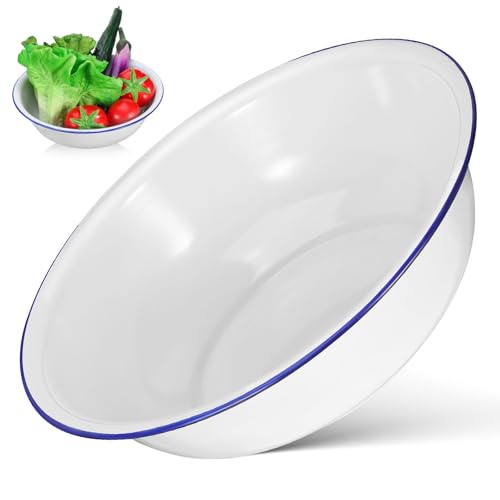
Riess enamelware is crafted with a focus on purity and quality, making it an excellent choice for your most precious fibers. If you are working with hand-dyed cashmere, silk, or angora, you want a vessel that is as gentle as possible.
The finish on these basins is exceptionally smooth, which minimizes the risk of snagging fine, high-twist yarns. When you are working with luxury fibers, even a tiny scratch in a plastic bowl can snag a loose fiber and ruin your hard work.
This is an investment piece for the dedicated artisan. It provides the peace of mind that comes from knowing your delicate projects are resting in a high-quality, inert environment.
Why Enamel Basins Are Ideal for Fiber Washing
Enamelware is fundamentally different from plastic, which can develop microscopic scratches that harbor bacteria or old detergent residue. When you wash your hand-knits, you want a surface that is completely neutral.
- Non-Reactive: It won’t leach chemicals into your soak water, ensuring your yarn stays pristine.
- Easy to Clean: A quick rinse is usually all it takes to remove any lingering lanolin or wool wash.
- Temperature Resistant: You can safely use warm water for soaking without worrying about the bowl warping or releasing odors.
These basins provide a stable environment for the fibers to relax. This is essential for achieving the perfect stitch definition after a project comes off the needles.
Essential Features to Look for in a Fiber Basin
When choosing a basin, start by considering the scale of the projects you typically knit. A basin that is too small will force you to fold your garments too tightly, leading to uneven blocking.
- Rim Depth: A deeper rim prevents splashing when you are moving the basin to your blocking mat.
- Weight: You need a bowl that is heavy enough to stay put but light enough to carry when full of water.
- Surface Integrity: Always inspect the enamel for chips; a chipped bowl can expose the steel underneath, which might rust or snag your yarn.
Don’t overthink the color or pattern; focus on the capacity and the smoothness of the interior. A basin is a tool, not a decoration, so prioritize the physical mechanics of the soak.
How to Properly Soak Your Hand-Knitted Garments
The soak is not just about getting the yarn wet; it is about allowing the fibers to reset after the tension of the knitting process. Always use a gentle wool wash and avoid harsh detergents that can strip natural oils.
- Fill your enamel basin with lukewarm water and add your wool wash, mixing it gently before adding the garment.
- Submerge your piece and let it soak for at least 15 to 20 minutes; do not agitate or rub the fabric.
- Drain the water and gently press the excess moisture out against the side of the basin—never wring or twist your knitting.
- Transfer the garment to a towel and roll it like a sleeping bag to remove remaining water before laying it flat to dry.
By treating your knitwear with this level of care, you ensure that your stitches remain uniform and your fabric retains its intended drape.
Maintaining Your Enamelware for Long-Term Use
Treat your enamel basin with the same care you give your favorite pair of needles. While it is durable, it is not indestructible, and dropping it on a hard tile floor can cause the enamel to chip.
Always wash your basin by hand with a soft cloth and mild soap after each use. Avoid using abrasive scouring pads, as these can create small scratches that compromise the smooth surface over time.
If you notice a stubborn stain from a particularly dark-dyed yarn, a paste of baking soda and water usually does the trick. Store your basin in a dry place to prevent any moisture from sitting on the rim and potentially causing rust.
Selecting the right enamel basin is a simple yet transformative upgrade for your knitting practice. By choosing a high-quality, non-reactive vessel, you ensure that every project receives the gentle care it deserves during the finishing process. These basins serve as the bridge between a finished piece of knitting and a beautifully blocked garment ready to be worn. Treat your tools well, and they will help you showcase your hard work for years to come.