6 Best Blocking Mats For Heirloom Shawls To Use
Discover the top 6 blocking mats for your heirloom shawls. We compare materials and durability to ensure your delicate handiwork maintains its perfect shape.
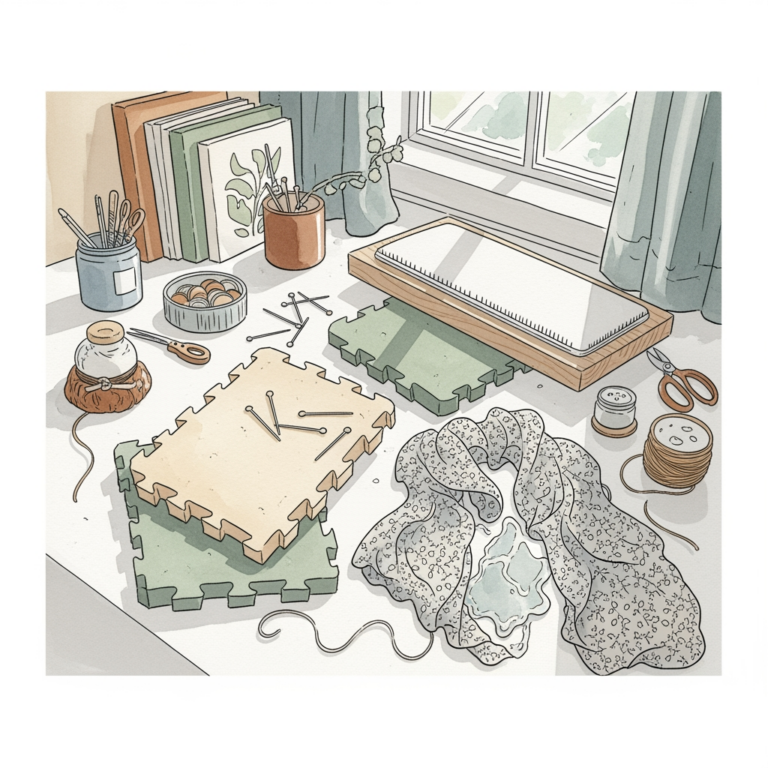
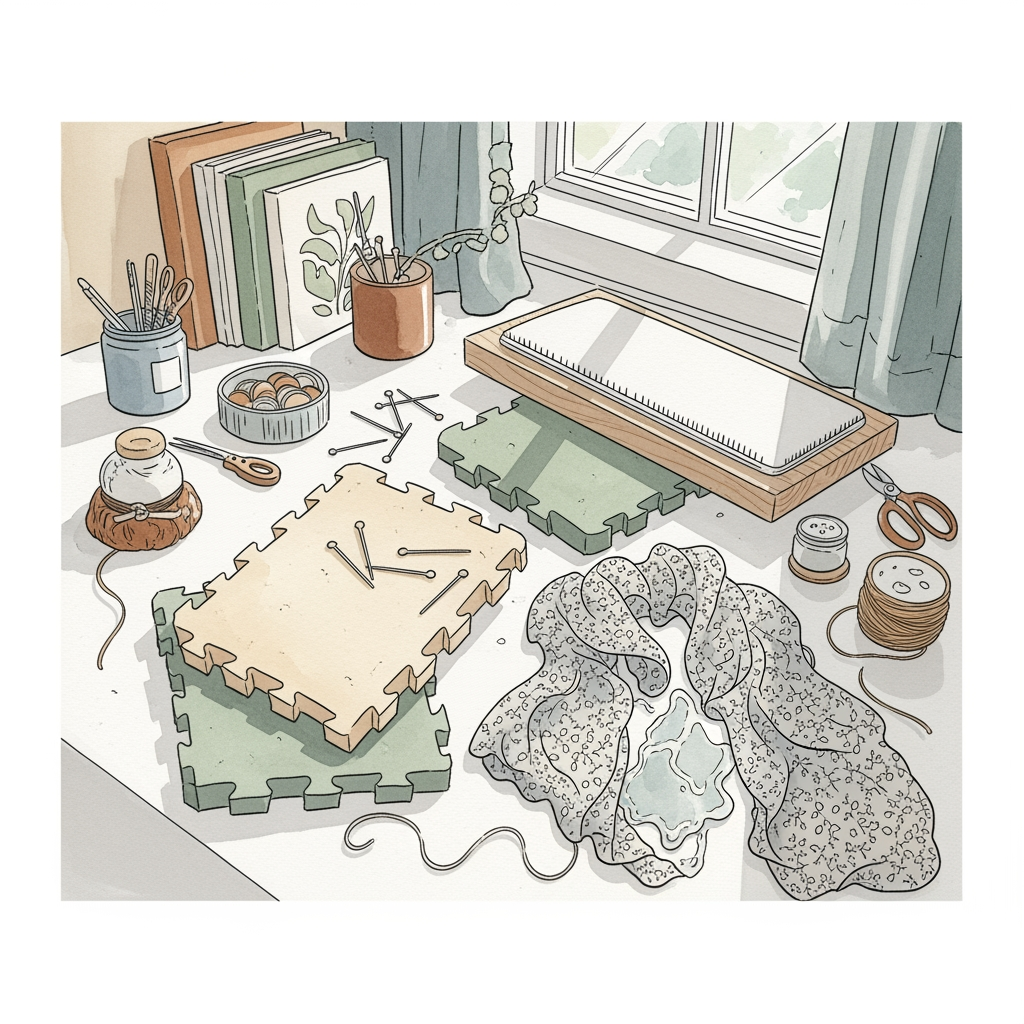
Blocking is the final, transformative step that turns a crumpled, hand-knitted fabric into a professional-grade heirloom. Choosing the right surface is essential to ensure your lace opens up exactly as the pattern designer intended. Without a reliable, heat-resistant, and stable mat, even the most intricate stitch work can look uneven or distorted. These six options represent the gold standard for stabilizing your most precious fiber art projects.
Knitter’s Pride Lace Blocking Mats: Best Overall


These mats are a staple in my studio because they strike the perfect balance between density and ease of use. The material is thick enough to hold a T-pin securely without the pin wiggling or popping out, which is vital when you are under tension with delicate lace.
The modular design allows you to configure your workspace to fit anything from a small crescent shawl to a massive circular tablecloth. Because they interlock like puzzle pieces, they stay firmly in place throughout the days or weeks your project might need to dry.
The bottom line: if you want a reliable, long-term investment for your stash, these are the industry standard for a reason. They hold up to repeated use without crumbling or losing their interlocking integrity.
Mindful Collection Blocking Mats: Best for Detail

If you are working with complex, multi-layered lace charts, these mats offer a distinct advantage. They are designed with a specific focus on precision, often featuring a subtle, non-distracting grid that helps you maintain symmetry across your shawl’s wingspan.
The material feels slightly more refined than standard foam, providing a smooth surface that won’t snag delicate fibers like mohair or silk blends. When you are pinning out a complicated picot edge, that extra bit of surface stability makes a world of difference in your final stitch definition.
The trade-off here is the price point, which is higher than basic foam tiles. However, for the knitter who obsesses over every single yarn-over and nupp, the added precision is worth every penny.
Clover Blocking Mats: Best for Small Projects
Sometimes you aren’t blocking a massive wedding shawl; you’re finishing a delicate cowl or a pair of intricate lace mitts. Clover’s mats are smaller and more compact, making them ideal for knitters with limited floor or table space.
Because they are smaller, they are much easier to store away in a project bag or a shelf corner. You don’t have to clear your entire dining room table just to get a small accessory ready for gifting.
They are essentially the "utility" choice for the everyday knitter. Keep a set of these on hand for quick, small-scale blocking sessions where a massive mat setup would feel like overkill.
KnitIQ Blocking Mats with Grids: Best Accuracy
Nothing is more frustrating than finishing a shawl only to realize one side is stretched tighter than the other. KnitIQ mats solve this with high-contrast, printed grids that act as a visual guide for your pins.
The grid isn’t just a gimmick; it allows you to measure your progress in real-time. If you are blocking a geometric lace pattern, you can align your stitches perfectly with the lines, ensuring the finished piece is perfectly rectangular or triangular.
If you struggle with "eyeballing" your blocking, the printed grid is your best friend. It removes the guesswork and ensures that your heirloom pieces come off the mats with professional, symmetrical results.
Boye Interlocking Blocking Mats: Best for Value

If you are just starting your journey into lace knitting, you don’t need to break the bank to get a functional blocking setup. The Boye mats provide a solid, no-frills surface that gets the job done without unnecessary bells and whistles.
They are durable enough to withstand the moisture of a wet-blocked shawl without warping. While they may not have the premium feel of higher-end mats, they offer a consistent density that keeps your pins locked in place.
These are perfect for the knitter who prefers to spend their budget on high-quality hand-dyed yarn rather than accessories. You get a reliable, functional tool that performs exactly as expected for a very reasonable cost.
Foam Tiles by Exqline: Best for Large Shawls

When you are tackling a massive, lace-weight wool shawl that requires significant stretching, standard small mats can be a hassle to assemble. Exqline offers larger-format foam tiles that cover more ground with fewer seams.
Fewer seams mean a flatter, more uniform surface, which is critical when dealing with large, open-work lace. You won’t have to worry about a join in the mat creating an unwanted "bump" in your fabric while it dries.
These are a game-changer for knitters who specialize in large-scale projects. If you frequently knit oversized, complex lace shawls, the larger surface area of these tiles will save you time and frustration during the setup process.
Why Proper Blocking Matters for Heirloom Shawls
Blocking is not just about making a project look pretty; it is about relaxing the fibers after they have been worked through the stress of your needles. When you knit, the yarn is pulled, twisted, and compressed, which masks the true character of the lace pattern.
By soaking the finished piece and pinning it to the correct dimensions, you allow the yarn to bloom. This is especially true for natural fibers like wool, alpaca, or silk, which need moisture to "reset" their structure.
Without blocking, your heirloom shawl will remain dense and lifeless. Proper blocking opens the lace, creates drape, and ensures that your hard work is actually visible.
Essential Tools for Precision Blocking Success
You cannot block effectively with mats alone; you need the right hardware to hold the tension. T-pins are the industry standard because they are rust-proof and strong enough to withstand the pull of heavy, wet yarn.
For straight edges, consider using blocking wires. You thread these through the edges of your shawl and pin the wires down, which creates a perfectly straight line that pins alone cannot achieve.
Always ensure your pins are stainless steel to prevent rust stains on your light-colored fibers. Invest in a good set of T-pins and wires—they are the unsung heroes of the blocking process.
Choosing Between Foam Mats and Blocking Boards
Foam mats are the most popular choice because they are lightweight, portable, and gentle on your hands. They are excellent for almost any project, especially those that require a lot of pinning and stretching.
Blocking boards, often made of wood or cork, are more rigid and sometimes feature pre-drilled holes for specific shapes. While they offer extreme stability, they are much heavier and less flexible when you need to change the shape of your project.
Choose foam if you want versatility and ease of storage. Choose a board only if you have a dedicated studio space and a very specific, recurring project shape you need to accommodate.
How to Maintain Your Blocking Mats for Longevity
To keep your mats in top shape, always allow them to dry completely after a heavy blocking session. Stacking them while they are still damp can lead to mildew or degradation of the foam material over time.
Wipe them down with a damp cloth if they accumulate dust or fiber bits from your projects. Avoid using harsh chemicals, as these can break down the density of the foam and make it harder for the pins to stay put.
If you take care of your mats, they will last for decades. Treat them as a vital part of your knitting toolkit, and they will help you finish hundreds of beautiful shawls.
Blocking is the bridge between a finished knitting project and a wearable piece of art. By selecting the right mat for your specific needs—whether it’s the accuracy of a grid or the sheer size of a large-format tile—you ensure your heirlooms are treated with the care they deserve. Take your time with the pinning process, trust your tools, and enjoy watching your lace expand into its full potential. Happy blocking!