
6 Best Charcoal Fixatives For Preserving Drawings
Protect your artwork from smudging and fading with our expert guide to the 6 best charcoal fixatives. Choose the perfect spray for your drawings today.
Charcoal drawings require the same delicate touch and intentional structure as a complex lace project. Just as a fragile silk mohair yarn can snag or lose its loft if handled improperly, a charcoal sketch risks smudging and losing its depth without proper stabilization. Choosing the right fixative ensures the integrity of the work remains intact from the drawing board to the final display. These selections prioritize longevity, finish quality, and ease of application to protect those hard-earned marks.
Krylon Workable Fixatif: Best for Layering Work
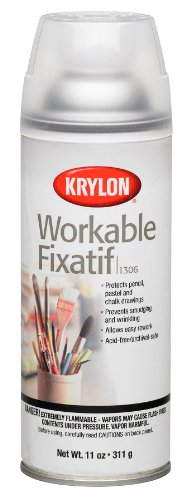

Think of this fixative as the blocking spray of the drawing world. Much like using a light steam block to set a finished sweater without crushing the fiber’s twist, this spray holds the charcoal in place while remaining thin enough to allow for further mark-making.
The primary advantage is its “workable” nature, meaning graphite or charcoal can be layered over the top without the surface becoming too slick. It acts like a temporary tension stabilizer, perfect for artists who build up values in stages.
If you are prone to reworking areas, this is the reliable choice for maintaining tooth. It prevents the drawing from becoming “saturated,” which is the artistic equivalent of over-felting a wool garment until it loses its drape.
Grumbacher Final Fixative: For a Permanent Seal
This product is designed for the final “bind-off” of a drawing. Once the work is complete, this fixative creates a robust, protective film that resists moisture and UV rays.
It is best suited for pieces that will be framed or handled extensively. It provides a heavy-duty seal that locks the pigment particles tightly to the paper fibers, much like how a superwash treatment ensures yarn withstands the rigors of machine washing.
Be aware that this fixative will significantly darken the charcoal, similar to how wet-blocking wool makes colors appear richer and deeper. It is not designed for further adjustment once applied.
SpectraFix Degas Fixative: Best Non-Toxic Pick

For artists concerned with air quality or those working in smaller spaces, this casein-based formula is the standard. It uses milk protein instead of harsh solvents to bind the pigment.
It is particularly effective for pastel and charcoal because it maintains the original “dry” look of the medium. It doesn’t leave a glossy or synthetic sheen, much like how untreated raw wool retains its natural matte, rustic appearance.
The trade-off is that it must be applied with a fine-mist spray bottle or a mouth atomizer. It requires more patience and practice to master the application technique compared to aerosol cans.
Winsor & Newton Fixative: The Artist’s Standard
This is the reliable, go-to product that behaves exactly as expected every time. It is a classic clear-coat finish that provides a uniform, non-yellowing protective layer.
It is ideal for charcoal drawings that feature a high degree of contrast between deep blacks and bright whites. It holds the charcoal in place without significantly shifting the tonal values.
Think of it like a high-quality, neutral pH yarn wash—it cleans and stabilizes without changing the fundamental properties of the fiber. It is a balanced choice that rarely disappoints.
Sennelier Delacroix Fixative: A Top Pro-Choice
Renowned for its high-quality resins, this fixative offers an exceptionally fine mist. It is essentially the luxury fiber of the fixative market, providing a sophisticated, archival-grade finish.
It minimizes the risk of spotting or uneven build-up, ensuring the surface looks consistent and professional. The result is a subtle, almost invisible layer that protects the work without sacrificing the tactile quality of the charcoal.
If the project involves intricate, detailed work, the precision of this spray is worth the higher investment. It respects the integrity of the charcoal, much like using hand-dyed silk for a delicate shawl.
Krylon Gallery Series Fixatif: Best Budget Final
This series offers a cost-effective solution for artists who need to protect a large volume of work. It is reliable enough for exhibition pieces but accessible enough for daily sketching.
It dries quickly and provides a consistent matte finish. While it may not possess the archival complexity of higher-end brands, it performs the basic task of fixing charcoal effectively.
It is the equivalent of a solid, standard-issue wool blend—not necessarily for a museum-grade masterpiece, but perfect for consistent, everyday use. It gets the job done without unnecessary fuss.
Workable vs. Final Fixative: Which Do You Need?
The choice between a workable and final fixative is similar to choosing between a temporary basting stitch and a permanent seam. Workable fixatives are intended to be layered.
- Workable: Allows for more charcoal application; keeps the tooth of the paper open.
- Final: Seals the work completely; protects from smudging; adds a permanent layer.
If the work is still in progress, stick to a workable spray. Only switch to a final fixative once the last mark is made and the piece is ready to be handled or framed.
How to Apply Fixative Without Smudging Your Art
The secret to a smudge-free finish is distance and layering. Never spray too close to the surface; keep the canister at least 10 to 12 inches away to ensure an even, fine mist.
Start spraying to the side of the drawing before passing the stream over the paper. This prevents the “blobbing” of concentrated fixative, which can ruin a drawing just as a knot in a yarn strand ruins a row of stockinette.
Apply multiple thin coats rather than one heavy, saturated layer. This prevents the charcoal from running or blurring under the force of the spray.
Safety Tips for Using Aerosol Art Sprays Indoors
Always treat aerosol fixatives with the same caution one would use when handling strong chemical dyes or bleach. Proper ventilation is non-negotiable.
- Use a respirator: A simple dust mask is insufficient; use an organic vapor respirator.
- Work outdoors: Or use a dedicated spray booth with a powerful extraction fan.
- Check the ambient conditions: Avoid spraying in high humidity, which can cause the fixative to cloud or bloom.
Safety is part of the professional process. Ignoring ventilation is like knitting in a dark, cramped room—eventually, the strain will impact the quality of the work and the well-being of the creator.
Can You Use Hairspray? A Word of Caution
While common advice suggests using cheap hairspray as a quick fix, this is generally discouraged for serious work. Hairspray is formulated to hold hair, not to preserve pigments, and often contains additives that can yellow or degrade paper over time.
Many hairsprays contain perfumes, oils, or alcohols that are not archival. Using them on a drawing is like using grocery-store acrylic yarn for a project meant to last generations; it may look fine initially, but it will eventually lose its luster and integrity.
For longevity and professional standards, stick to products specifically designed for charcoal. Save the hairspray for the vanity, and keep professional art supplies on the workbench.
Protecting charcoal drawings is a vital final step that ensures the longevity of the artistic vision. By selecting the right fixative and applying it with care, the depth and soul of the charcoal work will remain preserved for years to come.