6 Best Project Boards For Stabilizing Delicate Crafts
Stabilize your delicate crafts with ease. Discover the 6 best project boards designed to provide the perfect surface for your detailed work. Read our guide now.
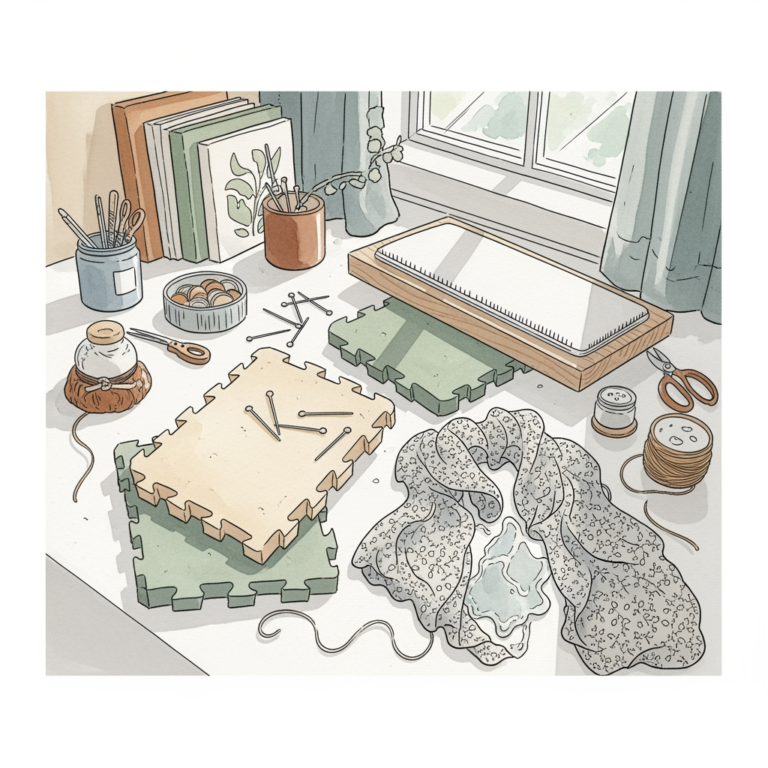
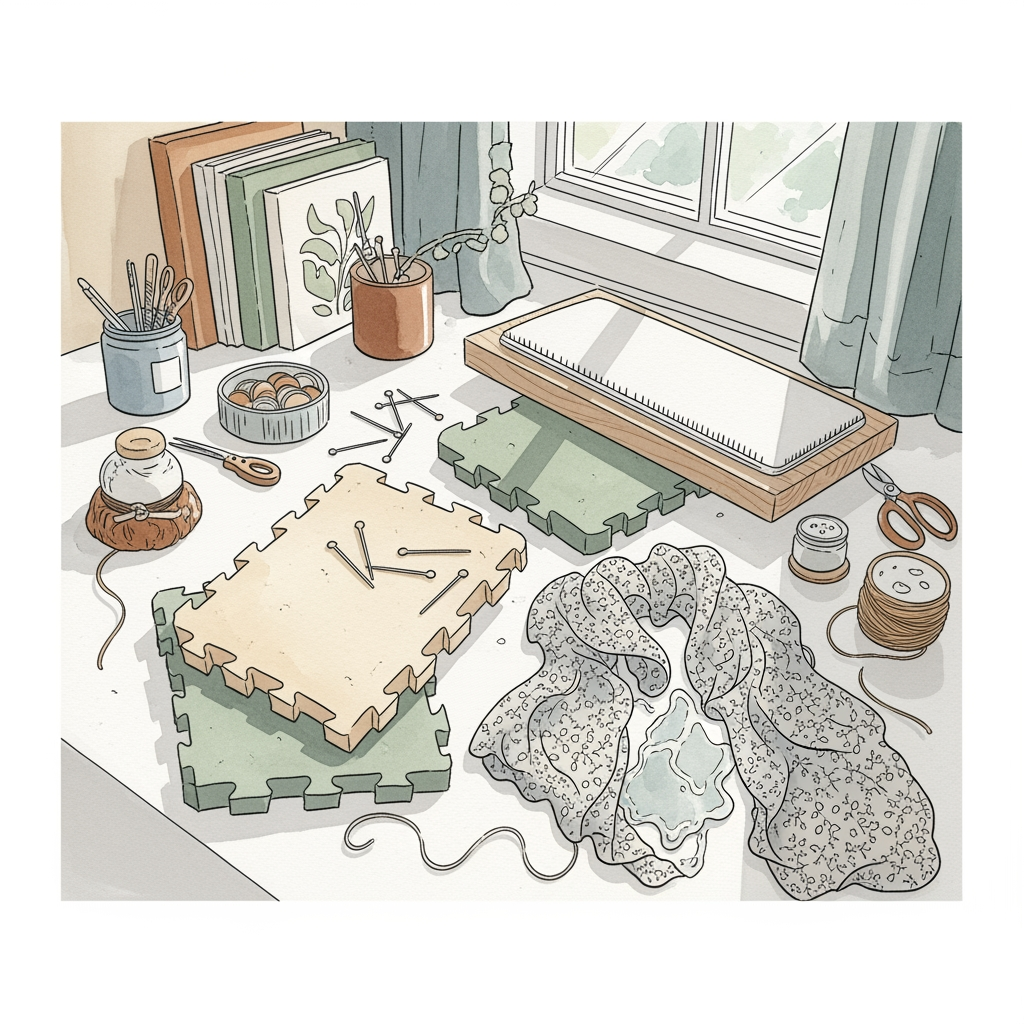
Blocking is the final, transformative step that elevates a handmade piece from a lumpy, uneven garment into a professional-grade textile. Many knitters overlook the importance of the surface beneath their work, yet the choice of blocking board directly dictates the accuracy of stitch definition and shape retention. Whether dealing with the delicate drape of lace or the structured geometry of a sweater, a stable, reliable foundation is essential. The following guide explores the best tools available to ensure every project reaches its full potential.
Chetnanigans Blocking Board: Best for Motifs


For knitters who obsess over individual granny squares or intricate lace motifs, the Chetnanigans board offers a level of precision that standard foam mats cannot match. These wooden boards feature a precise grid of holes, allowing for the insertion of stainless steel rods that provide uniform tension across every edge. This mechanical approach eliminates the guesswork often associated with pin-based blocking.

Because these boards are rigid, they prevent the “bowing” effect that occurs when pinning heavy wool motifs to softer surfaces. The rods hold each corner or side of a square in a perfectly straight line, ensuring that when the time comes to sew the pieces together, they align with mathematical accuracy.
It is important to note that these boards are tailored for small-scale projects. If you are looking to block a full-sized adult sweater, this board is not the right tool for the job. However, for the serious quilter or garment-maker who values consistent, repeatable dimensions, this is the gold standard for motifs.
Knitter’s Pride Kit: Best Blocking Comb System
Blocking combs replace the repetitive, tedious motion of placing dozens of individual T-pins with a single, sweeping action. The Knitter’s Pride system includes combs with multiple prongs, which allow you to anchor long straight edges—like a shawl’s border—in seconds rather than minutes. This is a massive relief for those who find the pinning process physically taxing on the hands.
The efficiency of this system is unmatched for large, rectangular projects. By pressing a comb into a blocking mat, you create an even distribution of tension along the entire length of the comb’s contact point. This helps prevent the “scalloping” or dipping effect that often happens when individual pins are spaced too far apart.
While highly effective, combs do require a bit of a learning curve to ensure they are inserted vertically and kept perpendicular to the mat. If the combs are angled too sharply, they can cause the stitches to distort unevenly. For those dealing with delicate lace, ensure the prongs are fully inserted to avoid snagging fibers during the drying process.
Cocoknits Sweater Kit: Premium All-in-One Pick
The Cocoknits Sweater Kit acts as an investment in the longevity of the knitting practice, prioritizing modularity and longevity. This system features specialized tiles that can be configured into various shapes, accommodating everything from small accessories to wide-shouldered garments. The inclusion of subtle markings helps maintain symmetry without needing to measure with a tape repeatedly.
One of the standout features of this kit is the heat-resistant material, which is a major advantage for those who frequently use steam-blocking methods. Many standard foam mats will degrade or warp when exposed to heat, but these boards are engineered to remain stable. The system also comes with a comprehensive set of accessories, including pins and strings, that integrate perfectly with the board’s surface.
This is an expensive option, which makes it a commitment for the dedicated crafter rather than a casual hobbyist. However, if you plan on knitting multiple sweaters or structured jackets, the organizational benefits and material quality make it a practical, long-term purchase. It essentially eliminates the frustration of needing to “make do” with household surfaces.
Della Q Canvas Board: Best for Precision Work
Della Q brings an artisan touch to blocking with canvas-covered boards that offer a luxurious, non-slip texture. The fabric surface provides enough grip that pins stay exactly where they are placed, preventing the sliding common on cheaper, smooth plastic surfaces. This makes it an ideal environment for blocking slippery fibers like silk or high-twist cotton.
The canvas construction also allows for a bit more “give” than wooden boards, making it easier to maneuver pins into tight spaces. The aesthetics of these boards are significantly higher than standard utility mats, which is a consideration for knitters who do not have a dedicated studio and must block in communal living spaces.
Because these boards are covered in fabric, they are more prone to absorbing moisture if they become soaked during a heavy blocking session. Use a protective layer of parchment paper or a thin towel between the board and your wet project to protect the integrity of the canvas. With proper care, these boards offer a professional, high-friction surface that makes complex blocking tasks far more manageable.
Knit Picks Blocking Mats: The Best Overall Value
When the goal is a balance between affordability and performance, the standard interlocking foam mats from Knit Picks are the reliable workhorse of the knitting community. These mats are lightweight, easy to store, and can be configured into any shape required by the project. They are the standard starting point for most knitters because they work effectively across all fiber types.
The primary benefit of these mats is the grid markings printed on the surface. These markings serve as an essential visual guide for ensuring that your work is perfectly square or rectangular. They remove the stress of measuring corners by hand, which is vital when working on large, flat pieces that need to match specific pattern dimensions.
Be aware that these mats are prone to wear and tear over many years of use. The edges of the interlocking teeth can eventually fray or loosen. Despite this, for the price point, they provide the most utility per dollar, allowing you to invest your remaining budget into higher-quality yarns or needles.
Lykke Crafts Mats: Best for Travel & Storage
Lykke Crafts mats are designed for the knitter on the move, offering a compact, folding solution that does not sacrifice surface area. These mats fold down into a slim profile, making them perfect for tucking into a project bag or a closet shelf. They are the most efficient option for those who live in apartments or have limited dedicated craft space.
The surface material is dense and holds pins firmly without leaving deep, permanent craters. Even after heavy use, these mats tend to maintain their shape better than generic craft-store foam. They offer a “pro” feel in a portable package, bridging the gap between temporary craft mats and permanent wooden boards.
If you are a frequent workshop attendee or often participate in knitting retreats, these mats are worth the investment. They ensure you can maintain a consistent blocking setup no matter where your projects take you. They effectively turn any table or hard floor into a professional blocking workstation.
Foam Mats vs. Padded Boards: A Quick Comparison
Choosing between foam and padded boards is a decision based on your specific knitting habits and the types of fibers you use most. Foam mats are inherently lightweight and modular, making them ideal for large items that require significant floor space. However, they are often less durable and can warp over time if exposed to high heat or extreme weight.
Padded or canvas boards, on the other hand, provide a more structured and stable base. They are superior for “blocking out” very firm stitches or heavy fabrics that require significant tension to stretch. The fabric cover acts as a stabilizer, preventing pins from moving during the drying process.
- Choose Foam Mats if: You knit mostly large, lightweight items like shawls, you have limited storage space, or you prioritize budget-friendly versatility.
- Choose Padded/Canvas Boards if: You specialize in small motifs, you need a high-friction surface, or you prefer a professional-grade tool that will last for years.
A Guide to Pins, Wires, and Blocking Combs
The tools you use to anchor your knitting are just as important as the board itself. T-pins are the standard for most projects because the “T” shape allows for easy removal and holds fibers securely. However, they can rust if used while wet; always opt for stainless steel T-pins to prevent permanent staining on light-colored yarns.
Blocking wires are an essential tool for lace knitters, as they allow you to stretch long, straight edges with a single, continuous line. By threading a wire through the edge stitches of a shawl, you can pull the entire length taut without the scalloping that individual pins often create. It is a game-changer for finishing circular or semi-circular lace designs.
Blocking combs offer the best of both worlds, providing the ease of wire tension with the localized control of pins. They are particularly effective for ribbed edgings or heavy wool garments that require a strong, uniform pull. Always match the thickness of your pins or wires to the gauge of your yarn to ensure you do not inadvertently stretch or distort your stitch loops.
How to Block Different Fibers for Best Results
The way you handle a project during the blocking process depends entirely on the fiber’s “memory” and its reaction to moisture. Animal fibers, such as wool, mohair, and alpaca, benefit significantly from blocking because their scales open up to accommodate the new shape, locking it in place as they dry. These fibers have excellent memory and will retain their blocked shape well.
Plant fibers, like cotton, linen, and bamboo, have much less natural elasticity. They do not “spring back” like wool, meaning they often require more aggressive stretching on the board to reach the desired dimensions. If you are blocking a cotton top, pinning it firmly and allowing it to dry completely in the stretched position is non-negotiable.
- Superwash Wool: These fibers can grow significantly when wet. Handle with care, avoid over-stretching, and measure twice before pinning.
- Silk and Synthetic Blends: These are often sensitive to tension. Use moderate stretching and ensure the project is fully supported by the board to avoid permanent distortion.
- Acrylic: These fibers react primarily to heat rather than water. A light steam-blocking technique is often more effective than a full wash for setting the shape of acrylic projects.
Wet, Spray, or Steam? Choosing Your Method
The chosen blocking method dictates how long a project stays on the board and the final outcome of the fabric’s texture. Wet blocking, which involves fully submerging the item in water, is the most thorough method. It is best for heavy garments or projects that need a significant reshaping, as it allows the fibers to relax completely.
Spray blocking is a lighter, more targeted approach where you pin the item to the board and mist it with water. This is perfect for light maintenance, such as refreshing a lace shawl that has lost a bit of its definition over the season. It is faster than wet blocking and creates less risk of over-stretching.
Steam blocking involves hovering an iron over the project to release fibers with heat and moisture. This is the fastest method but requires the most caution; keep the iron moving and never press directly into the fabric, as this can “kill” the yarn, causing it to lose its bounce and become flat or shiny. Always match the heat setting of your steamer to the fiber content, treating delicate fibers with significantly lower temperatures than robust wools.
Selecting the right blocking board is an investment in the final presentation of your craft. Whether you prioritize the modularity of foam mats or the precision of wooden rods, the goal remains the same: stabilizing your work to allow the beauty of your stitches to shine. By pairing the right surface with an appropriate blocking method, you ensure that every hour of knitting results in a piece that is as beautiful as it is enduring.