7 Best Heavy Duty Display Racks For Retail Inventory
Maximize your floor space with our curated list of the 7 best heavy duty display racks for retail inventory. Shop our top-rated storage solutions today.
Managing a growing stash of yarn requires more than just good intentions and a few storage bins. Heavy-duty display racks transform chaotic piles into an organized inventory, protecting delicate natural fibers from compression and dust. Selecting the right hardware ensures that your favorite alpaca or merino wool remains in peak condition while staying visible for your next project. This guide breaks down the best display solutions to help you curate a professional-grade workspace for your craft.
Econoco Commercial Z-Rack: Best for Heavy Garments


The Z-Rack earns its reputation by offering unmatched stability for heavy, finished knitwear. If a closet is filled with dense, cable-knit sweaters or long, heavy blankets, a standard rack will likely buckle under the weight.
Its unique “Z” base design allows multiple racks to nest together when not in use, which is ideal for makers with limited studio space. The heavy-gauge steel construction ensures that garments do not sag or cause the rack to tip during a sudden shift in weight.
Be aware that these racks are built for utility, not aesthetics. While they are the gold standard for supporting heavy inventory, they occupy a larger footprint than standard garment racks due to the base design.
TRINITY 5-Tier Wire Rack: Top Pick for Versatility
Wire shelving units provide the airflow necessary to keep natural fibers like wool and mohair from trapping moisture or odors. The TRINITY 5-tier rack allows for adjustable shelf heights, which is essential when storing different sizes of yarn, from bulk 100g hanks to delicate lace-weight cakes.
This unit excels at housing equipment as much as yarn. You can dedicate one shelf to heavy-duty blocking mats and another to a collection of interchangeables, keeping your tools protected yet accessible.
Avoid the mistake of overloading the center of a wire shelf without proper support. For heavier items like cones of weaving yarn or bulk cotton, distribute the weight evenly across the rack’s frame to prevent the wire grid from bowing over time.
Only Hangers Gridwall Panels: Best Modular System
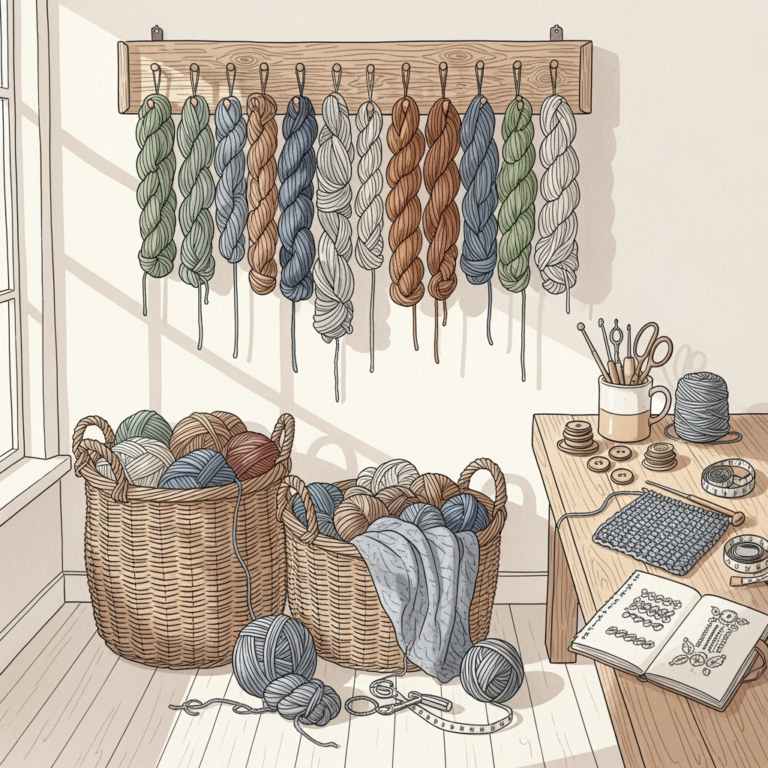
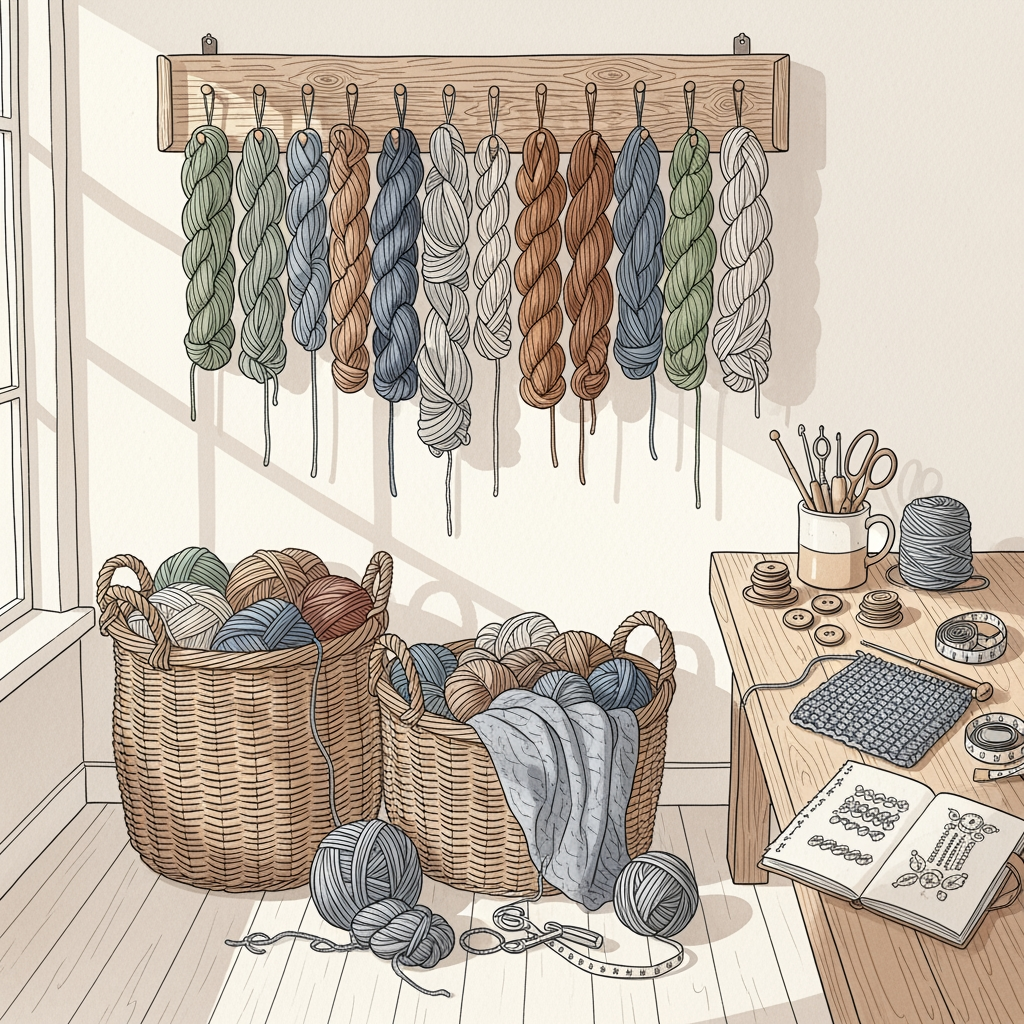
Gridwall panels offer the ultimate customization for a visual studio. By using various hooks and accessory attachments, you can display finished shawls or organized hanks of yarn at eye level for better color matching.
This system is particularly effective for those who use color theory to organize their inventory. Seeing your palette vertically makes it easier to spot how different shades of hand-dyed wool will interact in a stranded colorwork project.
Remember that gridwall requires a solid mounting surface. If you intend to hang significant weight, ensure the panels are securely anchored to wall studs, as the leverage from heavy bundles can pull weak fasteners loose.
UBesGoo Industrial Shelving: Best for Bulk Yarn
For the knitter who buys in bulk or maintains a large inventory of sweater-quantity yarn, industrial shelving is the most cost-effective solution. These units offer deep, wide shelves that accommodate dozens of yarn bags without compromising structural integrity.
The solid metal shelves offer a stable platform for heavy boxes or plastic bins. This is essential for protecting delicate fibers from light exposure, which can cause fading in natural yarns over long periods.
Use clear, stackable bins on these shelves to group yarns by fiber content or weight. Labeling bins by base type—such as “Superwash Merino” or “High-Twist Sock”—will save hours of searching when you are ready to start a new project.
Amazon Basics Wire Cubes: Best Budget Organizer

Wire cubes are a clever, budget-friendly hack for organizing smaller amounts of yarn or specialized accessories. These can be configured into various shapes, allowing them to fit into odd corners or under work tables.
They work best for storing yarn in individual cakes or small bundles. Because the cubes are relatively shallow, you can easily see what you have, preventing the dreaded “stash neglect” where yarn stays buried at the bottom of a bin for years.
The trade-off here is stability. While they are excellent for yarn, do not attempt to store heavy items like knitting machines or industrial steamers on these units. Use zip ties to reinforce the connections between cubes for a more secure structure.
Simple Houseware Double Rod Rack: For Small Spaces
A double rod rack doubles your hanging storage capacity without requiring a massive footprint. This is ideal for airing out garments after blocking or storing finished projects that are awaiting final photography.
The dual-level configuration allows for vertical organization. You can place longer items like cardigans on the top rod and shorter items like cowls or smaller accessories on the bottom.
If you are displaying lace garments, ensure the rack is placed away from high-traffic areas. The double-rod design can feel crowded, and the delicate nature of lace can lead to snagging if the rack is packed too tightly.
Whitmor Rolling Garment Cart: Best for Pop-Up Shops
If you are a vendor at craft fairs or fiber festivals, a rolling cart is a non-negotiable tool. These units are designed to be mobile, allowing you to transport a curated collection of inventory from your home to a market space with ease.
The wheels on these carts must be robust enough to handle various flooring surfaces, from carpeted convention centers to uneven outdoor ground. Look for models with locking casters to ensure your inventory stays put once you reach your booth.
Always test the weight limit before loading up for an event. A rack that seems sturdy at home may become unstable when fully loaded and in motion across a bumpy parking lot.
How to Choose the Right Rack for Your Craft Business
Selecting the right equipment starts with an honest assessment of your physical inventory. Identify your primary storage needs: are you hanging finished garments, or are you stacking yarn?
- Weight: Consider the weight of your fiber. Dense wools are far heavier than acrylics or lace-weight silk.
- Dimensions: Measure your available space, including height. Vertical storage is almost always superior to horizontal storage in small craft rooms.
- Accessibility: Choose a system that allows you to reach your most-used items without moving other gear.
Always prioritize accessibility over sheer volume. If your storage is too difficult to navigate, your workflow will suffer, and you will eventually find yourself with yarn “lost” in deep, dark corners.
Understanding Weight Capacity and Rack Stability
Weight capacity is not a suggestion; it is a critical safety parameter. Industrial-rated racks often provide the load-per-shelf limit, which is vital when stacking heavy cones or large totes.
Stability is equally important. A rack that is top-heavy or improperly balanced can be a danger in a workspace. If you have tall shelving, use anti-tip kits to secure the unit to the wall, especially if your studio is in a household with children or pets.
Never exceed the stated weight limit, even if the rack seems sturdy. Metal fatigue happens gradually, and a rack that holds today may collapse tomorrow if it is continuously pushed beyond its engineering specifications.
Wheels vs. Stationary Racks: Key Considerations
Wheels provide mobility, which is an advantage for those who rearrange their studio frequently. However, wheels introduce a point of failure; if one caster breaks, the entire rack becomes difficult to move and potentially unstable.
Stationary racks offer greater rigidity and are safer for heavy-duty, long-term storage. If you choose a wheeled unit, always verify that the casters are locking and made of a material that will not damage your flooring.
If you find yourself rarely moving your racks, consider removing the wheels entirely. A stationary base usually provides a lower center of gravity and a cleaner, more professional look in a dedicated craft space.
Effective storage is the foundation of a productive fiber arts practice. By investing in the right hardware, you turn a collection of yarn and garments into a curated, accessible inventory that fuels creativity rather than cluttering the mind. Choose the rack that aligns with your specific space and weight needs to ensure your fiber arts journey remains organized and enjoyable for years to come.