6 Best Foam Brushes For Decoupage Applications
Achieve smooth, bubble-free finishes on your next project with our top 6 foam brushes for decoupage. Read our expert reviews and choose the perfect tool today.
Decoupage often serves as the perfect bridge for knitters looking to decorate storage bins, needle boxes, or personalized project markers. Just as selecting the right needle material—like wood for slick mohair or metal for fast-paced stockinette—changes the outcome of a garment, choosing the right applicator dictates the success of a decoupage project. Foam brushes provide a unique, streak-free surface that manages adhesives much like a smooth bamboo needle manages delicate silk yarn. This guide breaks down the essential tools to ensure the finish on your craft projects is as professional as your finished knitting.
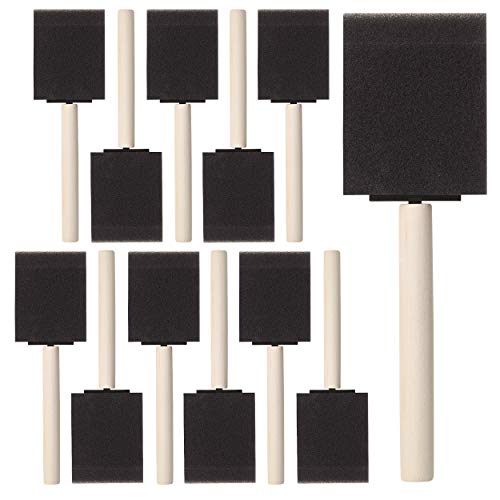

Mod Podge Foam Brush Set: The Decoupage Staple

When consistent performance is required, sticking to the industry standard is rarely a mistake. These brushes are specifically engineered to interact with water-based decoupage glues without absorbing too much product or losing their shape mid-application.
Much like standard size 4mm needles are the go-to for many worsted weight projects, these brushes provide a predictable, middle-of-the-road experience. They offer enough rigidity to push the glue into paper fibers without being so stiff that they drag and tear the material.
If a project involves simple paper decoupage on a sturdy wooden box, these brushes are the most reliable choice. They represent the baseline of quality for crafters who prefer a straightforward, no-nonsense tool that simply works every time.
Pro Grade Foam Paint Brushes: Best Value Pack
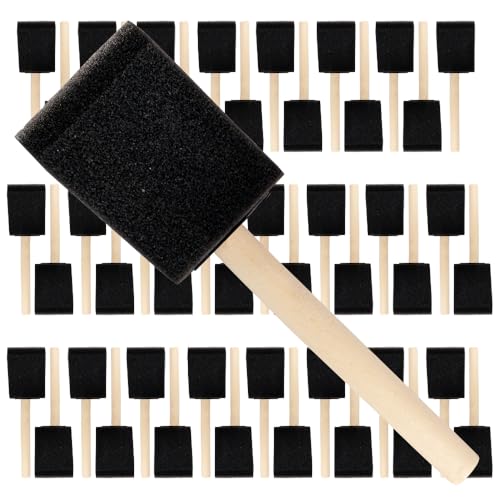
High-volume crafting—such as covering a set of matching storage bins for a yarn collection—requires a tool that remains functional without the need for constant, tedious cleaning. These bulk packs are the equivalent of buying a value pack of circular needles for a project with many different sizes.
Because these brushes are inexpensive and sold in large quantities, there is no guilt in disposing of one if it becomes too saturated with adhesive. This is a massive benefit when working with multiple decoupage layers where a dirty brush might ruin a clean, dry surface.
While the foam density is slightly lower than professional-grade options, they get the job done for base coats and rough applications. Think of them as the reliable aluminum needles in the kit: they may not be luxury, but they never fail to complete the task.
Loew-Cornell Assorted Foam Brushes: For Details
Precision is paramount when applying thin paper or napkins to curved, intricate surfaces like a yarn bowl or a small notions tin. These assorted sets provide various tip shapes that function much like interchangeable needle tips, allowing for maneuverability in tight corners.
The ability to switch between a thin edge and a wider surface area is vital for avoiding glue pooling. Proper technique here is similar to managing tension; if too much glue gathers, it leads to bubbling or tearing, much like an uneven stitch creates a bump in a sweater.
Choose these if the goal is to reach every nook and cranny of a project without sacrificing control. They are the surgical tools of the decoupage world, ideal for delicate, fiddly work.
Jen Poly-Foam Brushes: The Professional’s Choice
For makers who demand a flawless, furniture-grade finish, the Jen Poly-Foam brush is the gold standard. These brushes feature a unique, denser foam that acts more like a high-quality fabric swatch, absorbing only what is necessary and releasing it with controlled pressure.
They are remarkably durable and resistant to the harsh, tearing edges of heavy cardstock or wood textures. Using one is akin to upgrading from plastic needles to high-end, polished ebony; the tactile experience is superior and the results are demonstrably smoother.
While they carry a higher price point, the longevity of these brushes makes them a wise long-term investment. They are the preferred choice for heirloom-quality projects where even a single visible brush stroke would be an unwelcome distraction.
Royal & Langnickel Large Foam Brush: For Big Jobs
Large-scale decoupage projects, like refreshing a vintage furniture piece or covering a large desktop organizer, require a wider footprint. These large brushes cover significant surface area quickly, mirroring the efficiency of using jumbo needles for chunky, super-bulky yarn projects.
The wider foam head ensures that the glue is laid down in long, fluid strokes. This minimizes the risk of the glue beginning to set in one area before the rest of the surface is covered, effectively preventing patchy, uneven textures.
If the project requires broad, sweeping movements, do not settle for small, narrow brushes that will double the labor time. This tool is built for speed, stability, and broad-stroke coverage.
Wooster Pro Foam King Brush: For Smooth Finishes
This brush is engineered for those who struggle with the dreaded “orange peel” texture that sometimes occurs when applying thick sealants or adhesives. The foam is incredibly tight-celled, which helps distribute the decoupage medium with the uniform consistency of a well-blocked lace shawl.
When you need an absolutely level finish, the quality of the applicator becomes the single most important variable. These brushes are built to minimize bubbles, making them essential for high-gloss, transparent finishes where any imperfection is immediately visible to the eye.
While they may seem like overkill for simple projects, the difference in the final aesthetic is undeniable. Use them for the final top-coat layers to ensure a glassy, professional appearance that stands up to scrutiny.
How to Pick the Right Foam Brush for Your Project
Selecting the right tool requires an assessment of both the substrate and the medium. Just as you match fiber content to the intended garment use—wool for warmth, cotton for drape—you must match the brush to the material.
- For paper/napkins: Opt for high-density foam to avoid tearing.
- For wood/porous surfaces: Choose a larger, slightly firmer brush for better penetration.
- For top-coating/sealing: Always prioritize a fine-pored, professional-grade foam.
If the surface has texture or carvings, look for a brush with a tapered edge. A square-cut brush will often miss the indentations, leaving dry patches that can compromise the durability of your seal.
Getting a Smooth Finish: Avoiding Brush Strokes
Brush strokes in decoupage usually stem from one of two issues: too little glue or improper technique. The goal is to apply the medium in a thin, even layer, similar to keeping your knitting tension consistent across a long row of stockinette.
Always move the brush in one direction rather than scrubbing back and forth. Scrubbing creates air bubbles, which are the enemy of a smooth finish, much like dropped stitches are the enemy of a structural cable pattern.
If the glue feels “sticky” or is pulling at the paper, your brush is likely too dry. Add a tiny amount of water to your adhesive mix to improve flow, just as one might use a light misting of water to ease the manipulation of stubborn, stiff wool yarns.
Cleaning and Reusing Your Decoupage Foam Brushes
Foam brushes can be reused if they are cleaned properly, though they eventually lose their structural integrity. To clean, rinse the brush in warm water immediately after use; leaving glue to dry in the pores is like leaving a needle tip caked with dried adhesive.
Avoid aggressive scrubbing with your fingernails, as this will tear the delicate foam. Gently squeeze the water out, then pat it dry with a lint-free cloth, ensuring no fibers are left behind to settle into your next project.
If the foam starts to crumble or lose its elasticity, it is time to retire the brush. Like a set of bamboo needles that have become splintered through years of use, a degraded foam brush will eventually cause more damage than it solves.
Foam vs. Bristle Brushes for Decoupage Glue
Foam brushes and bristle brushes occupy different spaces in a crafter’s toolkit, much like the difference between a circular needle and a double-pointed needle. Bristle brushes are prone to leaving shed hairs and physical grooves in the glue, which can ruin a smooth decoupage application.
Foam is naturally better at self-leveling and absorbing excess, making it far superior for the delicate process of bonding thin materials. While bristles are great for thick, heavy-duty paints, they are rarely the right choice for the subtle, thin-layer application required for decoupage.
Ultimately, foam brushes offer a level of control and uniformity that bristles simply cannot match for this specific craft. Relying on foam is the surest way to achieve a professional, seamless result that lets the beauty of the paper take center stage.
Finding the right tool is the difference between a project that looks handmade in the best possible way and one that betrays its amateur construction. By selecting the correct foam brush based on the scale and material of the work, you ensure that every decoupage piece is as refined and precise as a well-crafted knitted garment.