6 Best Tablet Stand Risers For Eye Level Viewing
Improve your posture and productivity with our top 6 picks for the best tablet stand risers for eye level viewing. Shop our expert recommendations today.
Staring down at a digital pattern while working on complex cable work is a recipe for severe neck strain and posture fatigue. Many knitters transition from paper charts to tablets, only to find that slouching over a screen ruins the flow of a multi-hour knitting session. Proper eye-level viewing is not just a luxury; it is an ergonomic necessity for those who spend their evenings working on intricate lace or stranded colorwork. Selecting the right stand transforms a digital device from a neck-craning nuisance into a seamless part of the crafting toolkit.
Lamicall Tablet Stand: Best Overall for Knitters
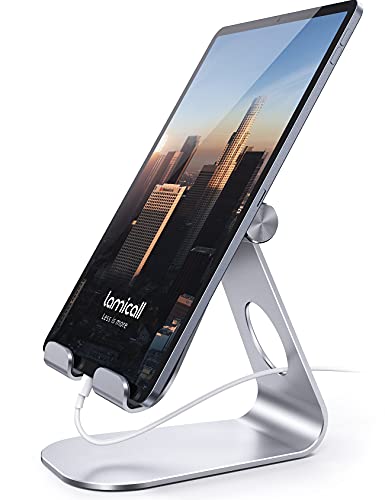

The Lamicall stand is the gold standard for home knitting stations. Its weighted base and sturdy aluminum construction ensure that even when tapping the screen to track progress on a complex chart, the device stays firmly in place.
This stand features a pivot point that allows for near-infinite angle adjustments. Whether sitting upright in an ergonomic chair or reclining on a sofa, the screen can be tilted to eliminate the glare of overhead lights on the tablet display.
The hook-style holders are deep enough to accommodate most tablets even when protected by a thick, rugged case. For knitters who keep their devices in heavy-duty covers to protect against errant yarn needles or accidental spills, this is a significant advantage.
Twelve South Compass Pro: Ideal for Knitting Bags

Portability is vital for knitters who frequently attend fiber guilds, retreats, or long train rides. The Twelve South Compass Pro folds down into a remarkably slim profile that disappears into a notions pouch or an exterior pocket of a knitting tote.
Despite its minimalist aesthetic, it offers remarkable stability. It functions like an easel, using high-quality steel legs that grip various surfaces effectively, ensuring the tablet doesn’t slide when the user is picking up stitches or managing long floats in colorwork.
Because it is a fold-flat design, it lacks the height adjustability of a pedestal stand. It works best on tables or flat tray tables, making it the perfect companion for travel projects like simple stockinette socks or repetitive garter stitch shawls.
KABCON Stand: Sturdiest for Large Digital Charts

Large-scale digital charts require a stand that can handle the weight of bigger tablets without sagging. The KABCON stand utilizes high-tension hinges that lock the tablet firmly at the chosen angle, preventing the slow drift often found in cheaper models.
For knitters working with complex lace designs that span multiple pages, the ability to support a 12-inch tablet in landscape orientation is essential. The base is wide and heavy, providing the necessary counterbalance to keep the device steady while the hands remain busy with needles.
The construction is entirely metal, which withstands the daily wear of being moved between a desk and a living room. It provides a reliable, rock-solid anchor for long, multi-day projects where the pattern must remain visible at all times.
OMOTON T1 Stand: Most Adjustable for Any Setup

The OMOTON T1 offers a high degree of versatility through its dual-hinge design. This allows the tablet to be raised significantly higher than standard cradles, bringing the pattern directly to eye level to prevent the “knitter’s hunch.”
When adjusting the height, the hinges feel tactile and firm. This resistance is crucial; if the hinge is too loose, the weight of the tablet will cause it to collapse just as the user reaches a critical point in a row.
It is particularly well-suited for knitters who prefer to view their patterns while standing at a cutting mat or working at a yarn-dying station. The small footprint also makes it ideal for crowded coffee tables where yarn bowls and notions jars leave little room for equipment.
UGREEN Tablet Holder: A Great Budget-Friendly Pick
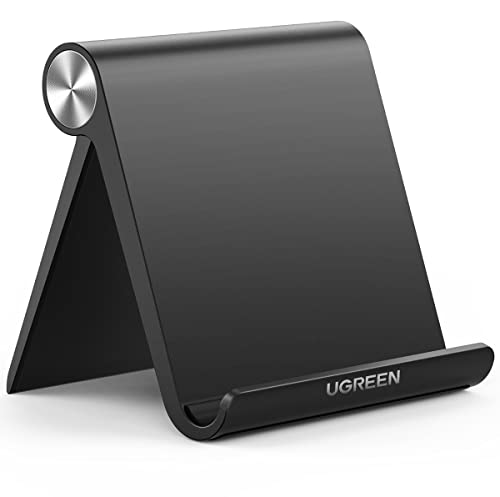
Not every knitting accessory needs to be a significant investment, and the UGREEN holder excels at providing basic, reliable functionality. It utilizes a simple, multi-angle slot design that is essentially foolproof.
While it lacks the adjustable height of premium models, it is incredibly durable because there are no complex moving parts to break. For knitters who mostly work on simple, meditative projects like ribbed scarves, this stand provides a clear view without unnecessary complications.
The rubberized grips ensure the tablet doesn’t slip, even if the surface underneath is slightly uneven. It is a fantastic entry-level choice for beginners who want to move away from paper patterns without spending a significant portion of their budget on accessories rather than fiber.
MOFT X Adhesive Stand: Best for On-the-Go Knitting
The MOFT X is a game-changer for knitters who want to keep their equipment as light as possible. It is an adhesive, foldable stand that sticks directly to the back of the tablet or its case, adding almost no weight or bulk.
Because it is permanently attached, there is never a risk of forgetting the stand at home when heading out to a knitting circle. It can be deployed in seconds, propping the tablet up in both portrait and landscape modes with a single motion.
The primary tradeoff is that the height is fixed based on the folding angle, and it is less stable on plush or soft surfaces like a bedspread. It is the ultimate tool for a minimalist kit, perfect for those who prioritize portability over the robust stability of a metal desk stand.
How to Pick a Stand: Stability vs. Portability
Choosing the right stand requires a realistic assessment of where the knitting happens. If the workspace is a dedicated craft desk, prioritize a heavy, weighted base that can handle the inevitable jostling that comes with vigorous knitting or untangling a messy hank of wool.
Conversely, for those who knit in various locations, focus on the weight and folded dimensions of the stand. A stand that is too cumbersome will inevitably stay in the closet, rendering it useless for travel or social knitting sessions.
- Stability: Look for metal construction, wide bases, and tension-adjustable hinges.
- Portability: Look for low weight, fold-flat designs, and compact footprints.
Key Features for Hands-Free Pattern Reading
When evaluating a stand, always check for “device clearance.” Ensure the holder does not obscure the bottom of the screen, as many digital pattern apps place navigation buttons or row counters right at the edge of the display.
Rubberized padding is another non-negotiable feature. It protects the tablet’s finish and ensures that the device doesn’t slide during the intense, repetitive motion of working through a row of intricate cables or complex brioche stitches.
Finally, consider the angle of the “lip” that holds the tablet. A deep lip is necessary if the tablet is in a bulky, protective case; a shallow lip will result in the tablet sliding off the stand whenever the screen is touched.
Setting Up Your Stand to Avoid Neck Strain
The goal of a tablet stand is to keep the cervical spine neutral. The top third of the tablet screen should sit at eye level, allowing the chin to remain parallel to the floor rather than tucked toward the chest.
Position the stand far enough away that the eyes can easily focus on the text, but close enough that the knitting isn’t obscured by the tablet’s frame. Proper alignment prevents the tension headaches that often occur after two or three hours of intense concentration.
If the neck still feels tight after a session, adjust the angle of the screen to minimize the need for downward gaze. It is often helpful to raise the entire stand on a stack of books if the model itself lacks sufficient height adjustment.
Will My Tablet Fit? A Guide to Sizing and Cases
Always measure the total thickness of the tablet including its case before purchasing. Many stands have a limited slot width, and a rugged, drop-proof case can add significant girth that standard stands may not accommodate.
For larger devices like 12.9-inch tablets, the weight distribution of the stand becomes the deciding factor. Always look for stands that specify support for larger screens to avoid the annoyance of the device toppling over during a delicate lace chart read.
When in doubt, prioritize a stand with adjustable “arms” or a gravity-based hinge system. These models are inherently more flexible and accommodate a wider range of device sizes and case profiles than fixed-cradle designs.
The perfect tablet stand serves the knitter without demanding attention, allowing the focus to remain entirely on the tension, the fiber, and the stitch. By matching the hardware to the specific environment and the complexity of the project, the crafting experience becomes significantly more comfortable and sustainable. Invest in the right support, and enjoy the rhythm of the needles without the distraction of neck strain.