6 Best Hot Glue Sticks For Durable Bonds That Last
Discover the 6 best hot glue sticks for reliable, long-lasting results. Read our expert review to find the perfect adhesive for your next project and buy today.
Hot glue is often misunderstood as a simple craft room staple, but for those working with yarn and textiles, it serves as a specialized engineering tool. Whether anchoring a silk lining into a hand-knit bag or securing structural elements in a complex costume, the right adhesive determines if a project holds its shape or falls apart after a single season. Choosing the wrong formula can lead to heat damage on delicate wool or unsightly, brittle bonds that snap under the natural tension of fiber movement. This guide explores the most reliable sticks on the market to ensure every project remains as sturdy as the day it was finished.
Gorilla Hot Glue Sticks: Best Overall for Strength
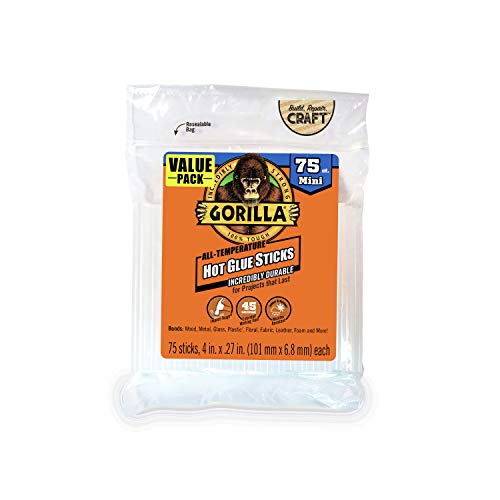

Gorilla Glue has earned its reputation by offering a significantly longer “open time” and a more robust chemical composition than standard craft store brands. This extra working time is vital when aligning multiple layers of heavy-gauge felt or stiffened fabric panels that need to be perfectly placed before the adhesive sets.
The bond is exceptionally strong and slightly more flexible than traditional glues, which is a critical trait when attaching items to knitted surfaces. Because yarn has a natural give, a rigid, brittle adhesive will eventually crack and pop off; these sticks accommodate that subtle movement without sacrificing security.
Use this adhesive when the structural integrity of the project is the top priority. It is ideal for mounting heavy decorative elements, like metal clasps or wooden handles onto knit totes, where the weight could easily pull apart a lesser bond.
Surebonder Fabric Sticks: Best for Textile Crafts

Fabric-specific glue sticks are engineered with a lower melting point and a formula designed to soak into fibers rather than sitting on top of them. This creates a mechanical bond that mimics a weld between the yarn and the substrate, preventing the “pop-off” effect common with standard adhesives.
These sticks are specifically formulated to avoid the stiff, plastic-like texture that ruins the hand—or the soft, tactile quality—of a finished piece. When working with delicate natural fibers like mohair or alpaca, this adhesive won’t pull or fray the delicate halo of the yarn.
For anyone crafting heirloom-quality accessories that require a bit of discreet structure, these are the gold standard. They provide a permanent hold that won’t become brittle, even after the item has been stored for years in a knitting basket.
AdTech Multi-Temp Full Size: Most Versatile Pick
The AdTech Multi-Temp is a workhorse designed to perform well in both high and low-temperature settings. This versatility is indispensable for the maker who transitions between delicate synthetic yarns, which might melt under high heat, and sturdy cottons or wools that require a hotter, faster bond.
Because it is compatible with a wide array of temperature settings, it eliminates the need for keeping multiple types of glue on hand. It effectively bridges the gap between precision work—where you need a cooler, controlled application—and high-volume projects that require rapid drying times.
For the general crafter who tackles a wide variety of mixed-media projects, this is the most logical choice. It provides a reliable, consistent bond across different materials, from canvas linings to plastic embellishments, without the frustration of constant clogging or stringing.
Arrow AP10-4 All-Purpose: Best Value Bulk Pack
When working on large-scale textile installations or producing multiples of a pattern, the price-per-stick adds up quickly. The Arrow AP10-4 offers a dependable, no-frills adhesive that is perfectly suitable for general-purpose bonding tasks that don’t require high-end industrial strength.
While it lacks the specialized flexibility of the fabric-specific sticks, it is more than capable of holding standard yarns to felt or cardboard backing. It is a smart choice for mock-ups, prototypes, or the interior structures of complex projects that will be hidden from view.
Avoid using this for external-facing elements that will experience significant friction or wear. Use it instead for the internal “bones” of a piece, such as stiffening a brim or securing a base, where volume and economy are the primary concerns.
Artellius Mini Black Sticks: For Opaque Bonding
Black glue sticks are a clever secret weapon in the fiber artist’s kit, particularly for projects involving dark-colored yarns or deep-dyed textiles. Clear glue, when it dries, often leaves a shiny, visible residue that can be difficult to hide on dark indigo or charcoal wools.
By using a color-matched adhesive, the glue effectively disappears into the project. This is a game-changer for finishing edges or applying small, dark-colored findings like buttons or charms, where a white or translucent glue line would otherwise act as an unwanted highlight.
These mini sticks are best suited for smaller, detail-oriented tasks where precision is key. Keep in mind that once applied, the color is permanent, so ensure the placement is accurate on the first pass to avoid staining the surrounding fibers.
3M Scotch-Weld 3792FP: Pro-Grade Durability
The 3M Scotch-Weld series is categorized as a professional-grade adhesive, and the difference is evident in the viscosity and the cleanliness of the application. It offers an incredibly clean finish with minimal “strings”—the thin, spider-web-like trails of glue that plague cheaper sticks.
This product is designed for high-performance applications where the bond must withstand temperature fluctuations and physical stress. For items that might be exposed to the elements or frequent handling, such as knit wearables or home décor, it offers a level of durability that is rarely found in standard consumer products.
Investing in pro-grade sticks is worth it for advanced makers who are putting significant time and effort into their work. It guarantees that the finishing touches will last as long as the knitting itself, preserving the integrity of the piece against everyday use.
High-Temp vs. Low-Temp: Which Glue Is for You?
The distinction between high and low-temp glue is primarily about the melting point and the potential for heat damage. High-temp glue bonds faster and stronger, but it also reaches temperatures that can permanently singe or melt delicate fibers like nylon, acrylic, or fine-gauge wool.
Low-temp glue is the safer choice for heat-sensitive fibers, though it typically provides a slightly weaker, more surface-level bond. Use this setting when you are applying delicate embellishments that need careful placement, as the cooler temperature allows for a more forgiving working experience.
- Low-Temp: Best for silk, fine synthetics, lace weight yarns, and delicate trims.
- High-Temp: Best for heavy-duty construction, leather, wood, or thick, non-fusible backing materials.
- Safety Rule: Always err on the side of caution. If the fiber feels fragile or synthetic, start with the low-temp setting to prevent irreparable damage.
Choosing the Right Glue Stick Size for Your Gun
Glue sticks come in two standard diameters: mini (0.27 inch) and full-size (0.44 inch). The choice is rarely about the strength of the bond and almost entirely about the volume of glue you need and the design of the glue gun you possess.
Mini sticks are ideal for intricate, delicate detail work where only a small bead of glue is required. They are excellent for fine-tuning the placement of tiny beads or delicate lace appliques on a larger knitted background.
Full-size sticks are designed for larger projects where you need to lay down a continuous bead over a longer distance. If you find yourself constantly stopping to reload a mini glue gun, switching to a full-size unit will significantly increase your efficiency and allow for smoother, uninterrupted bonds.
Tips for Using Hot Glue on Yarn and Fabric
Applying hot glue to yarn requires a delicate touch, as yarn is porous and will absorb the liquid adhesive. To ensure a solid bond, apply the glue to the non-porous material first, then press the yarn onto the adhesive, rather than applying the glue directly to the yarn.
This prevents the glue from saturating the fiber and creating a hard, uncomfortable lump that changes the drape of the fabric. Additionally, always work on a flat, protected surface to prevent glue from seeping through the gaps in the knit and bonding your project to the table.
- Avoid over-applying: A little glue goes a long way; too much creates a bulky, uneven finish.
- Cooling time: Allow the bond to sit undisturbed for at least five minutes to ensure the adhesive has fully solidified.
- Test first: Always perform a test bond on a swatch of your specific yarn before committing to the final project.
Hot Glue Safety: How to Avoid Burns and Mess
The most common mistake when working with hot glue is treating it with too much casualness, forgetting that it remains liquid at temperatures high enough to cause immediate skin burns. Keep a bowl of cold water nearby—not for the project, but for your fingers—in case of accidental contact with hot adhesive.
To manage the mess, keep a silicone mat or a piece of parchment paper under your workspace. These materials are non-stick, allowing you to easily peel off any stray drips that would otherwise be permanent once they harden on wood or fabric surfaces.
Finally, never try to pull or scrape hot glue off a delicate fabric while it is still warm, as this will likely tear the fibers or push the glue deeper into the weave. Wait until the glue is completely cool and hardened; it will often peel away more cleanly, or it can be carefully picked off with tweezers.
Selecting the right glue is just as important as choosing the right yarn for your project. By matching the adhesive strength and temperature to the specific needs of your fabric, you ensure that every carefully crafted piece stays together for years to come.