6 Best Fine Tip Markers For Marking Chain Lengths
Find the 6 best fine tip markers for marking chain lengths with precision. Improve your accuracy and shop our top expert-tested recommendations for your kit today.
Tracking chain lengths and stitch counts accurately is the hallmark of a meticulous knitter. Whether gauging the length of a provisional cast-on or mapping out the placement of complex cables, precision marks are essential for avoiding costly mistakes. Choosing the wrong marker can lead to permanent fiber staining or marks that vanish before the project is finished. This guide identifies the top markers that balance visibility, safety, and reliability for various knitting workflows.
Sakura Pigma Micron: Best for Archival Patterns
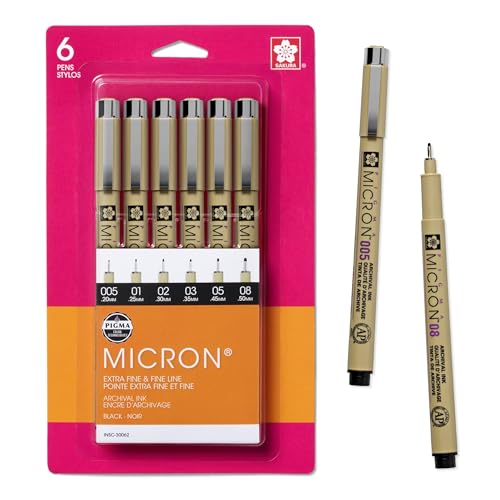

Sakura Pigma Micron pens are the gold standard for those who keep detailed project journals or wish to label yarn hanks for long-term storage. The pigment-based ink is chemically stable, meaning it won’t fade or eat through delicate fibers over time.
Because these pens provide a consistent flow without feathering, they are perfect for marking crisp lines on paper charts or rigid physical tags. If the project requires precise notations on a project sheet or a swatch tag that needs to survive years of archival storage, this is the superior choice.
Avoid using these directly on finished yarn unless the item will never be washed or handled excessively. While the ink is archival, it is not designed to be removed from porous animal fibers like wool or mohair.
Pilot Frixion Pen: For Notes You Can Erase

Pilot Frixion pens utilize thermo-sensitive gel ink that disappears completely when exposed to friction or heat. For knitters who find themselves constantly adjusting their gauge notes or sketching stitch patterns on paper, this provides a “safety net” for mistakes.
The true magic for the knitting room occurs during the blocking process. If marks are accidentally left on a paper project guide or a swatch tag, a quick pass with a hair dryer or the heat from a steam iron makes the ink vanish instantly.
Be wary of using these on cold-weather accessories meant for high-altitude or sub-zero climates. If the temperature drops low enough, the ink can reappear, potentially marring a pristine piece of finished knitwear.
Sharpie Ultra Fine Point: A Household Favorite

The Sharpie Ultra Fine Point is a tool found in almost every craft room for good reason. Its alcohol-based ink is intensely pigmented and provides immediate, bold visibility on synthetic materials like acrylic yarn tags or plastic cable needles.
This marker performs best when labeling plastic notions cases, rigid stitch markers, or identifying synthetic yarn scraps. It does not smudge once dry, making it ideal for high-traffic organization where labels are handled frequently.
Do not use this on high-end, light-colored natural fibers like silk or cashmere. The permanent ink will migrate into the yarn structure instantly, and there is no way to remove it without damaging the delicate protein fibers.
Clover Water Erasable: For On-Fabric Marking

When temporary markings are required directly on a project—such as marking the center point for a complex lace repeat—Clover Water Erasable markers are the industry standard. These pens are designed to leave a mark that stays visible until it is intentionally washed away.
They are particularly useful for marking the right side of dark fabrics or large swatches where you need to track your location without leaving a permanent trace. Simply dabbing the mark with a damp cloth or a quick soak in the final blocking bath removes it completely.
Always test these on a small scrap of your specific yarn first to ensure the dye doesn’t interact poorly with the fiber. Some specialty hand-dyed yarns with loose pigments may react unexpectedly when exposed to the marker’s solution.
Staedtler Lumocolor: Ideal for Marking Tools
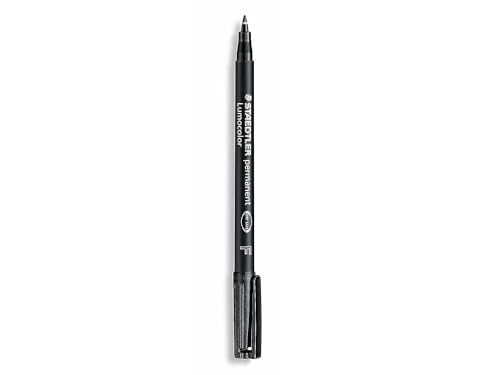
Staedtler Lumocolor pens are essentially permanent ink pens designed for non-porous surfaces. They excel when you need to label your knitting needle storage cases, plastic yarn bobbins, or metal circular needle tips without the ink rubbing off over time.
The fine, durable tip resists dulling even when dragged against textured surfaces like plastic or polished wood. If you are an organized maker who color-codes needles by size, these pens provide the most resilient and professional-looking labels.
Because these are permanent, they are strictly for tools and storage equipment, not for textile use. Keep them away from your finished shawls and sweaters to prevent accidental contact that could ruin hours of labor.
Zebra Sarasa Clip: The Best Everyday Gel Pen
For a reliable, smooth-writing pen that handles daily documentation, the Zebra Sarasa Clip is a favorite among knitters who prefer fluid, easy-to-read notation. The water-based pigment ink flows cleanly and sits on top of paper fibers rather than soaking through.
This is the pen to reach for when updating your Ravelry project notes or writing out row-by-row instructions for a custom pattern. The clip mechanism is robust, allowing it to stay securely attached to your project bag or knitting journal.
Like most gel pens, the ink takes a few seconds to dry. If you are rushing to log your row count after a late-night knitting session, be careful not to smudge the ink against the pages of your pattern folder.
How to Choose the Right Marker for Your Project
Choosing a marker is less about the brand and more about the intended “lifespan” of the mark. Ask yourself if the information needs to be permanent, temporary, or somewhere in between.
- For Tools: Choose permanent, surface-resistant markers like the Staedtler Lumocolor.
- For Yarn Tags: Use a reliable, smudge-proof option like the Sharpie Ultra Fine Point.
- For Paper Journals: Prioritize ink stability and flow with the Zebra Sarasa or Pigma Micron.
- For Fabric/Yarn: Only use water-erasable markers and always prioritize testing on a swatch.
If you are working with luxury fibers like angora or mohair, avoid any marker that risks fiber contamination. In these cases, it is safer to mark a physical tag rather than the fiber itself.
Ink Showdown: Permanent vs. Erasable vs. Water
Understanding the chemistry of your ink prevents ruined projects. Permanent inks, like those in Sharpies, are solvent-based and bond with the surface; they are virtually impossible to remove from yarn.
Erasable inks, such as those found in the Frixion line, are heat-reactive. They offer great flexibility but carry the risk of “reappearing” if the item is subjected to extreme cold or if the original heat application wasn’t sufficient to turn the pigment fully clear.
Water-erasable inks are the safest for direct-to-fiber applications. However, they rely on the assumption that you will be washing the item. If you are making a delicate wall hanging that won’t be washed, these might not be the correct choice.
The Bleed Test: Always Check Your Marker First
Before a marker touches any project component, conduct a bleed test. Take a scrap of the exact yarn or paper you are using and apply the marker. Wait for the ink to dry and then apply your standard cleaning or blocking solution.
Observe whether the ink spreads into the surrounding fibers. Check if the color bleeds onto other surfaces when pressed with a light-colored cloth. If the ink moves or leaves a halo, do not use it on the actual project.
Consistency is key. A marker might behave differently on superwash wool compared to a rustic, untreated highland wool. Always treat every new yarn base as a fresh test case.
FAQs About Using Markers for Fiber Crafts
Can I use a Sharpie on yarn? Only on synthetic tags attached to the yarn, never directly on the fiber, as it will bleed and potentially weaken the strands.
What if I accidentally use permanent ink on my knitting? Unfortunately, there is rarely a way to remove permanent ink from natural fibers without damaging them. It is often better to incorporate the mark into a decorative element like an embroidered detail.
How do I keep markers from drying out in my knitting bag? Store markers horizontally and ensure the caps click shut completely. Investing in a small, rigid pencil case helps protect the tips from being crushed by heavy knitting needles.
Selecting the right marker is a subtle but vital part of maintaining order in your knitting process. By matching the tool to the specific material—whether it is an archival record or a temporary swatch guide—you protect your time and your yarn. Invest in quality instruments, and you will find your organizational flow becomes as smooth as your stockinette stitch.