6 Best Craft Clamps For Lampshade Construction
Struggling with DIY lighting? Discover the 6 best craft clamps for lampshade construction to ensure perfect alignment. Read our expert guide and start building.
Creating a beautiful lampshade requires the same precision as maintaining consistent tension across a complex lace pattern. Just as the right needle material changes how a yarn behaves, selecting the correct clamping tool determines whether the fabric sits taut or puckers on the frame. Professional results depend on holding materials firmly without damaging delicate weaves or intricate textures. These tools act as a third hand, ensuring the structure remains aligned while adhesive sets or bindings are sewn.
Clover Wonder Clips: Best for Delicate Fabrics
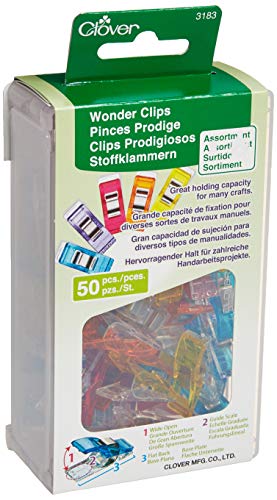

Clover Wonder Clips are the gold standard for projects involving silk, fine cotton, or fragile synthetic blends. Their flat base allows them to slide easily against a work surface, while the strong, spring-loaded hinge provides a firm yet gentle grip. Unlike metal clamps, the smooth plastic construction avoids snagging loose threads or leaving deep, permanent indentations in soft fibers.
When working with light-weight fabrics that might fray or crush, these clips provide essential stabilization. They operate much like a stitch marker that holds a cable crossing in place; they offer enough tension to prevent shifting without distorting the fabric grain. Because they lack sharp teeth, the risk of tearing a delicate weave is virtually eliminated.
For those prone to marking fabric with heavy tools, these are a reliable choice. They are best suited for smaller, intricate lampshades where maneuverability is more important than heavy-duty force. Rely on these when the goal is a flawless finish on high-end materials.
Pony Spring Clamps: The All-Purpose Workhorse
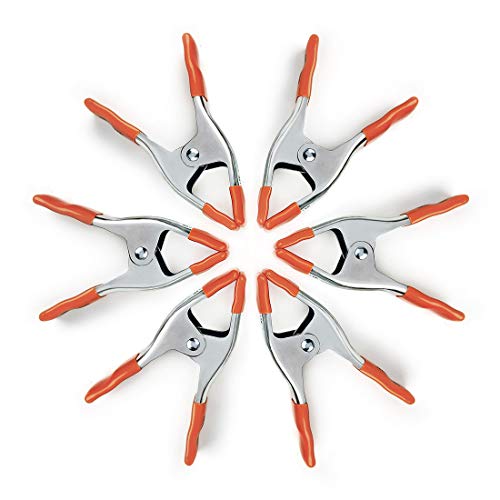
Pony spring clamps are the staple of any well-equipped studio, serving as the utilitarian equivalent of a sturdy aluminum needle. They provide a reliable, straightforward grip that functions perfectly for heavier fabrics like wool, tweed, or thick canvas. The simple spring mechanism allows for one-handed operation, which is invaluable when maneuvering a bulky wire frame.
These clamps feature protective plastic tips that prevent metal-on-metal contact, keeping the frame finish intact. While they lack the finesse of specialized clips, their ability to apply consistent, mid-range pressure makes them excellent for securing fabric to larger, more rigid structures. They are robust enough to endure years of repetitive use without losing their snap.
Keep a variety of sizes on hand to match the thickness of the lampshade material. When the fabric has a bit of “loft” or weight, a larger spring clamp ensures the edges stay pinned exactly where they belong. They are the reliable choice for standard projects that require sturdy, predictable pressure.
Irwin Handi-Clamp: Best for a Strong, Secure Grip

The Irwin Handi-Clamp utilizes a quick-release trigger mechanism that allows for high-pressure clamping with minimal physical effort. This makes it a superior option for mounting heavier, high-tension fabrics that tend to slip or shift during the bonding process. For makers who struggle with hand fatigue, the ergonomic handle design is a significant advantage.
This tool is particularly effective when working with styrene sheets that require a firm hold during the initial adhesion phase. Because it offers a wider opening than traditional spring clamps, it accommodates multiple layers of fabric and frame wire with ease. The steady, adjustable pressure ensures that the seam remains perfectly aligned from top to bottom.
Consider the Irwin for larger floor lamps or structured shades where the fabric needs to be pulled taut against the frame. While it is more powerful than necessary for fine silks, its versatility is unmatched for heavy-duty construction. Use it when the material requires a truly permanent, secure hold during the setting process.
Bessey Clippix Set: Top Choice for Versatility
Bessey Clippix clamps are renowned for their ergonomic design and flexible clamping range. They function with a unique pivot mechanism that allows the pads to adapt to angled or uneven surfaces, which is critical when clamping onto conical or tapered lampshade frames. The ability to pivot ensures that pressure is distributed evenly across the entire contact point.
This flexibility prevents the “wedging” effect where a clamp might slip off a sloped wire. For those who frequently switch between different shade shapes, this set offers the most adaptable solution. It bridge the gap between lightweight clips and heavy-duty industrial clamps, providing a balanced, nuanced grip.
Quality matters here, as the tension on these clamps is consistent and long-lasting. If the lampshade project involves complex curves or unconventional frames, the Bessey Clippix is the most sensible investment. They offer a level of control that helps prevent accidental warping of the frame.
WORKPRO 20-Piece Set: The Best Value Clamp Kit
A large project often requires dozens of contact points to ensure the fabric remains uniform, making the WORKPRO 20-piece kit an ideal starting point. This set provides an array of sizes and styles, ensuring the right tool is available for every section of the shade. Buying in bulk is a practical strategy for those who prefer to keep their workspace organized and prepared for any eventuality.
The variation in this set means you can use smaller clips for delicate areas and larger clamps for structural points. While the material is not as premium as some individual options, the sheer volume of clamps allows for a “set it and forget it” approach during the gluing stage. It is an excellent way to build a functional kit without overextending a budget.
Assess the size of the lampshades typically produced to determine if this multi-sized set meets the needs. The inclusion of various jaw sizes allows for precision in tight corners and strength on the main frame rings. It remains the top choice for those who value variety and project-wide coverage.
Heavy-Duty Binder Clips: An Ultimate Budget Hack
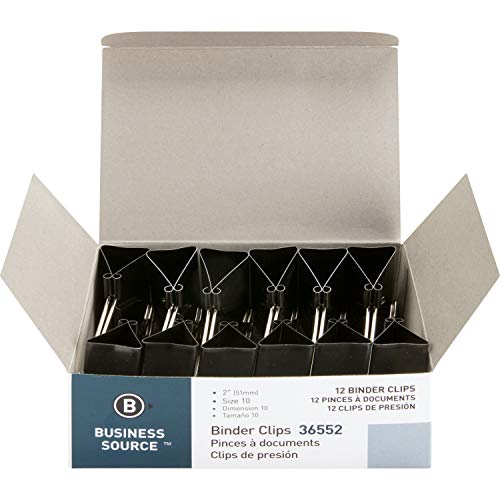
Never underestimate the utility of office supplies in a craft studio; large-scale binder clips provide an surprisingly effective, high-tension grip. These are the “scrap yarn” of the clamping world—they are incredibly cheap, available everywhere, and perform well in a pinch. Their steel construction offers a level of clamping force that surpasses many purpose-built plastic craft clips.
However, be cautious about the metal finish. It is highly recommended to pad the contact points with a small scrap of felt or heavy cotton fabric to prevent the steel from rusting or marking the shade material. When used with a protective layer, they provide an incredibly secure, flat grip that is perfect for folding fabric over the edges of a lampshade ring.
They are particularly useful for holding down binding tape or narrow trim while adhesive sets. While they lack the specialized ergonomics of professional clamps, they are effective for temporary holds during the construction phase. Use them as a cost-effective solution for small-scale adjustments and edge finishing.
How to Choose Clamps for Your Lampshade Project
Selecting the right clamp involves evaluating the weight of the fabric, the geometry of the frame, and the time required for the adhesive to set. Heavy, thick materials like velvet or wool require significant, sustained pressure to ensure the bond holds. Conversely, thin or delicate fibers demand a soft touch to avoid permanent compression marks.
Consider the following factors before you begin: * Frame Geometry: Tapered frames require pivoting pads that can grip at an angle. * Adhesive Cure Time: Long-curing glues require clamps that maintain consistent pressure over several hours. * Material Sensitivity: Natural fibers such as silk are prone to bruising, making soft-tipped or plastic clamps essential. * Quantity: Large shades often require many small clamps to keep the fabric even, rather than a few large, high-pressure ones.
Always evaluate the “dent factor” of the fabric. Test the clamp on a scrap piece of the same material for several hours to see if it leaves a lasting impression before applying it to the main project. A little preparation in the testing phase prevents ruined materials.
Clamp Pressure: How Much Is Too Much for Fabric?
In fiber arts, excessive pressure can be just as damaging as a loose gauge. Applying too much force to a lampshade can cause the fabric to stretch unevenly, leading to puckering or rippling once the frame is finally unmounted. The goal is to reach the point of “secure tension”—the fabric should not shift under light tugging, but it should not be so crushed that the weave is distorted.
If the clamps are leaving a deep indentation, they are likely too small or the spring tension is too high for the fiber type. For delicate weaves, utilize wider, flat-jawed clamps to spread the pressure over a larger surface area. This reduces the PSI (pounds per square inch) exerted on the fibers, keeping the texture intact.
Adjust the number of clamps to distribute force rather than increasing the strength of a single clamp. Spreading four medium-pressure clamps around a frame is almost always better than using one high-pressure clamp in a single spot. Patience during the set-up phase is the best insurance against a distorted final look.
Using Clamps on Wire Frames vs. Styrene Shades
Wire frames and styrene-backed shades require different clamping strategies due to the rigidity of the underlying material. Wire frames offer limited surface area, meaning the clamp must be precise enough to grab the wire without slipping off the fabric. Always aim for a “sandwich” approach, where the clamp grabs both the fabric and the wire frame simultaneously to lock them in alignment.
Styrene shades, which are essentially plastic-backed fabric, respond well to flat, wide-jawed clamps that can grip a larger area of the sheet. Because styrene is rigid, the clamps help maintain the curve of the shade while the edges are folded and secured. Be wary of using metal clamps directly on styrene, as they can sometimes create sharp creases if not used with care.
Regardless of the frame type, the primary goal is to prevent shifting while the adhesive dries. If the fabric slides even a millimeter, the tension across the entire shade becomes uneven. Choose a tool that matches the rigidity of the substrate; a firmer frame benefits from a more robust, spring-heavy clamp.
FAQ: Can I Use Clothespins for My Lampshade?
Clothespins are a popular DIY choice, but their utility is limited by their design. Most traditional wooden clothespins are designed for a very narrow range of movement and offer relatively weak, inconsistent pressure. While they might suffice for very lightweight fabrics or small repair jobs, they rarely provide the uniform tension required for professional lampshade construction.
The primary issue with wooden clothespins is the lack of a flat surface area. They tend to grip at a single point, which can cause the fabric to “walk” or shift during the setting process. Furthermore, their small size makes them difficult to remove quickly without potentially snagging the fabric as they are pulled off.
If you are just starting out, use them for temporary pinning, but invest in proper craft clamps as soon as possible. Professional tools are designed to facilitate a better workflow, saving you the frustration of uneven seams and slipped edges. Save the clothespins for laundry, and prioritize purpose-built tools for your craft work.
The success of a lampshade project rests heavily on the small, technical choices made during construction. By selecting the correct clamp for the specific demands of the fabric and frame, you ensure the structure remains stable, smooth, and professional in appearance. Invest in tools that support your craftsmanship rather than hindering it.