6 Best Buttonhole Feet For Adding Custom Closures
Struggling with sewing closures? Discover the 6 best buttonhole feet to achieve professional results on your next project. Upgrade your sewing toolkit today.
Finishing a hand-knitted cardigan with store-bought buttons often feels like a compromise, but adding high-quality, custom closures elevates a project from a craft piece to a professional garment. The secret to success lies not just in the button, but in the precision of the buttonhole itself. Using the correct presser foot ensures that dense, hand-knitted fabrics are fed through the machine without distorting or snagging. Selecting the right tool prevents the dreaded “chewed” fabric look, keeping the structural integrity of the yarn intact.
Janome Automatic Buttonhole Foot R: Best Overall
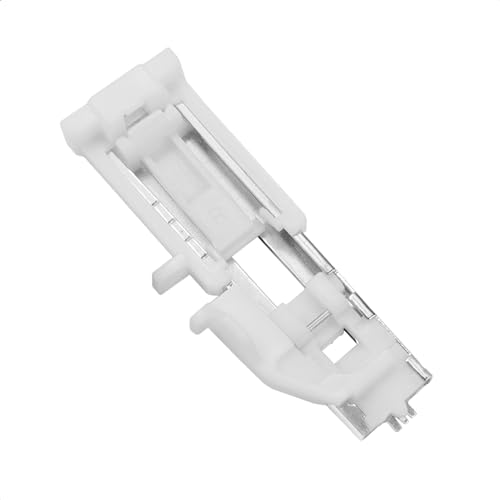

The Janome R foot functions as the gold standard for those who demand consistency across various yarn weights. It features a sliding measurement plate that allows the button to be placed directly into the foot, ensuring the machine calculates the exact length needed.
This precision is vital when working with delicate fibers like merino or silk blends, where repetitive stitching can cause the yarn to creep if the tension isn’t perfectly calibrated. By locking the button size, the machine handles the start and stop points, eliminating the guesswork that often leads to uneven closures on a button band.
It remains the preferred choice for those who frequently switch between different button sizes on varied knitting patterns. While it requires a compatible machine, the reliability it provides for high-end knitwear is unmatched.
Singer Sliding Buttonhole Foot: Easiest for Beginners

Simplicity defines the Singer Sliding buttonhole foot, making it an excellent entry point for knitters who fear the technical aspects of machine finishing. Its design relies on a clear, straightforward sliding mechanism that dictates the stitch length before the needle hits the fabric.
This foot is particularly forgiving when navigating the bulk of a doubled-over button band. For those who find the automated sensors of computerized machines intimidating, this mechanical approach offers tactile control over the stitching process.
Keep in mind that it lacks the high-tech feedback of electronic systems, meaning users must keep an eye on the stitch density. For quick, functional closures on rustic wool or cotton garments, it offers a seamless experience without unnecessary complication.
Low Shank Snap-On Buttonhole Foot: Best Universal Fit
Many vintage machines or entry-level models utilize a low-shank configuration, which often complicates the search for accessories. The universal snap-on buttonhole foot solves this by attaching easily to the standard presser bar found on a vast majority of home sewing machines.
This foot is a workhorse for knitters who maintain a stable of older, reliable machines alongside their modern technology. It provides a sturdy, predictable platform for creating buttonholes in heavy-gauge sweaters where bulk is a significant factor.
Because it is a generic fit, it may not have the specialized sensors found in brand-specific feet. However, its versatility allows it to bridge the gap for knitters who frequently switch between machines for different project types.
Brother Sensor Buttonhole Foot M: For Computerized Use

Computerized sewing machines require feet that communicate directly with the internal motherboard, and the Brother Sensor foot excels here. It utilizes an electronic sensor to “read” the thickness of the fabric, adjusting the stitch width and density automatically.
For projects featuring complex cabling or heavy ribbing on the button band, this sensor prevents the needle from skipping stitches. It is a sophisticated piece of gear that ensures the buttonhole is strong enough to withstand the tension of a frequently worn garment.
While this foot represents a higher investment, it is an essential tool for high-volume makers. It essentially removes the need for manual adjustment, letting the machine handle the nuances of stitch placement.
Bernina Buttonhole Foot with Slide #3A: Best for Knits
The Bernina #3A foot is engineered with a slide mechanism that maintains consistent pressure, which is critical when sewing through knit fabric. Elasticity in hand-knitted pieces often causes them to stretch and warp under the presser foot; this accessory mitigates that movement.
The design allows for an unobstructed view of the needle area, permitting the knitter to guide the fabric precisely. It is highly effective at handling the natural “give” of a swatch, ensuring that buttonholes remain square even when dealing with looser tension.
Expect superior results on garments made from superwash wool or high-twist cottons that tend to shift. It is a premium accessory that reflects the precision required for professional-grade finishing.
Evernice 4-Step Buttonhole Foot: Top Budget Option
The Evernice 4-step foot is designed for the knitter who prefers to control the process manually, step by step. By breaking the buttonhole into four distinct phases—left side, bottom bar tack, right side, and top bar tack—it offers total oversight of the seam.
This is the best option for those working with inconsistent or highly textured yarn where a machine’s automatic sensor might struggle to “see” the fabric. It requires more manual input, but it provides the ultimate control over the size and placement of each hole.
It is an affordable, robust solution that avoids the complexities of automated electronics. If the budget is limited or the machine is strictly mechanical, this foot is the go-to choice.
Shank Type: Find the Right Fit For Your Machine
The “shank” refers to the distance between the hole for the screw and the bottom of the presser foot. Most modern home machines use a low shank, but high-shank and slant-shank configurations still exist, particularly on industrial or vintage machines.
- Low Shank: The most common; the hole is about 1/2 inch from the bottom.
- High Shank: Common on heavy-duty machines; the hole is 1 inch from the bottom.
- Slant Shank: Primarily found on older Singer models where the needle entry is angled.
Always verify the shank height before purchasing a new foot, as a mismatch can result in the needle striking the foot itself. A quick check of the machine manual or a measurement of the current presser foot will save hours of frustration.
One-Step vs. Four-Step Buttonholes: A Comparison
A one-step buttonhole is fully automated, where the machine measures the button and completes the entire loop in one go. This creates a highly consistent look, ideal for garments that require multiple, identical buttonholes along a long placket.
A four-step buttonhole puts the knitter in the driver’s seat, allowing for adjustments as the fabric moves. While slower, it allows for “custom” buttonhole lengths that can be altered mid-sew if the knitting density fluctuates.
Choose the one-step for efficiency on standard projects and the four-step for creative control on unique, hand-dyed, or textured yarns. Neither is inherently better; the choice depends on the pace of the project.
How to Stabilize Knits for Perfect Buttonholes
Sewing directly onto a knitted button band is risky because the needle can easily slip between the fibers, causing loops to drop. To prevent this, always apply a lightweight, fusible interfacing to the backside of the button band.
In addition to interfacing, use a stabilizer—such as a tear-away backing—underneath the fabric while sewing. This prevents the presser foot from stretching the knit, which otherwise results in a buttonhole that ripples or “waves” after the work is removed from the machine.
For delicate fibers, a layer of water-soluble stabilizer acts as a firm guide, dissolving completely once the project is finished and blocked. This ensures a crisp, clean finish that holds its shape over time.
Troubleshooting Common Buttonhole Sewing Problems
If the machine keeps skipping stitches, the culprit is often a dull needle or the wrong needle type. Always switch to a “Ballpoint” or “Jersey” needle when sewing on knits; these have rounded tips that push fibers aside rather than piercing them.
Should the fabric pucker or bunch, decrease the presser foot pressure if your machine allows it. A high-pressure foot can crush the loft of a hand-knitted fabric, making the buttonhole appear stretched out or misshapen.
Lastly, if the thread tension looks uneven, check the bobbin area for stray fibers. Knitted items shed tiny particles of fiber that can clog the feed dogs, causing the fabric to drag and resulting in poor stitch formation.
Mastering the use of these buttonhole feet requires a brief period of trial and error on scrap swatches, but the result is a professional finish that celebrates the hours invested in your knitting. Once the mechanical rhythm is established, these tools will undoubtedly become a staple in your finishing toolkit.