7 Best Multi Angle Drawing Stands For Tabletop Use
Elevate your workspace with the 7 best multi angle drawing stands for tabletop use. Choose the perfect ergonomic support for your art—shop our top picks today.
Following a complex lace chart for a delicate mohair shawl requires a clear line of sight that flat tabletops simply cannot provide. Maintaining correct posture while deciphering intricate cable repeats saves the neck and shoulders from the repetitive strain that often cuts a knitting session short. An angled drawing stand serves as the perfect low-tech or high-tech partner, elevating pattern instructions to eye level. Selecting the right support transforms a cluttered workspace into an ergonomic sanctuary for any serious maker.
Parblo PR100 Stand: Best for Portability


The Parblo PR100 is designed for makers who treat every coffee shop or knitting retreat as a potential studio. Its lightweight, foldable frame allows it to slide easily into a project bag alongside a set of interchangeable needles and a collection of stitch markers.
Because it collapses into a slim profile, it is the ideal companion for knitters on the move. When set up, it offers a range of angles that accommodate different lighting conditions and chair heights.
However, portability comes at the cost of sheer mass. It may vibrate slightly if bumped during a particularly intense round of intarsia colorwork, so it is best suited for lighter tablets or printed pattern sheets rather than heavy, oversized design folios.
Articka Drawing Board: Best for Large Charts

Large-scale colorwork charts often span multiple pages, making them difficult to track on a small stand. The Articka Drawing Board provides an expansive surface area, functioning more like a dedicated workspace than a simple support.
This stand is particularly useful for knitters mapping out custom sweater schematics or complex Fair Isle motifs. The surface allows for the use of magnetic strips to keep a line-by-line tracker in place, ensuring the knitter never loses their spot in a twenty-row pattern repeat.
Keep in mind that the size of this board requires a permanent footprint on the craft desk. While it lacks the sleek folding nature of smaller stands, it offers an unshakeable platform that excels during long, sedentary afternoons of heavy knitting.
XP-PEN AC18 Stand: Most Stable for Tablets
When using digital apps to manage knitting patterns, stability is paramount. The XP-PEN AC18 is engineered to withstand the pressure of constant tapping and scrolling, making it a reliable choice for the tech-forward knitter.
The stand features rubberized contact points that grip the surface of the desk, preventing any sliding during precise zoom-ins on complex lace charts. This rigidity is vital for keeping an iPad or tablet steady while working with fine yarn weights where losing focus on the pattern could lead to a missed increase.
Its adjustability is smooth but firm, locking into place securely once the desired angle is chosen. It is an excellent middle-ground choice for those who want a blend of professional-grade stability and a relatively compact form factor.
Lamicall Tablet Stand: Best Minimalist Pick
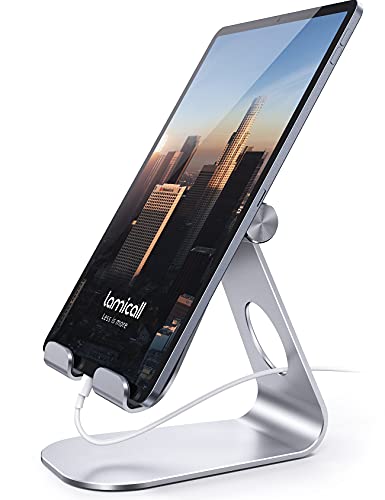
The Lamicall stand is an exercise in functional simplicity, occupying very little space while providing essential elevation. Its minimalist aesthetic appeals to makers who prefer a clean, uncluttered workspace for their yarn bowls and swatching needles.
Despite its modest appearance, the build quality handles standard-sized tablets and laminated pattern printouts with ease. The pivot hinges are stiff enough to hold a specific angle for hours without sagging, which is crucial when holding a heavy pattern book in a set position.
The trade-off here is the lack of height adjustment range. It is perfect for sitting at a standard desk but may need a secondary riser if the knitter prefers an upright, standing-desk configuration.
KABCON Stand: Top Choice for Heavy Devices
Some knitters rely on heavy, older tablets or thick, spiral-bound technical knitting books that would topple a lighter stand. The KABCON is built like a tank, offering superior weight capacity for these bulkier items.
The solid metal construction eliminates the “bouncing” sensation that occurs when resting hands near a tablet while picking up stitches. Because of its weight, it remains anchored to the table regardless of how many times the knitter shifts their project or reaches for a new ball of yarn.
While it is the least portable option on this list, it is the most reliable for those who demand total immobility. It effectively turns a tablet into a stationary, eye-level reference monitor for any advanced garment construction project.
Huion Adjustable Stand: Sleek and Sturdy
The Huion Adjustable Stand balances a polished, professional look with a heavy-duty skeleton. It is designed to accommodate various digital drawing devices, but its utility extends perfectly to holding heavy fiber art reference materials.
The cooling properties of the metal frame are an unintended bonus for tablets that might overheat during hours of use. It sits low to the desk, which creates a natural, comfortable sightline for someone leaning over their needles to focus on the work.
This is a premium-feeling option for the dedicated maker who wants their equipment to match the quality of their hand-knit garments. It is sturdy without feeling bulky, fitting well into a sophisticated studio setup.
MeFee Artist Easel: Best Budget Workhorse
Not every knitting tool needs to carry a high price tag to be effective. The MeFee Artist Easel is a simple, cost-effective solution that provides the necessary angle for pattern reading without unnecessary bells or whistles.
Its design is straightforward, relying on a basic notched mechanism for angle adjustment. It is exceptionally lightweight and easy to store in a drawer when the knitting project is finished or when the workspace needs to be cleared for blocking a large item.
Because the construction is more basic, it is best for holding lightweight paper patterns or smaller devices. For a knitter looking to test the benefits of an angled stand without a significant financial commitment, this is the most logical starting point.
How to Pick a Stand for Your Knitting Style
Choosing a stand depends heavily on the type of projects typically on the needles. A sock knitter working with thin fingering weight yarn and complex charts needs a stable, eye-level setup to maintain focus.
- For digital patterns: Prioritize stability and non-slip feet to handle tapping and swiping.
- For paper charts: Look for surface area and the ability to use magnets to track rows.
- For bulky books: Seek stands with high weight capacities and deep support lips.
Consider the environment in which the knitting happens. If the workspace is cramped, choose a compact, folding stand; if the craft area is a dedicated permanent space, a heavier, more substantial board will provide better long-term comfort.
Preventing Neck Strain with an Angled Stand
“Text neck” is a real risk for the dedicated knitter, especially during the long months of winter. Bending the neck downward to consult a pattern for hours causes significant tension in the trapezius and upper back muscles.
An angled stand brings the instruction level closer to the line of sight, allowing the knitter to maintain a neutral spine. This small adjustment significantly reduces the fatigue that settles in after a long knitting session.
Always adjust the height so that the eyes look forward rather than down. If the stand is too low, place it on a stack of books or a secondary riser to bring the pattern to the ideal focal point.
Tablet vs. Paper: Which Stand Works Best?
Tablets allow for magnification, which is a game-changer for deciphering fine print in vintage patterns or dense lace instructions. However, tablets require stands with a lip that won’t obscure the screen or interfere with touch navigation.
Paper patterns, especially when laminated or placed in sheet protectors, are more forgiving. They don’t require power, are immune to yarn fuzz, and can be easily marked with a highlighter or erasable pen.
When choosing a stand, consider the medium. Paper requires a wider, flatter surface, while tablets demand a stand with a sturdy, low-profile ledge and a secure grip to prevent sliding during heavy use.
Finding the right support for your patterns is as important as choosing the correct needle size for your gauge. By elevating your instructions, you protect your posture and ensure that the joy of creating stays in the stitches, not in the aches of your neck. Whether you prefer a sleek tablet mount or a robust wooden easel, the right choice will make every complex chart feel manageable. Invest in your comfort, keep your patterns in sight, and enjoy the rhythm of the work without the physical toll.