7 Best Professional Tools For Advanced Projects
Boost your efficiency with our curated list of the 7 best professional tools for advanced projects. Streamline your workflow and achieve better results today.
The transition from a casual hobbyist to a serious maker is often marked by a shift in equipment quality. While basic tools suffice for simple scarves, complex projects like stranded colorwork, intricate lace, or multi-part garments demand precision, durability, and ergonomic efficiency. Investing in high-performance tools reduces physical fatigue and minimizes errors that jeopardize weeks of work. This guide highlights the essential gear that elevates the craft from standard knitting to professional-grade production.
ChiaoGoo TWIST Set: The Ultimate Pro Needle System


Interchangeable needle sets are a significant financial commitment, but the ChiaoGoo TWIST system offers unparalleled versatility for the dedicated knitter. These stainless steel needles provide a slick surface that helps stitches glide effortlessly, which is essential for maintaining consistent tension during long sessions. The cables are memory-free, meaning they won’t kink or coil while working on large sweaters or blankets.
When choosing between tip materials, understand that stainless steel offers a faster knitting speed than bamboo or wood. If you struggle with tight gauge, the sharp, tapered tips of the TWIST set allow for easier entry into complex stitches like decreases or cables. However, those who knit with very slippery yarns—such as silk or high-twist alpaca—might find metal tips too fast and prone to dropped stitches.
The security of the connection point is the true hallmark of a pro-grade set. ChiaoGoo uses a tightening keyhole that, when utilized correctly, prevents the cable from unscrewing mid-row. Always use the tightening key and the rubber gripper provided to ensure the join is flush, preventing snagging on delicate fibers.
Stanwood Ball Winder: For Serious Hank Management

Hand-winding yarn into balls is a tedious task that often introduces uneven tension before the first stitch is even cast. A heavy-duty ball winder, such as the Stanwood 10-ounce model, transforms hanks into neat, center-pull cakes that sit firmly on the table. This is non-negotiable when working with expensive luxury fibers that tangle easily.
The gear mechanism is the deciding factor in longevity. Cheap winders rely on plastic gears that strip after only a few uses, especially when winding heavy worsted or bulky yarns. A metal-geared winder provides the torque necessary to create a tight, uniform cake without skipping or jamming.
Proper usage requires a steady hand and a matching yarn swift. If you pull the yarn too tightly while winding, the fiber loses its natural elasticity, which can negatively impact the final gauge of the project. Always wind at a consistent, moderate pace to maintain the integrity of the yarn’s twist and loft.
Cocoknits Knitter’s Block: For Flawless Finishing

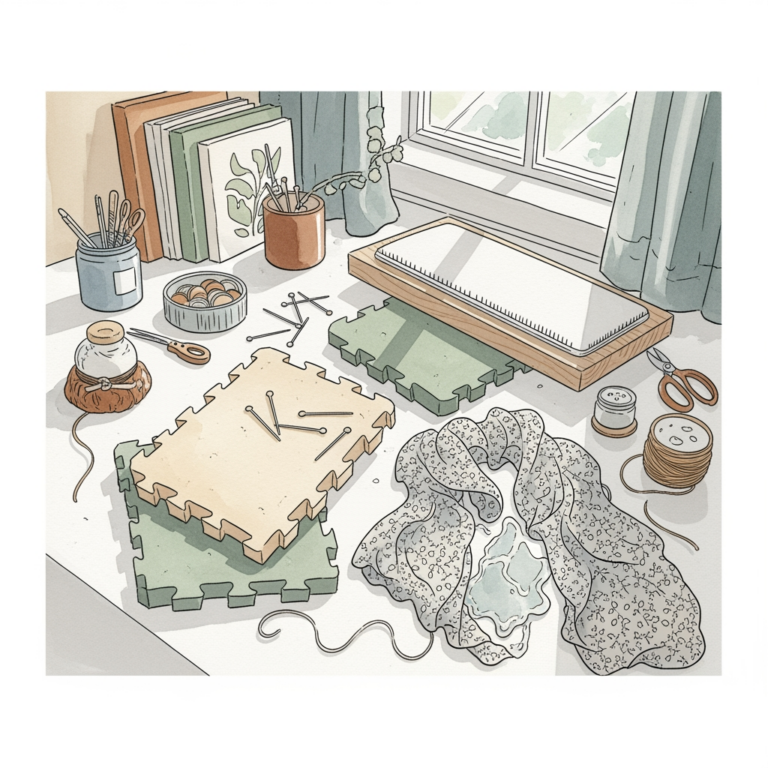
Finishing is where a project transforms from a handmade item into a professional garment. The Cocoknits Knitter’s Block system uses heat-resistant EVA foam tiles that feature a grid pattern, allowing for precise measurement and consistent shaping. This is vital for lace projects that must be stretched to open up the pattern or garments that require specific schematic dimensions.
Unlike standard mats, this system is designed to withstand steam and high pressure without warping. The inclusion of T-pins and stainless steel wires allows you to shape edges with surgical accuracy. This level of control is impossible to replicate with makeshift blocking boards or carpeted floors.
If you block frequently, moisture management is a concern. Always allow your pieces to dry completely before unpinning; if the project is still damp, it will lose its shape the moment tension is removed. Use the grid lines as a permanent measurement reference to ensure both sleeves or both fronts of a cardigan are identical in size.
Norwegian Thimble: Master Two-Handed Colorwork

Stranded colorwork often leads to uneven tension, particularly when one color is held more loosely than the other. The Norwegian thimble—a small, notched metal ring worn on the finger—guides two yarns simultaneously and maintains consistent tension between them. This tool is essential for knitters who find it difficult to manage floats across the back of the work.
The primary challenge with colorwork is preventing the “puckering” of the fabric. By using a thimble, you reduce the strain on your hands, allowing you to focus on managing the tension of the long floats. It eliminates the need to constantly drop and pick up yarns, which significantly increases knitting speed.
Not every knitter will find the adjustment period easy. It requires a shift in muscle memory, as the fingers must learn to interact with the guide rather than directly with the yarn. Practice with a swatch before starting a large-scale stranded project to ensure the thimble’s tension settings match your natural gauge.
Gingher Stork Scissors: Precision Snipping for Life

A pair of high-quality, ultra-sharp scissors is the most underrated tool in a knitter’s kit. Gingher Stork scissors are crafted from double-plated chrome, offering a fine point that can get deep into a tight bind-off to trim ends with absolute precision. This prevents the fraying that occurs when using dull or overly large craft scissors.
The “Stork” design is more than an aesthetic choice; the long, slender blades provide excellent leverage and visibility. When weaving in ends or snipping a loose strand of mohair, you need a clean cut that doesn’t fray the yarn tail. A clean cut ensures that the end will stay tucked securely inside the stitch, rather than working its way out over time.
Because these are precision instruments, they demand care. Never use them to cut paper, plastic, or even thicker weight yarn that might force the blades apart. Keep them in a protective sheath to maintain the edge of the blades and protect the point from dulling.
Clover Bent Tip Needles: Weave Ends In Like a Pro

Weaving in ends is the final hurdle to a professional finish, and the tool used dictates how invisible those ends are. Clover bent-tip tapestry needles feature a curved eye and rounded end, which makes it easier to navigate through the loops of your knitting without splitting the yarn fibers. This is crucial for seamless, invisible finishing.
Standard straight needles often force the knitter to poke blindly behind stitches, which risks distorting the surface of the fabric. The bent tip allows you to scoop up only the necessary stitches from the back side, ensuring the tail remains trapped within the fabric structure. This results in a cleaner, more secure finish that won’t show on the public side.
The size of the needle is just as important as the shape. Always choose a needle that is slightly smaller than the yarn weight you used; if the needle is too thick, it will leave visible gaps in the fabric. Select a dull-tipped needle to avoid piercing the yarn structure as you travel through your work.
Clover Locking Markers: Secure Your Complex Stitches
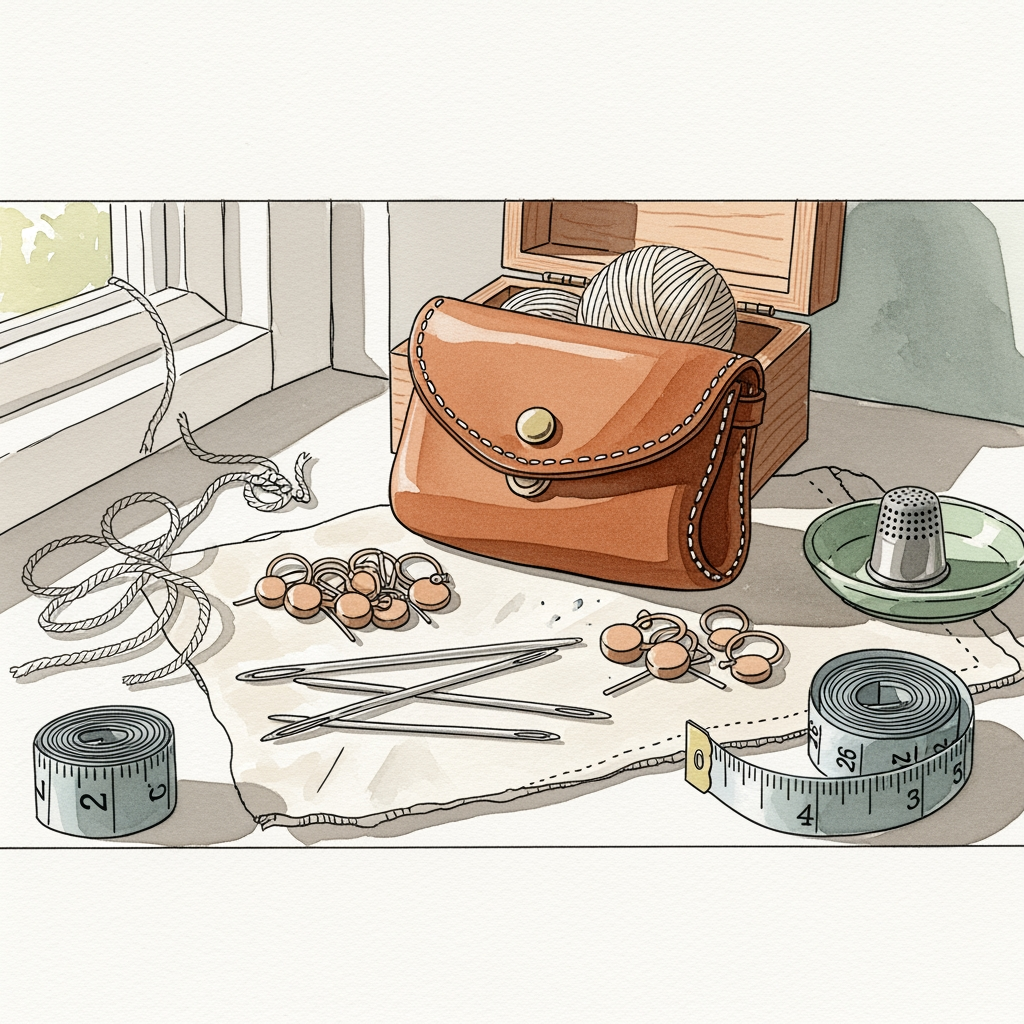
In complex projects involving cables, lace, or varying pattern repeats, keeping track of where you are is critical. Clover locking markers offer a secure snap-closure that stays in place even when the fabric is being manipulated or transported. Unlike open rings, these cannot slip out, which prevents the catastrophic loss of a pattern repeat.
Locking markers are the most versatile tools in the collection. Beyond marking rows, they serve as “progress keepers” for dropped stitches and provide a reliable way to hold live stitches when a project needs to be set aside. Their snag-free design ensures they glide through yarn without catching or fraying even the most delicate luxury fibers.
Avoid using cheap, plastic safety pins, which can snag yarn and create small holes. High-quality locking markers are made with smooth, rounded surfaces specifically to protect the integrity of the fiber. Keep a variety of colors in your kit to differentiate between stitch counts, row counts, and pattern repeats.
What Makes a Knitting Tool ‘Professional’ Anyway?
A professional knitting tool is defined by its ability to perform a specific function with consistency, reliability, and ergonomic efficiency. While amateur tools are often chosen for their lower cost or novelty, professional tools are designed for longevity and repeatable results. They eliminate variables—such as varying cable flexibility or inconsistent needle smoothness—that cause frustration during a high-stakes project.
These tools are also built to handle high-stress environments, such as continuous, heavy-duty use or complex, fine-gauge knitting. They often utilize materials like surgical steel, hardened plastics, and heat-tempered metals. These materials do not degrade under the oils from the skin or the friction of constant yarn contact, ensuring that the tool performs on its thousandth hour of use exactly as it did on its first.
Ultimately, the professional status of a tool is proven by its impact on the final garment. If a tool makes the process easier, faster, and leads to a more polished, uniform outcome, it qualifies as professional equipment. It is not about luxury branding; it is about the measurable difference the tool makes in the finished product.
How to Care For Your Premium Knitting Equipment
Investing in high-end equipment is only half the battle; maintaining those tools ensures they last a lifetime. Needle tips should be wiped down occasionally with a soft, dry cloth to remove natural skin oils and residue, which can cause them to become “sticky” over time. Never store metal needles in damp environments, as even high-quality stainless steel can develop surface oxidation if neglected.
For mechanical tools like ball winders, maintenance is about cleaning and lubrication. Periodically remove dust and yarn fibers from the gears, as these small particles can cause mechanical binding. If the winder begins to squeak, a tiny, targeted drop of machine lubricant is often enough to restore smooth, silent operation.
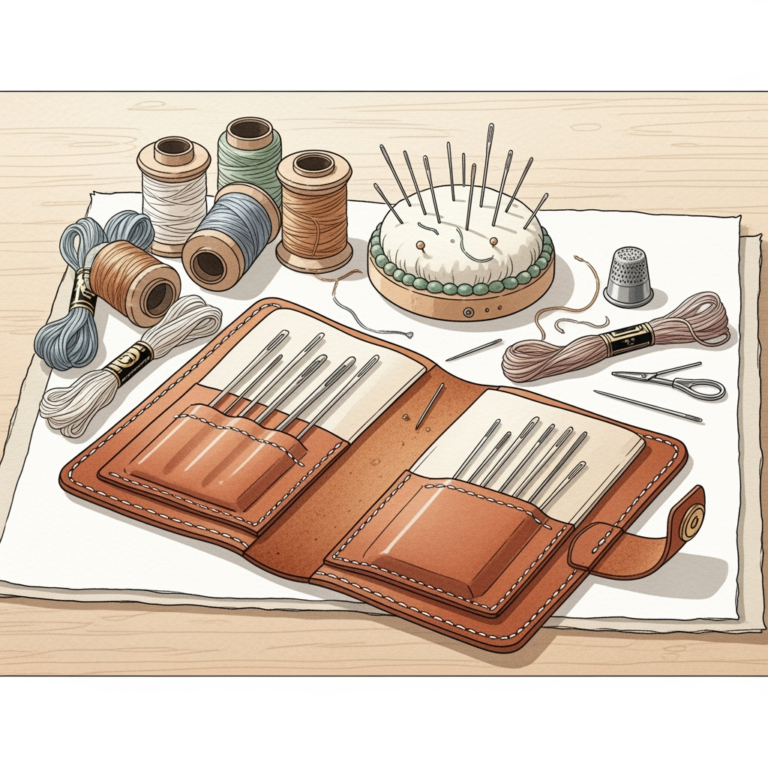
Storing your tools properly is the best way to prevent damage. Use dedicated cases or rolls that separate needles by size, preventing the tips from dinging or scratching against one another. Treating your tools with the same respect as your fiber ensures that every project you start is supported by equipment that is in peak condition.
Deciding When to Invest in an Advanced Tool Kit
The decision to move toward professional-grade tools should align with the complexity of the projects being undertaken. If you are regularly knitting simple stockinette scarves, you may not see the immediate value in a full interchangeable set or a metal-geared ball winder. However, when you begin tackling projects that require consistent gauge, long cables, or expensive, finicky fibers, the tools become a necessity rather than a luxury.
Consider the “cost-per-hour” of your tools. A premium interchangeable set might seem expensive upfront, but if it prevents you from purchasing three different sets of fixed needles over the course of a year, the investment pays for itself. Moreover, the time saved by having the right tool for the job—like a locking marker that stays put or a needle that doesn’t snag—is a value that cannot be easily measured in dollars.
Start by upgrading the tools you use most frequently. If you struggle with tension, start with a needle set. If you spend too much time dealing with tangled yarn, invest in a quality winder. Build your toolkit organically based on the specific hurdles you encounter in your current knitting practice, and you will eventually possess a collection that empowers you to tackle any pattern with confidence.
By prioritizing precision and durability, you transform the act of knitting from a series of manual tasks into a refined technical craft. Each tool in this list serves a specific role in eliminating friction, preserving yarn integrity, and ensuring that your hard work translates into a superior finished garment. Choose your equipment based on the demands of your current projects, and you will find that the right tool does more than assist the process—it elevates the result.