7 Hobby Knives For Trimming Excess Plastic For Clean Edges
Achieve professional-grade results with our top 7 hobby knives for trimming excess plastic. Read our expert guide to find the perfect blade for clean edges.
Precision tools are just as vital to a knitwear designer or a crafter of handmade notions as a set of high-quality circular needles. While knitting remains the primary focus, the ability to cleanly trim excess plastic from 3D-printed yarn bowls, plastic stitch marker molds, or even plastic components of looms is essential for maintaining a snag-free environment. Investing in a reliable hobby knife ensures that every fiber of delicate lace or heavy wool stays protected from sharp, jagged plastic edges. Choosing the right blade transforms a tedious finishing task into a seamless part of the crafting workflow.
X-Acto #1 Knife: The Classic Precision Choice


The X-Acto #1 is the industry standard for a reason. Its slim, pen-like profile mimics the feel of a knitting needle in the hand, allowing for incredible control when shaving down imperfections on plastic tools.
Because it relies on a simple collet-lock mechanism, replacing blades is fast and inexpensive. This is the ideal tool for the knitter who frequently works with 3D-printed custom needle gauges or plastic accessories that require minor deburring to prevent yarn snags.
The primary tradeoff is the handle diameter, which can cause hand fatigue during long sessions of cleaning multiple plastic components. However, for sheer precision and accessibility, this remains the foundational tool for any fiber arts studio.
Fiskars Softgrip Knife: Most Comfortable Grip

If the prospect of cleaning several plastic stitch marker molds leads to cramping, the Fiskars Softgrip knife provides much-needed ergonomic relief. The handle is significantly thicker and cushioned, mirroring the comfort of ergonomic crochet hooks or circular needle grips.
This knife is particularly effective for knitters who suffer from repetitive strain or arthritis. The textured grip ensures the blade does not slip, even when working with materials that require a bit of extra pressure to trim.
While it is bulkier than a standard precision knife, the trade-off in comfort is well worth it for large-scale projects. It acts as a reminder that tools designed for comfort allow for longer, more focused work sessions.
OLFA AK-4 Art Knife: Best for Intricate Cuts

The OLFA AK-4 is designed for those who demand professional-grade stability. It features a rubberized grip and a weighted balance that provides a steady hand, which is vital when performing fine detail work on delicate plastic components.
A standout feature is the blade locking system, which offers superior security compared to standard twist-locks. For knitters modifying plastic swift components or intricate yarn guide attachments, this stability prevents the blade from skipping and damaging the surface.
While the higher price point reflects its professional status, the build quality ensures it will last through years of studio maintenance. It is a tool for the maker who values precision above all else.
Cricut TrueControl Knife: Top for Safety Grip
The Cricut TrueControl Knife differentiates itself with a locking mechanism that makes changing blades touch-free. For the knitter concerned about safety when handling sharp steel, this mechanism is a significant advantage.
Its design emphasizes a balanced weight distribution that feels natural in the hand, similar to the weight of a premium wooden needle. The blade housing also holds the blade firmly in place, eliminating the slight wobble that can occur in cheaper models.
Keep in mind that this knife uses proprietary blades, which may limit sourcing options. If ease of use and safety are the top priorities, this is an excellent choice for a well-stocked craft room.
Excel Blades K1 Knife: A Durable Alternative
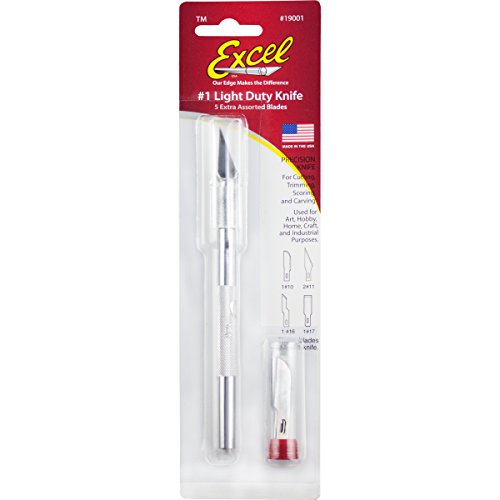
The Excel Blades K1 is a robust, all-metal hobby knife that rivals the classics in terms of longevity. The knurled handle provides a superior grip that does not degrade, even if the hands are covered in natural lanolin or other fiber-processing oils.
It is an excellent choice for the rugged crafter who needs a tool that can be tossed into a knitting bag without worrying about plastic components snapping or breaking. The weight is substantial, providing a grounded feel that helps with steady, controlled cuts.
Because of its straightforward, no-frills design, it is highly affordable and easy to maintain. It is a workhorse tool that prioritizes utility over flashiness.
WORKPRO 3-Piece Set: Best Value Hobby Knife Kit
Buying a set is often the most economical route for a knitter just beginning to build a tool kit. The WORKPRO 3-piece set includes various handle sizes, allowing for a range of tasks, from heavy-duty trimming to fine edge detail.
Having multiple knives means a different blade type can be kept in each handle, saving time during projects that require frequent switching between tools. It is a practical choice for the knitter who enjoys customizing their gear but doesn’t want to break the bank.
While the steel may not hold an edge as long as more expensive professional alternatives, the value is undeniable for light-to-medium hobby use. It is a perfect starter kit for a home studio.
Slice Precision Knife: Safest Finger-Friendly Blade
The Slice Precision Knife uses a unique ceramic blade technology that feels far less intimidating than traditional steel. The blades are designed to be “finger-friendly,” which is a massive bonus for knitters who rely on the sensitivity of their fingertips.
Ceramic blades also stay sharp significantly longer than steel, meaning fewer blade changes and less downtime. For those who frequently trim plastic accessories near delicate yarns, the added safety profile of ceramic reduces the risk of accidental slips.
The only real tradeoff is the proprietary nature of the blades, which are specific to the Slice system. For those prioritizing safety and long-lasting sharpness, this is an investment in both protection and performance.
Choosing the Right Hobby Knife For Your Needs
Selecting the correct knife comes down to how much volume of work you perform and your physical comfort needs. If you are trimming a large batch of 3D-printed items, an ergonomic, cushioned handle is non-negotiable.
Consider the material you are trimming; harder plastics require a stiffer, metal-bodied knife to prevent blade flex. Soft plastics, conversely, can be managed with a lighter-weight tool.
Ultimately, the best knife is one that feels like an extension of your hand. Prioritize handles that provide a steady, comfortable grip to match the dexterity you already possess from years of needlework.
Hobby Knife Safety: Essential Tips for Safe Use
Never pull a knife toward your body when trimming plastic. Always cut away from the hand holding the piece to ensure that if the blade slips, it travels safely through the air rather than into skin.
Maintain a dedicated “trimming mat” to protect your work surface, as knives will inevitably score wood or glass. Additionally, always cap your blades immediately after use, even if you only intend to step away for a moment to check your pattern gauge.
Never use a hobby knife to pry open stuck components, as the blades are designed for slicing, not torque. Prying can cause the blade to snap, creating a dangerous flying projectile.
Blade Types and How to Change Them Correctly
Different blades serve different functions, such as the #11 blade for fine detail or the #10 blade for wider, flatter cuts. Familiarize yourself with the blade profiles to ensure you aren’t using a heavy-duty blade for delicate trimming.
To change a blade, loosen the collar only enough to release the tension—never unscrew it completely, as the small parts can easily be lost in a carpet or yarn stash. Use a pair of pliers or a magnetic tool to remove the old blade, rather than your fingers, to ensure total safety.
Once the new blade is inserted, tighten the collar firmly but avoid over-tightening. A loose blade is a dangerous blade, so always double-check the lock before beginning a cut.
Maintaining your tools with the same care you apply to your finest hand-dyed wool will ensure your project outcomes are always professional and polished. By selecting the right hobby knife for your specific needs, you guarantee that every plastic component in your kit remains as smooth and snag-free as your stitches. Always prioritize safety and ergonomics, and you will find that these small tools significantly enhance your overall making experience.