6 Yarn Swifts For Quick Skein Winding
Speed up your knitting prep with our expert review of 6 yarn swifts for quick skein winding. Find the perfect tool for your craft and shop our top picks today.
There are few moments in a fiber artist’s life more rewarding than untwisting a fresh, hand-dyed skein of yarn. However, the transition from a looped hank to a usable center-pull cake is a task that can quickly turn frustrating without the proper equipment. A yarn swift is the essential bridge in this process, preventing tangles and ensuring tension remains consistent during winding. Choosing the right tool depends heavily on available workspace, storage habits, and the frequency with which a knitter processes luxury fibers.
Stanwood Umbrella Swift: The Sturdy Workhorse


The Stanwood Umbrella Swift stands as a benchmark for reliability in the knitting room. Its solid construction allows it to handle heavy-weight wools and delicate lace-weight cobweb yarns with equal grace.
The defining feature here is the heavy-duty metal clamp and wooden construction, which provides enough stability to keep the swift from wobbling during high-speed winding. This is particularly important when working with slippery fibers like silk or bamboo blends, where erratic movement often leads to uneven tension.
Consider this model if the goal is longevity and frequent use. It is a workhorse designed to survive the repetitive motion of winding hundreds of yards of yarn, making it a sound investment for those who regularly purchase hand-dyed hanks.
Schacht Tabletop Swift: Ideal for Small Spaces

Tabletop swifts are a lifesaver for knitters living in apartments or those who lack a dedicated craft room. The Schacht model sits directly on a flat surface, eliminating the need for a deep table edge or complex clamping systems.
This swift is engineered for precision and fluid motion. Its smaller footprint does not mean it lacks capacity; it handles standard skein lengths with ease. The primary benefit is portability and quick setup, allowing a knitter to convert a dining table into a winding station in seconds.
While it lacks the sheer scale of floor-standing models, the Schacht’s compact nature encourages better yarn management. It is best suited for knitters who need to stow their equipment away between projects to keep their living spaces uncluttered.
Lykke Umbrella Swift: Elegant and Functional

Lykke has built a reputation on aesthetic appeal paired with high performance, and their swift is no exception. Crafted from beautiful, smooth-finished hardwoods, it adds a touch of sophistication to any knitting kit.
Beyond its visual appeal, the design focuses on smooth, friction-free rotation. When winding delicate fibers like merino or alpaca, reducing friction is vital to prevent “splitting” or pilling during the transition from hank to cake.
This is the preferred choice for those who value form as much as function. If the swift must remain on a shelf or tabletop when not in use, this is a piece of equipment that looks like a purposeful studio accessory rather than a bulky mechanical tool.
KnitPicks Swift: Best for a Tight Budget
The KnitPicks umbrella swift is a testament to the fact that effective tools do not always require a massive investment. It provides the core functionality needed to transform a hank into a cake without the premium price tag of luxury wood finishes.
This model serves as an excellent entry point for the newer knitter who has just discovered the joy of indie-dyed yarn. It is lightweight, making it easy to move, though it may require a bit more careful handling during the winding process compared to heavier, premium wooden models.
For a knitter working mostly with standard wools, this swift handles the job perfectly. The straightforward tensioning mechanism is intuitive, ensuring that yarn is delivered to the ball winder at a steady, manageable pace.
Lacis Metal Umbrella Swift: A Durable Classic
Metal swifts like those manufactured by Lacis offer a level of durability that wood simply cannot match. If a knitter finds themselves in a humid environment or simply prefers a tool that will never warp or splinter, this is the definitive choice.
The metal construction allows for a very sleek, high-speed winding experience. Because the arms are thin and rigid, there is minimal resistance, which is an advantage when winding long yardage for large-scale projects like sweaters or blankets.
Be aware that metal swifts are heavier and have a different mechanical feel. They are ideal for the utilitarian knitter who prioritizes a tool that will last for decades without needing maintenance or repairs.
Stanwood Amish-Style Swift: For Large Skeins
Amish-style swifts, or cross-style swifts, operate on a horizontal plane rather than the vertical, umbrella-style rotation. This design is exceptionally stable and is often the best choice for winding large, heavy skeins of yarn.
The horizontal rotation minimizes the risk of the yarn “bouncing” or slipping off the arms if the winding pace becomes inconsistent. It is also inherently easier to balance, which is a major benefit when dealing with unevenly hand-wound hanks that might otherwise cause an umbrella swift to lean or tilt.
This style is perfect for the knitter who frequently buys large-diameter skeins or bulky, heavy yarns. Because it is essentially a wooden lattice, it is also very easy to disassemble and pack flat, making it a great storage-saving option.
Umbrella vs. Amish Swift: Which Is Right for You?
Choosing between these two styles comes down to workspace constraints and the types of yarn being handled. Umbrella swifts are vertical and take up less surface area, making them ideal for small, cluttered tables.
Amish swifts require a wider, clear surface area to allow the arms to rotate freely. However, they offer a superior level of control for heavy or irregular hanks.
- Choose an Umbrella Swift if: You value vertical storage, need to clamp to a small desk edge, and primarily wind light-to-medium weight yarns.
- Choose an Amish Swift if: You have ample table space, often wind large or bulky skeins, and prefer a tool that is less prone to mechanical wear over time.
How to Set Up Your Yarn Swift Correctly
Proper setup is the difference between a relaxing winding session and a frustrating, knotted mess. Start by securing the swift firmly to the table; a loose swift will wobble and eventually lead to uneven cake tension.
Place the yarn hank on the swift so that it is slightly snug, but not stretched to the point of snapping the yarn. If the hank is too loose, it will catch on the arms; if it is too tight, the yarn will be pulled with too much tension, which can “kill” the loft of delicate wool fibers.
Always remove the labels and ensure the yarn is untwisted before placing it on the swift. Taking thirty seconds to inspect the yarn for pre-existing snags or factory knots will save significantly more time on the back end of the winding process.
Pairing Your Swift with the Right Ball Winder
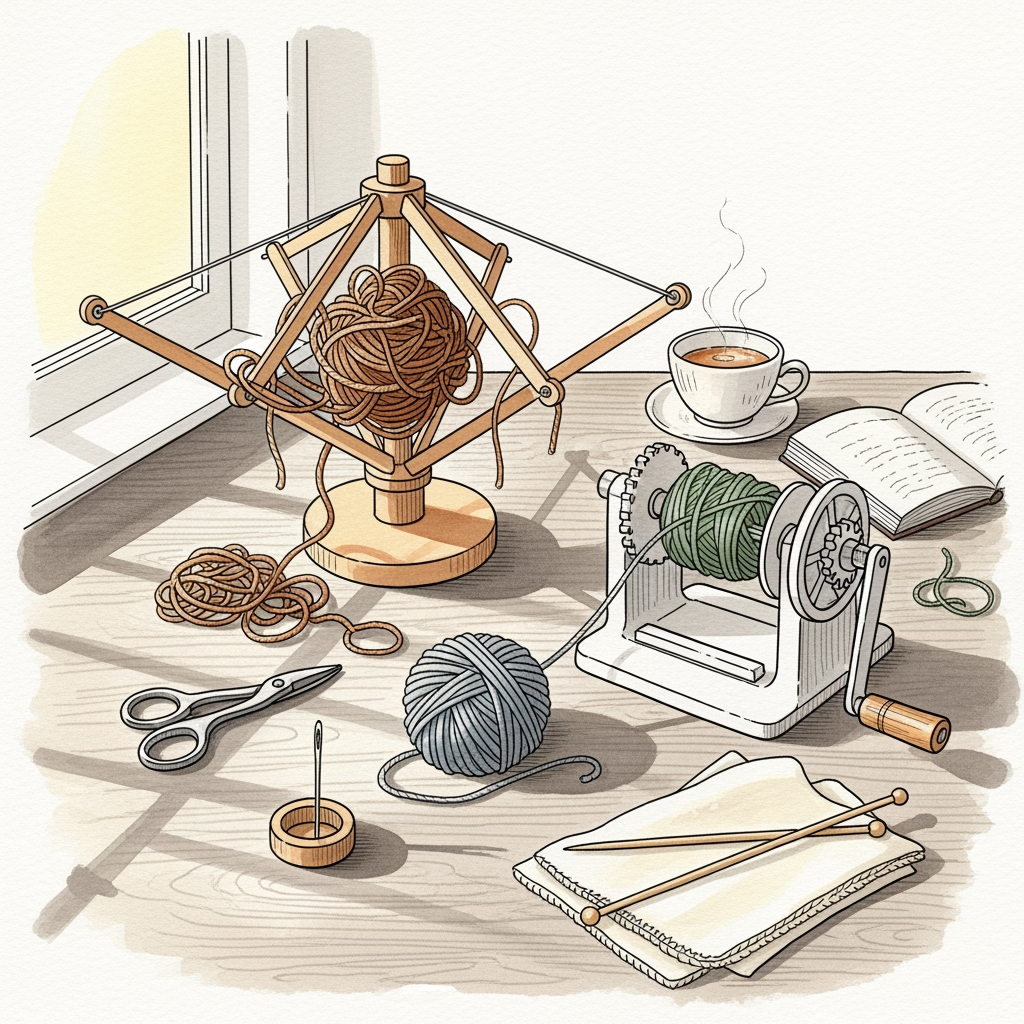
A swift is only half of the equation; the ball winder does the heavy lifting of shaping the yarn. Ensure the swift is positioned so that the yarn flows directly into the guide arm of the winder without sharp angles or friction points.
The distance between the two tools is crucial. If they are too close, the yarn will feed too rapidly, leading to a loose or sloppy cake. If they are too far apart, the yarn will drag against the tabletop, which can lead to unwanted snagging or stretching of the fiber.
Experiment with the positioning until the yarn creates a straight, smooth line of travel. A properly paired setup allows the yarn to flow off the swift with just enough resistance to keep the resulting cake tidy and pull-from-the-center functional.
Caring for Your Yarn Swift for a Lifetime
Wood swifts benefit from an occasional wipe with a soft, dry cloth to remove dust and stray fibers. If the wood begins to look dry, a light application of a high-quality furniture wax can prevent splintering and keep the joints moving smoothly.
Avoid using harsh chemical cleaners, as these can strip the wood of its natural oils or damage delicate finishes. For metal swifts, ensure the moving joints remain clean of debris; a tiny drop of sewing machine oil can be used if rotation becomes stiff over time.
Always store the swift in a cool, dry place away from direct sunlight, which can cause wood to warp or dry out. Treat the swift as a precision instrument rather than a generic storage item, and it will remain a reliable partner for every project in the queue.
Finding the perfect swift transforms the chore of yarn preparation into a meditative, satisfying step in the creative process. By matching the mechanical style of the tool to the specific needs of the fiber and the limitations of the workspace, a knitter ensures that their project begins with perfectly tensioned, tangle-free yarn. Focus on these fundamentals, and the equipment will provide years of seamless service.