6 Best Studio Desks For Ergonomic Equipment Placement
Upgrade your workspace with our top 6 studio desks for ergonomic equipment placement. Discover the perfect setup to boost your comfort and productivity today.
Crafting sessions often stretch into the late hours, leaving shoulders aching and posture slumped over complex lace charts or intricate stranded colorwork. A dedicated workspace does more than organize your stash; it serves as the physical foundation for every stitch. Proper equipment placement reduces repetitive strain, allowing for longer, more comfortable sessions with delicate fibers. Selecting the right desk is an investment in both your physical well-being and the longevity of your projects.
Uplift V2 Standing Desk: Top Ergonomic Choice


The Uplift V2 stands out because of its exceptional stability, even at higher elevations. When working on large-scale projects like a heavy wool afghan, a desk that remains steady while shifting your weight is non-negotiable.
This desk offers an extensive range of customization options, from specialized grommets to cable management trays. For a knitter with a collection of circular needles, interchangeable kits, and pattern binders, keeping the work surface clear is vital to maintaining the flow of a complex pattern.
The primary advantage here is the precision height adjustment. Being able to tweak the desk height by millimeters ensures your elbows remain at the ideal angle to prevent tension in the wrists—a common issue when working with sticky alpaca or tight tension.
Vari Electric Standing Desk: Easiest Assembly
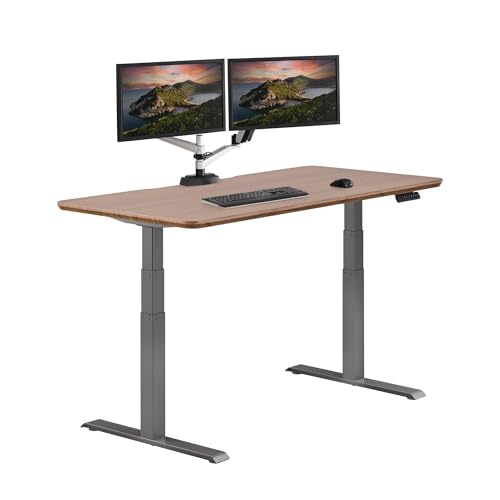
Ease of assembly matters when the goal is to start a new project immediately rather than spending an entire afternoon with a hex key. The Vari desk arrives largely pre-assembled, meaning the transition from the box to a fully functional studio happens in minutes.
The frame is robust and the laminate surface is durable enough to withstand the accidental slip of a pair of sharp stainless steel scissors. While it may lack the extreme customization of modular systems, it provides a consistent, reliable base that stays out of the way.
It is an excellent choice for those who value simplicity over complex configurations. If your priority is a functional, stable surface that allows for quick setup, this desk minimizes the time spent on logistics and maximizes time spent with yarn.
IKEA Idåsen Desk: The Best Budget Sit-Stand

The Idåsen is a utilitarian workhorse that provides a wide, open footprint for your materials. Its design philosophy favors structural integrity over unnecessary frills, making it a favorite for those who want a large surface for blocking small items or laying out sweater pieces.
The height adjustment mechanism is manual, which acts as a simple, reliable alternative to motorized systems that may fail over time. For a crafter on a budget, this desk allows for a significant upgrade in workspace without draining funds that could otherwise go toward high-quality wool or luxury needles.
While the manual crank requires a bit of effort, it encourages movement. Changing your desk height mid-project is a great way to relieve the static tension that accumulates while concentrating on delicate gauge adjustments.
Arrow K8611 Kangaroo Kabinet: For Sewists

Though designed primarily for sewing machines, the Kangaroo Kabinet offers unique benefits for knitters who also manage a sewing station or a small spinning wheel. The hydraulic lift allows you to lower heavy equipment, creating a flush, flat surface for complex finishing tasks.
If you are a knitter who performs machine seaming or requires a space to store bulky bobbins, the vertical storage integrated into this unit is life-changing. It effectively organizes tools that often end up cluttering the primary workspace.
This desk is not for everyone, specifically those who strictly knit on the couch, but for the multi-disciplinary fiber artist, it provides a dedicated, professional environment. It streamlines the transition between knitting, blocking, and final assembly.
FlexiSpot E7 Pro: The Most Stable Desk Frame
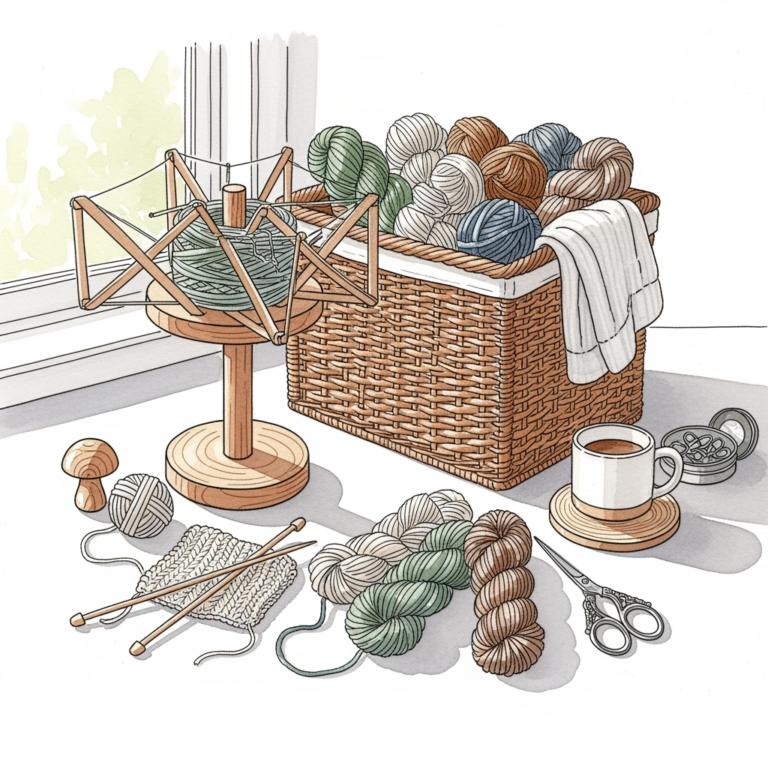
The E7 Pro is engineered with a focus on lateral stability, which is crucial if you keep a heavy yarn swift or a ball winder clamped to the edge of your desk. Any wobble during the winding process can cause the yarn to tangle, turning a quick prep task into a frustrating, knotted mess.
The frame can handle significant weight, allowing for a heavy solid-wood top if desired. For knitters who prefer the tactile feel of natural surfaces, mounting a custom wood slab on this frame creates a warm, sturdy environment that ages beautifully alongside your favorite bamboo or wooden needles.
Investing in a stable frame means your desk won’t “bounce” while you are working. When you are performing precise kitchener stitch or picking up stitches along a neckband, stability ensures your hand-eye coordination remains undisturbed.
Sauder Craft Pro Table: Ultimate Work Surface

The Sauder Craft Pro Table is essentially a dedicated command center for the serious crafter. Its large, flat surface is perfect for pinning out lace shawls for blocking, providing ample space to measure dimensions against a pattern draft without crowding the workspace.
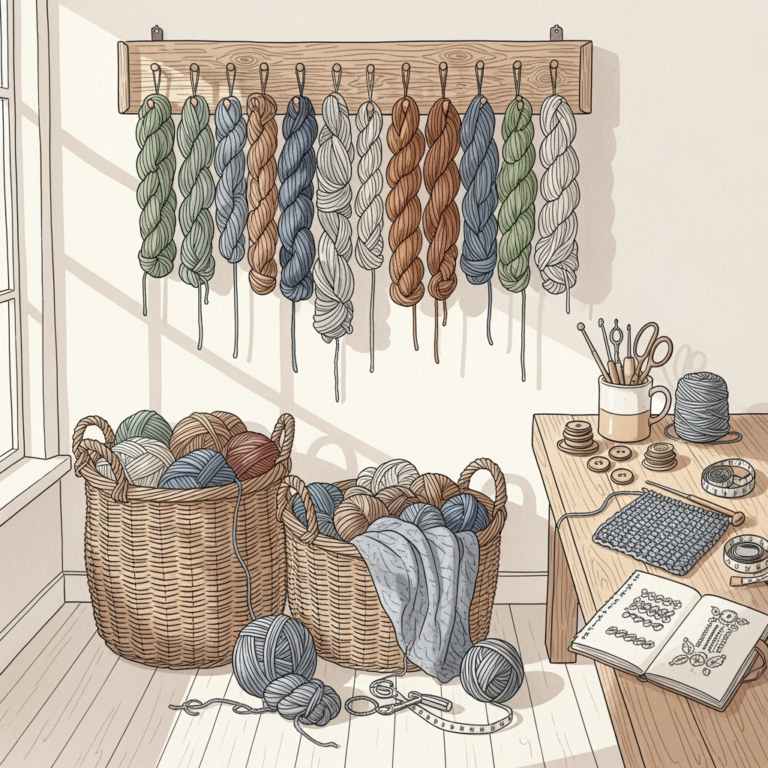
Beyond the surface area, the integrated shelving creates a vertical inventory of your supplies. Having yarn weights (WPI), stitch dictionaries, and measuring tapes visible and accessible saves you from digging through bins while in the middle of a project.
This desk is an excellent choice for those who view their craft as a full-time pursuit. It is less about “sit-stand” functionality and more about total project management. It keeps your materials, references, and WIPs (Works In Progress) organized in one cohesive station.
How to Choose the Best Desk for Your Craft
Selecting the right desk requires balancing your spatial constraints with your physical needs. First, determine if you are primarily a sedentary crafter or if you need the ability to stand to stretch after long sessions of stranded colorwork.
Consider the material of the desktop as well. A surface that is too slick might allow your project bag to slide off, while a surface that is too porous could snag delicate silk or mohair lace.
- Weight Capacity: Ensure the desk can hold your heaviest equipment, including looms or multiple yarn organizers.
- Surface Texture: Aim for a matte finish that provides just enough friction for yarn balls to stay in place.
- Depth: A deeper desk allows for better monitor placement if you follow digital patterns.
Setting Up Your Ergonomic Crafting Station
An ergonomic station starts with the “triangle of comfort”: the chair, the desk, and your body. When seated, your feet should rest flat on the floor, and your elbows should form a 90-degree angle while you knit.
Avoid the tendency to hunch over your needles. If you find your chin dropping toward your chest, it is a sign that your desk or chair height needs adjustment, or that you should bring your knitting closer to your eyes rather than bringing your eyes to the knitting.
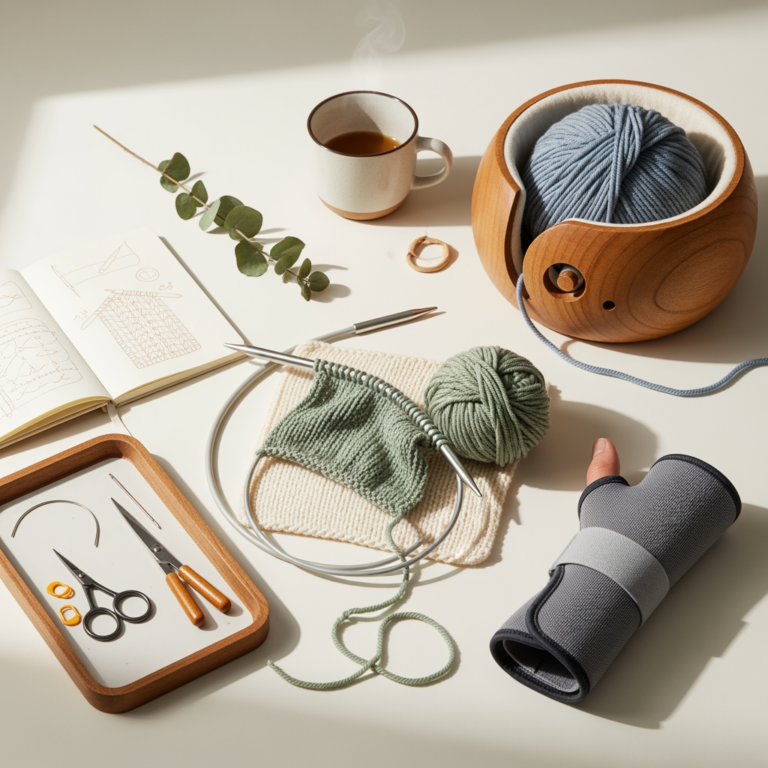
Use the following as a checklist for your station: * Lighting: Position a daylight-balanced lamp to illuminate your stitches without casting shadows that mask the dark fibers of deep navy or black yarn. * Reach: Place your most frequently used items—needles, scissors, and cable needles—within a comfortable arm’s reach. * Movement: Set a timer to stand or stretch every hour to prevent the stiffness associated with long periods of repetitive motion.
Standing vs. Crafting Tables: What to Pick
The choice between a standing desk and a traditional craft table depends entirely on the nature of your projects. If your work involves a lot of assembly, blocking, and measuring, a large, fixed-height table often provides more utility.
Standing desks are superior for those who knit for long, continuous hours and need to vary their position to avoid back pain. If you suffer from lower back fatigue, the ability to transition to a standing position is worth the investment in a motorized frame.
Ultimately, the best choice is the one that forces you to move periodically. Whether that is a manual crank desk or a standing desk with a memory setting, the goal is to keep your body dynamic while your hands remain focused on the needles.
Desk Accessories That Boost Your Workflow
Accessories can turn a standard desk into a specialized fiber arts hub. A quality clamp-on task lamp with a magnifying lens is invaluable for troubleshooting dropped stitches in fine-gauge projects or reading tiny circular needle sizes.
Cable management is often overlooked, but it is critical. Tangled power cords near your yarn stash are an invitation for disaster; keep cords tucked away to prevent them from snagging on your precious hand-dyed yarns.
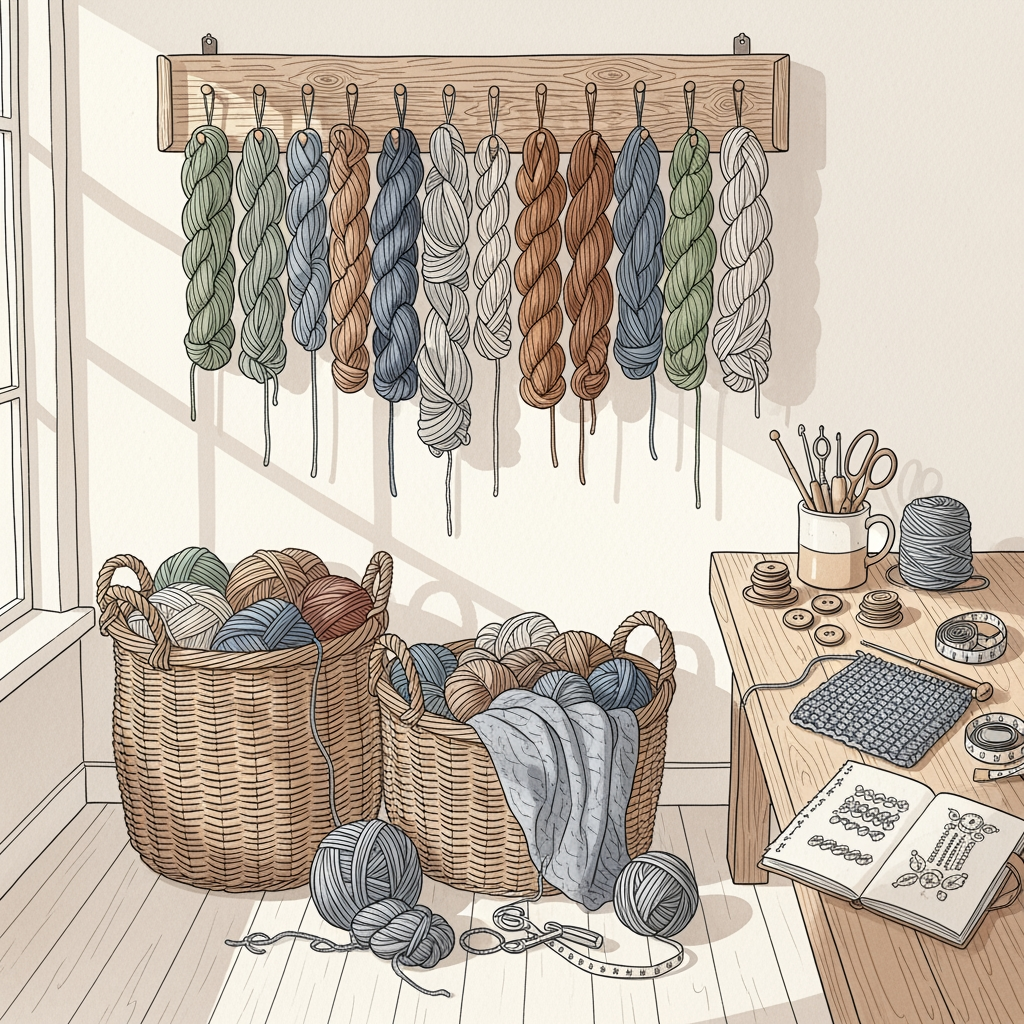
Consider adding a pegboard behind your desk to hang your most used needles and scissors. Keeping your tools in plain sight saves time and prevents you from losing your favorite set of dpns (double-pointed needles) in the depths of a yarn bag.
The perfect desk is one that supports your physical comfort while keeping your materials within reach and your mind clear for the creative process. Choose a surface that reflects the way you work, and your projects will benefit from the increased focus and reduced strain. Happy knitting.