6 Best Storage Chests For Tool Organization To Declutter
Tired of a messy garage? Discover the 6 best storage chests for tool organization to declutter your workspace and keep your gear accessible. Shop our top picks now.
Tangled stitch markers, missing circular needles, and wandering tape measures are the quiet enemies of every productive knitting session. A disorganized workspace forces the mind to focus on searching for tools rather than maintaining consistent gauge or following a complex lace chart. Investing in a structured storage chest transforms a chaotic collection of notions into a streamlined studio. Selecting the right unit ensures that every DPN, cable needle, and tapestry needle has a permanent home.
Homz 6-Drawer Cart: Best All-Around Organizer


The Homz 6-Drawer Cart strikes a practical balance between visibility and capacity for the average crafter. Its semi-clear plastic drawers allow for a quick visual scan of contents, which is vital when searching for specific needle sizes or crochet hooks mid-project.
This unit excels at housing modular accessories like stitch counters, point protectors, and small scissors. Because the drawers are shallow, notions stay organized at the bottom rather than getting lost in a deep, dark pile where specialized items go to vanish.
The caster wheels make it a versatile choice for knitters who rotate between a living room chair and a dedicated craft room. However, avoid overloading these drawers with heavy stashes of worsted-weight wool, as the plastic frame may bow under excessive weight.
IRIS USA 10-Drawer Cart: Best for Small Spaces

If the knitting corner is merely a corner of a shared bedroom or a small nook, the vertical footprint of the IRIS USA 10-Drawer Cart is a lifesaver. By stacking drawers upward, this unit keeps a massive variety of tools in a footprint no larger than a standard footstool.
The smaller, segmented drawers are perfect for sorting needles by material or type. A dedicated drawer for bamboo needles, another for slick nickel-plated options, and a third for various cable lengths keeps specialized tools accessible without the clutter of a messy drawer.
Keep in mind that the thin drawers are best suited for flat items like pattern books, swatches, and needle gauges. They lack the depth for bulky skeins of yarn but are unparalleled for keeping the thousands of small tools that accumulate over years of knitting.
Seville Classics 7-Drawer Chest: Best Heavy-Duty

For the knitter who hoards a collection of heavy metal needles or cast-iron blocking tools, the Seville Classics 7-Drawer Chest provides the necessary structural integrity. Its steel frame stands up to the weight of substantial equipment that would crack cheaper, lighter-weight plastic options.
The wider drawers are ideal for housing larger, more delicate items like blocking mats, wooden blockers, and circular needle cases that don’t bend well. The stability of a metal unit prevents wobbling, which is a significant advantage when storing fragile vintage needles or polished ebony tools.
While this unit is a larger investment, it serves as a “buy it once” solution for a serious fiber artist. The increased weight of the unit means it is less mobile, so consider placing it in a permanent spot near the primary knitting chair.
Sterilite 3-Drawer Unit: Top Budget-Friendly Pick
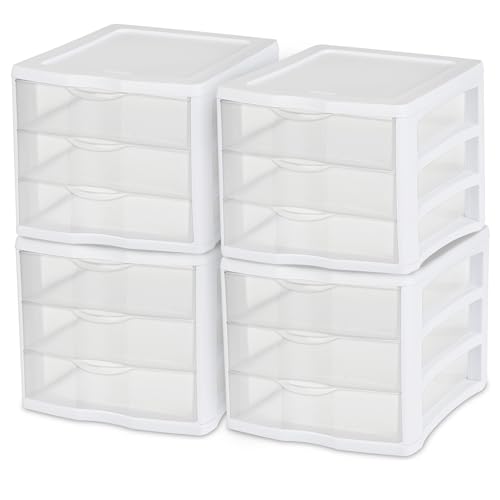
The Sterilite 3-Drawer Unit is the entry-level standard for a reason: it is functional, lightweight, and accessible. It serves as an excellent starting point for new knitters who are still acquiring their core collection of notions and need a basic system for containment.
These drawers are spacious enough to hold larger items like bags of stuffing, project bags, or extra skeins of acrylic yarn for test swatches. They provide an easy way to separate “current project” supplies from “long-term stash” tools.
Because these units are inexpensive, they can be stacked or placed side-by-side as a collection grows. While they are not heirloom quality, they are perfectly suited for keeping dust and curious pets away from essential knitting supplies.
Winsome Halifax Cabinet: Most Stylish Storage Chest

When the knitting space is also a living area, aesthetic considerations matter as much as functional ones. The Winsome Halifax Cabinet offers a clean, professional look that hides the usual clutter of a knitting stash behind sleek drawer fronts.
The drawers are deep enough to accommodate bulkier items like large yarn winders, swifts, or even multiple finished garments that are waiting to be blocked. It transforms the appearance of a workspace from a “pile of stuff” to a “curated collection.”
This chest is the best choice for the knitter who wants to maintain a tidy, sophisticated home environment. Remember to add labels to the drawer fronts, as the opaque nature of the wood means you will need a system to remember which drawer holds the double-pointed needles versus the cable needles.
DeWalt TSTAK System: The Best Portable Solution
Many knitters find that the tools required for travel knitting—a specific set of interchangeable needles, a travel scale, and assorted stitch markers—differ from the home setup. The DeWalt TSTAK system is built for trade-level durability, making it the perfect “go-bag” for workshops or retreats.
The interlocking mechanism allows you to build a custom tower of storage that locks together securely during transit. Its rugged construction protects needles and precision tools from the bumps and drops that inevitably occur during travel.
While designed for hardware, the interior trays are perfectly sized for organizing knitting accessories. It is the ultimate choice for the knitter who frequently attends fiber festivals and wants to keep their most expensive tools safe and organized on the road.
Choosing the Right Chest for Your Crafting Space
- Assess your inventory: Determine if you have more small notions (needles, markers) or large tools (winders, blocking mats).
- Evaluate your space: Measure the available floor area, keeping in mind that vertical units save space while wide units provide surface area on top.
- Consider mobility: If you rotate knitting spots, a wheeled cart is non-negotiable; if you stay put, a heavier cabinet is superior.
- Think about accessibility: Clear drawers make it easy to find specific items, whereas opaque drawers keep the room looking uncluttered.
Plastic vs. Wood vs. Metal: Which is Best for You?
Plastic units are affordable and lightweight, making them ideal for quick-access notions that change frequently. However, they lack the aesthetic appeal of wood and the long-term durability of metal.
Wood cabinets offer a timeless look that integrates well with home decor, but they are often heavier and more expensive. Metal units provide the best structural support for heavy tools but can be prone to scratching or dents if handled roughly.
Always choose based on the environment. In a humid climate, plastic may be the safest bet to avoid warping or moisture buildup around delicate wool fibers.
Maximizing Your New Storage Chest’s Drawer Space
Use drawer dividers or small, clear plastic bins inside the drawers to create sub-sections. This prevents a collection of tapestry needles from migrating into the same corner as a tangle of waste yarn.
Labeling is the secret to a high-functioning system. Use a label maker or masking tape to identify what is inside each drawer, especially if the chest has opaque fronts.
Keep the most-used items—your primary needle set, a favorite pair of scissors, and a tape measure—in the top drawer. Reserve deeper or lower drawers for seasonal items, like heavy needles or bulky project bags.
Can You Store Yarn and Fiber in These Chests?
While these chests are designed for tools, they can store yarn under the right conditions. Ensure the environment is dry and cool to prevent mildew from settling into natural fibers like wool or alpaca.
Avoid stuffing too many skeins into a small drawer, as this can compress the yarn and compromise its “loft”—the air trapped in the fibers that provides warmth. If you are storing wool, always ensure the chest is kept in a moth-proofed area or use cedar blocks to protect your investment.
These chests are best for long-term storage of notions, but for large stashes, consider ventilated bins that allow the fiber to breathe. Over-stuffing plastic drawers with yarn can also lead to sagging, so keep heavier fiber stocks in the bottom-most, most supported drawers.
Investing in a proper storage system is the final step in moving from a casual hobbyist to an organized maker. By selecting a chest that aligns with your specific knitting habits and space constraints, you eliminate the friction that often stands between an idea and a finished piece. Take the time to set up your system, label your drawers, and get back to the craft you love with total clarity.