6 Best Book Binding Clips For Securing Signatures
Discover the 6 best book binding clips for securing signatures. Explore our top-rated recommendations to keep your book projects organized and shop them today.
Securing paper signatures for custom-bound journals or project notebooks requires the same precision as maintaining even tension in a complex cable knit. Just as the wrong needle material can snag a delicate silk-blend yarn, the wrong binding clip can leave permanent, unsightly indentations on your paper or fail to hold the stack square. Selecting the right tool ensures that your signatures remain perfectly aligned during sewing, preventing the shifting that ruins a spine. This guide breaks down the best options to ensure your bookbinding projects are as structurally sound as a well-knit sweater.
Clover Wonder Clips: Best for Delicate Papers
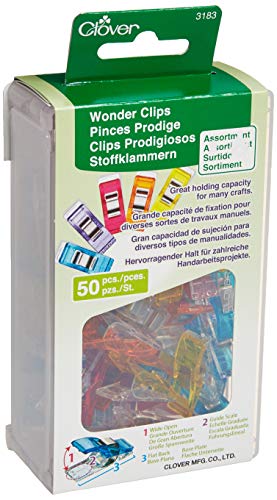

Clover Wonder Clips are the go-to for situations where surface integrity is paramount. These clips feature a flat base and a high-tension spring that holds paper securely without the aggressive, sharp edges found on metal clips.
For knitters working with hand-dyed, delicate specialty papers, these are indispensable. They mimic the gentle nature of wooden or bamboo needles when working with fragile, low-twist lace weight fibers.
The primary tradeoff is that they lack the sheer clamping force required for very thick, multi-signature stacks. Reserve these for delicate, single-signature booklets or thin decorative pages that would easily suffer from metal bruising.
Standard Binder Clips: The Budget-Friendly Workhorse

Standard binder clips remain the most accessible tool for any creator. Their versatility comes from the dual-lever design, which allows for temporary, firm compression across a wide range of paper thicknesses.
Think of these as the aluminum knitting needle of the binding world—found everywhere, inexpensive, and generally effective for most standard tasks. They are ideal for locking down larger stacks of signatures before you begin the long-stitch binding process.
Be cautious of the edges, as the metal can dig into softer cardstock or textured art paper. To prevent damage, always slip a small piece of scrap cardstock between the clip jaws and your signature, much like using point protectors to keep stitches from sliding off during a long break.
X-ACTO Bulldog Clips: Secure Grip, Classic Style

Bulldog clips provide a more aggressive, reliable grip than standard binder clips. Their rigid, heavy-gauge steel construction ensures that paper does not shift once the clip is locked into place.
These are essential when working with heavier, stiffer stocks like 140lb watercolor paper. Much like using a firm-coated metal needle when knitting with cotton—which has zero elasticity—the bulldog clip provides the tension necessary to combat the paper’s inherent tendency to spring back.
Because of their strength, they are prone to leaving deep marks if used on the outer edge of a cover. Position them slightly inside the trim line to ensure any potential indentation is removed when the edges of the book are finally guillotined or trimmed.
Pony Spring Clamps: For Heavy-Duty Clamping Power
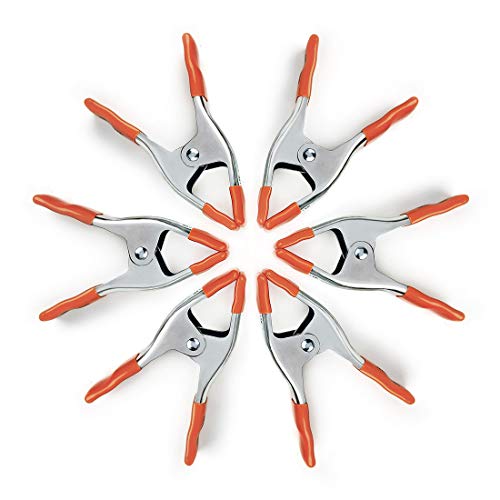
Pony spring clamps are the heavy artillery of the bookbinding bench. These tools offer intense, localized pressure that is far beyond the capacity of common office supplies.
These clamps are best reserved for creating the structural spine of a book before applying glue. When you are performing a “perfect binding” or preparing a text block for casing-in, the consistent pressure keeps the adhesive line straight and clean.
Avoid using these on finished covers, as they will almost certainly leave an impression. They are strictly for the mechanical assembly of the text block where raw power is required to hold heavy materials in perfect alignment.
Lineco Binder’s Finishing Press: A Serious Upgrade
The Lineco Finishing Press is the gold standard for dedicated bookbinders. Unlike individual clips, a press applies even, distributed pressure across the entire length of the spine.
Using a press is analogous to using circular needles with a smooth join for large projects; it eliminates the inconsistencies that arise from clipping different points along the spine. It provides a level of squareness that is impossible to achieve with loose clips.
While the cost is higher, the investment is justified if you are producing multiple volumes. It effectively turns your workspace into a professional bindery, ensuring your signatures are compressed uniformly for a professional, square spine.
Supla Alligator Clips: For Precision Placement
Alligator clips, often found in electronics assembly, serve a niche but important role in bookbinding. Their tiny profile allows you to pin down precise sections of a signature without obstructing your needle path.
These are perfect for intricate maneuvers, such as holding a ribbon bookmark in place or securing a single fold during a complex Japanese stab binding. They offer “surgical” control in a way that bulkier clamps cannot.
Their grip is strong, but their reach is very limited. Use them as secondary tools to supplement your primary clamps, rather than as a replacement for standard signature-securing clips.
How to Choose the Right Clip for Your Project
Choosing a clip requires assessing the weight of your paper and the thickness of the stack. A thin, delicate signature requires a low-pressure, smooth-surface clip, whereas a heavy-duty text block demands high-tension steel.
- Thin/Delicate: Clover Wonder Clips
- Standard/Utility: Binder Clips
- Heavy/Structural: Bulldog Clips or Spring Clamps
Always consider the “memory” of your material. If your paper is prone to denting, prioritize surface area over clamping force.
Preventing Marks and Dents on Your Signatures
The golden rule for preventing marks is to add a sacrificial layer between the metal and the paper. Use small pieces of thick, scrap cardstock or even felt scraps to distribute the pressure.
Much like using a needle gauge to check your sizing, check the pressure of your clips on a scrap of the same paper stock before attaching them to your actual signatures. If a test piece shows a dent, add a buffer layer immediately.
Never leave clips on for an extended period if you are not actively working. Leaving a binder clip on a finished cover overnight is the fastest way to ruin an otherwise perfect project.
Metal vs. Plastic Clips: Which Should You Use?
Metal clips are superior for durability and high-tension applications. They do not fatigue as quickly as plastic and provide a much more rigid hold for heavy materials.
Plastic clips, such as the Wonder Clips, excel in protection and surface safety. They are engineered to prevent the scarring that metal inevitably causes on softer papers or finished book cloth.
Select metal for structural, internal assembly and plastic for the final stages where the surface of your cover is exposed. Balancing the two will keep your work professional and damage-free.
Can I Just Use Clothes Pins or Paper Clips?
Clothes pins are generally discouraged because their tension is inconsistent and the gripping surface is often rough. They lack the jaw geometry to sit flush against the spine, often causing the signature to tilt or gap.
Standard office paper clips are entirely insufficient for binding. They provide point-pressure that will deform the paper without holding the stack securely, leading to misaligned holes and uneven stitches.
Stick to purpose-built tools to maintain the structural integrity of the binding. Much like avoiding household items as substitutes for knitting needles, using proper tools prevents project failure and frustration.
With the right selection of clips, your signatures will remain perfectly aligned from the first stitch to the final press. Take the time to test your tension, protect your surfaces, and prioritize the structural needs of your specific paper stock to achieve a professional finish.