6 Best Archival Sprays For Fabric Preservation To Use
Protect your heirloom textiles with our expert guide to the 6 best archival sprays for fabric preservation. Choose the right product and shop your options today.
Preserving a hand-knit heirloom or a complex fiber art display requires more than just careful washing and folding. Atmospheric pollutants, light exposure, and humidity can degrade fibers long before the piece ever sees significant wear. Archival sprays provide an invisible, protective shield that guards against these silent threats without altering the drape or color of the yarn. Choosing the right product ensures that the hours spent on complex lace or stranded colorwork remain a legacy rather than a memory.
Krylon UV-Resistant Clear: Best Overall Protection


Krylon UV-Resistant Clear serves as the foundational choice for those looking to protect finished garments from light damage. It creates a subtle, moisture-resistant barrier that helps prevent the fading often seen in natural fibers like wool or cotton when displayed near windows.
For projects like a vibrant, stranded-colorwork sweater that might spend time on a dress form, this spray provides a baseline of defense. It excels because it is readily available and effective at blocking ultraviolet light, which is the primary culprit behind color degradation in dyed yarns.
However, be aware that this is a broad-spectrum fix. While it performs admirably for display pieces, it may slightly stiffen the hand of extremely delicate fibers like silk or fine mohair. It remains the top pick for general-purpose protection where accessibility and consistent performance are the primary goals.
303 Fabric Guard: Top Choice for Sun-Exposed Items
303 Fabric Guard is engineered to repel water and oil, making it the superior selection for items that see real-world, high-traffic use. If a project includes durable, heavy-weight accessories like a knitted tote bag or an outdoor cushion cover, this product is essential.
It offers impressive UV screening, but its true strength lies in its stain-repelling capabilities. This keeps the fibers clean by preventing moisture and dirt from penetrating the yarn twist, which is particularly beneficial for high-traffic items that might come into contact with spills.
Note that it does not provide the same chemical stabilization as traditional archival varnishes. Use this when the goal is physical durability and stain prevention rather than long-term museum-grade chemical stabilization. It is the practical, hardworking choice for functional fiber arts.
Pro-Tect Archival Mist: Best for Old Heirlooms
Pro-Tect Archival Mist is designed specifically for delicate, vintage, or antique textiles. When treating a cherished family shawl that has been passed down through generations, gentleness is paramount.
This spray is unique because it is formulated to deacidify the material it touches. By neutralizing acidic residues in the fiber, it prevents the classic yellowing and brittleness that eventually destroy old lace or antique linens.
It is best suited for pieces that are for display or careful storage rather than daily wear. Avoid using this on high-friction items like socks or gloves, as its primary purpose is the chemical preservation of aging, fragile fibers.
Golden Archival Varnish: Pro-Grade for Art Quilts
Golden Archival Varnish occupies a professional-grade tier, often favored by textile artists who show their work in galleries. It offers a level of uniformity and chemical purity that standard consumer sprays often lack.
The spray provides a reversible finish, meaning it can be removed with appropriate solvents if future conservation efforts are required. This is a critical feature for high-value art pieces where the long-term history and potential for future restoration are considered.
Be advised that this requires a steady hand and a controlled environment for application. Because it is highly concentrated, use it in light, even passes to avoid creating uneven patches or a visible sheen on matte yarn surfaces.
Lascaux UV Protect: Premium Pick for Fine Textiles
Lascaux UV Protect is considered the gold standard for those who treat their fiber art as high-value investment pieces. Its light-fastness and anti-aging properties are significantly more robust than basic UV sprays.
It is exceptionally clear and non-yellowing, ensuring that the specific tonal values of carefully dyed indie-dyed yarns remain true. For pieces featuring complex color gradients or delicate hand-dyed silk, this spray provides the most transparent protection available.
The trade-off is the price point and specialized nature of the product. Use this exclusively for high-end display pieces that require the best possible defense against environmental decay. It is rarely necessary for everyday garments, but invaluable for masterworks.
Krylon Archival Varnish: The Most Versatile Option
Krylon Archival Varnish acts as the workhorse for fiber artists who rotate between different types of materials. It is formulated to be non-yellowing and protective, sitting comfortably between budget sprays and high-end professional varnishes.
This product is highly versatile, working well on a variety of fiber types including wool, synthetic blends, and cotton. It provides a reliable seal that is flexible enough to handle the natural movement of a knit garment without cracking or flaking.
While it lacks the extreme UV-blocking power of the Lascaux line, it offers excellent general protection for a wide range of projects. It is the most sensible choice for the dedicated maker who wants one reliable bottle to keep in the supply kit for most finished objects.
Choosing a Spray: UV Protection vs. Deacidifier
Understanding the distinction between these two functions is vital to protecting fiber health. UV protection is essentially a sunscreen for your yarn, preventing the sun’s rays from breaking down dye molecules and weakening the fiber structure itself.
A deacidifier, conversely, addresses the internal chemical breakdown of the fiber. Natural fibers can become acidic over time due to environmental pollutants, leading to a slow, irreversible rot.
If the goal is to prevent fading, reach for a UV-resistant spray. If the goal is to store an heirloom for decades, prioritize a deacidifying agent. Choosing incorrectly won’t necessarily damage the item, but it will leave it vulnerable to the specific threat you were trying to avoid.
How to Safely Apply Archival Spray to Your Work
The success of any archival spray depends entirely on the application process. Always work in a well-ventilated area, preferably outdoors or in a garage, to avoid inhaling aerosol fumes.
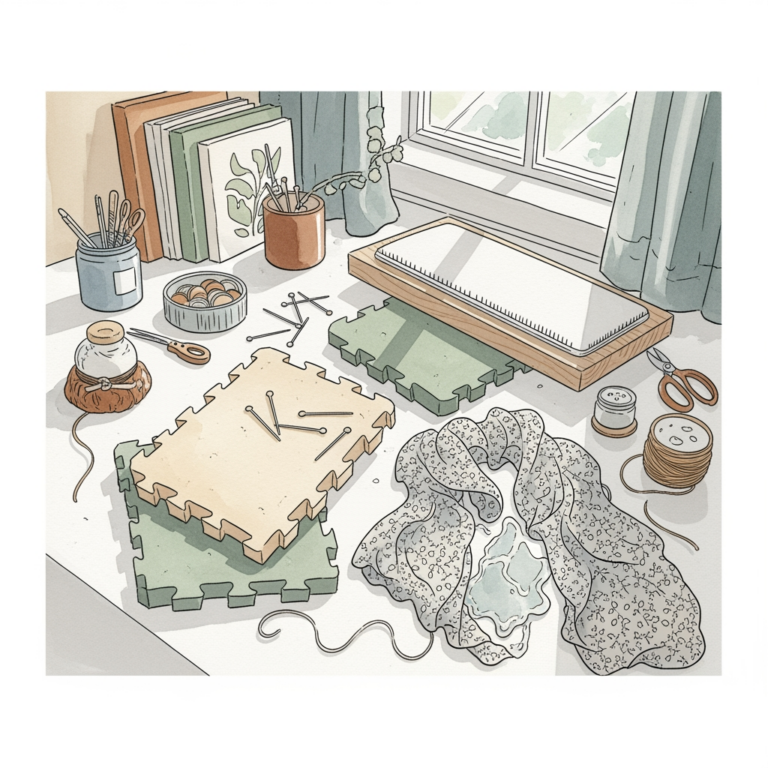
Begin by laying the garment flat on a clean, dust-free surface, ensuring it is blocked to its desired shape. Hold the nozzle at least 10 to 12 inches away from the fabric to prevent pooling or saturation.
Apply in light, sweeping motions, moving past the edge of the fabric before beginning the next pass. Over-application is the most common error; it is always better to apply two thin, light coats with a drying period in between than one heavy coat that might change the texture of the yarn.
Archival Sprays and Fiber: What You Can & Can’t Treat
Not all fibers react the same way to archival treatments. Animal fibers like wool, alpaca, and mohair generally take well to light misting, as they are absorbent and the spray can settle into the fiber structure without leaving a heavy film.
Synthetic fibers and high-twist cottons are more challenging, as the spray may sit on the surface rather than absorbing. This can sometimes create a slick or plastic-like finish if too much product is applied.
Avoid treating items that will be worn against the skin, as these sprays are not designed to be in contact with sweat or natural oils. Stick to wall hangings, decorative pillows, or display sweaters that do not require frequent washing or physical handling.
Beyond the Spray: Proper Long-Term Fabric Storage
Sprays are merely the final line of defense, not a replacement for proper storage. The most critical factor in longevity is removing environmental stressors like light, humidity, and insects.
Store your items in acid-free tissue paper and breathable fabric garment bags, rather than plastic bins which trap moisture and encourage mold growth. If storing woolens, use cedar chips or lavender bags to deter moths, but ensure these are not touching the yarn directly to avoid oil staining.
Regularly rotate your stored pieces to prevent permanent creasing along the fold lines. By combining smart storage practices with the right archival spray, your fiber art will remain as vibrant and structurally sound as the day the final bind-off was completed.
Preserving a finished project requires a shift in mindset from the creative process to a conservationist approach. While sprays provide an essential layer of protection, they should always be treated as a supplement to proper handling and climate-controlled storage. By carefully selecting the right product for the specific material and intended use, you ensure your hand-knits withstand the test of time.