6 Best Sewing Pattern Hooks For Hanging Lingerie Templates
Organize your studio efficiently with our 6 best sewing pattern hooks for hanging lingerie templates. Upgrade your storage system and shop our top picks today.
Organizing sewing patterns is as essential to a successful project as maintaining proper tension on a mohair blend. Lingerie patterns, characterized by delicate curves and small, multi-part pieces, require a storage solution that prevents creases and distortion. When paper templates lose their shape, grainlines become impossible to align, leading to ill-fitting garments. Establishing a hanging system ensures that every pattern piece remains crisp, accessible, and ready for the cutting table.
Dritz Pattern Hanger Clips: Best Overall System


These clips are the industry standard for a reason, specifically designed to grip delicate tissue or heavy cardstock without causing tearing. They function by clamping onto the top edge of a pattern sheet, providing a pre-punched hole for hanging on a standard garment rack.
For lingerie makers, this system is invaluable because it keeps small gussets, straps, and lace appliques organized together. Unlike folded storage, hanging prevents the “memory” of creases from interfering with the precise seam allowances required for intimate apparel.
The primary tradeoff is the initial investment compared to makeshift household alternatives. However, the longevity of these clips justifies the cost when preserving master copies of patterns that undergo frequent adjustments.
IKEA Kungsfors S-Hooks: Best on a Tight Budget

Simple, sturdy, and utilitarian, these stainless steel S-hooks offer a minimalist approach to pattern management. They are designed to hook directly into a pre-punched hole in a pattern folder or a hole-punched pattern envelope.
These hooks shine when utilizing an open garment rack, allowing for quick retrieval of various sizes or styles. Because they lack moving parts, they are virtually indestructible, much like a pair of reliable nickel-plated circular needles.
The main limitation is that the patterns must be punched or placed in a bag to hang correctly. If the goal is speed and volume storage on a budget, this is the most effective path forward.
Command Large Metal Hooks: For Heavy Cardstock

When heavy-weight tag board or stabilized pattern paper is used, standard plastic clips often fail to provide enough support. Command hooks offer a robust, wall-mounted solution that keeps entire pattern blocks off the floor and away from drafting tables.
Adhesive-backed hooks are ideal for those who work in limited spaces where floor racks are impractical. They turn any unused wall surface into an organized library of sewing templates.
Ensure the surface is properly cleaned before application, as the weight of large pattern sets can cause inferior adhesives to fail over time. Think of it as securing a heavy tapestry; proper mounting is the difference between a tidy studio and a cluttered workspace.
U-pick Bulldog Clips: Best No-Punch Solution
Bulldog clips utilize a spring-loaded tension mechanism to grasp the edge of a pattern without requiring a single puncture. This is critical for delicate vintage patterns or hand-drawn templates on fragile tracing paper.
These clips are versatile enough to hold multiple layers of a pattern block, such as the back, front, and cradle of a bralette. Because they are not permanent, they can be swapped or rearranged as projects change from season to season.
The main concern is the weight of the clips themselves, which can cause curling if the paper is too thin. Use lighter-gauge clips for delicate patterns to maintain the integrity of the paper edges.
Swivel Clips with Hooks: Most Versatile Option
Swivel clips are designed with a rotating head, allowing patterns to face whichever direction offers the best view in a crowded closet. This 360-degree mobility is a game-changer when cross-referencing multiple pattern pieces in tight quarters.
They are particularly useful for lingerie makers who frequently need to flip through different strap lengths or cup sizes. The ability to rotate a pattern allows for a higher density of storage without sacrificing ease of access.
While slightly more complex than a standard hook, the added maneuverability reduces physical handling of the paper. Less handling leads to less tearing, which is essential for delicate pattern materials.
Clover Wonder Clips & Rings: For Small Spaces
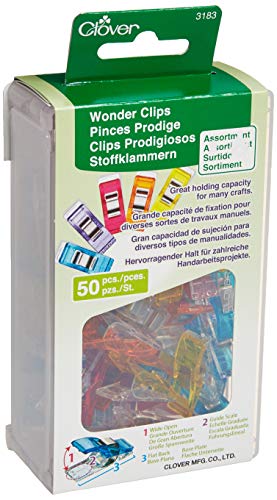
Though typically used for pinning fabric without holes, these clips pair perfectly with small metal binder rings for a compact, vertical filing system. This method treats patterns more like a swatch collection or a set of circular needles, grouping them neatly by category.
This is the preferred method for anyone with limited storage space who needs to keep lingerie patterns protected in a hanging garment bag. It keeps the collection compact and prevents small pieces from becoming separated.
Avoid over-stuffing the rings, as this can warp the edges of the pattern paper. A well-organized, thin ring keeps pieces orderly while protecting the paper from unnecessary strain.
How to Choose the Right Hook for Your Patterns
The weight of your pattern material is the deciding factor for your storage hardware. Thin tissue paper requires delicate, low-tension clips, while heavy cardstock templates demand sturdy, metal-reinforced hooks.
Consider the frequency of access; if you reach for a specific bra block every week, choose a hook that requires minimal manipulation to remove. If the pattern is for infrequent use, a more secure, permanent clip is the better investment.
Always prioritize the structural integrity of the paper. No matter the cost of the hook, if it compromises the edge of your pattern, it is the wrong tool for the job.
Clip Hooks vs. S-Hooks: Which is Right for You?
Clip hooks act as a secondary interface between the pattern and the rod, allowing you to hang non-punched material with ease. S-hooks, conversely, require a hole, acting as a direct extension of the garment rack.
S-hooks are inherently stronger and less prone to mechanical failure over the long term. Clip hooks are far more convenient for frequently changing patterns, especially when working across multiple projects simultaneously.
Evaluate the trade-off between permanence and convenience. If you have a permanent set of master patterns, use S-hooks for stability. If your patterns change or need adjustments often, stick with reliable clip hooks.
Tips for Setting Up Your Pattern Hanging System
Organize by category or project type rather than by size alone to maintain a logical workflow. Use color-coded labels or tags on your hooks to identify patterns at a glance, much like using stitch markers to identify needle sizes.
Keep your hanging system in a climate-controlled area, away from direct sunlight, which can cause paper to become brittle. Light is as damaging to patterns as it is to sensitive yarn fibers like silk or wool.
Maintain a consistent spacing on your rack to allow for airflow. Crowding the patterns can lead to moisture buildup or unintentional folding, both of which will eventually compromise your cutting precision.
Prepping Your Patterns for Long-Term Hanging
Reinforce the top edge of your pattern paper with acid-free tape before punching holes or applying clips. This simple step prevents the weight of the paper from tearing the holes, effectively extending the lifespan of your templates by years.
Store small pieces, such as elastic guides or hardware templates, in clear, acid-free envelopes before clipping them to the main hanger. This prevents the loss of small components that are vital for the finished fit.
Treat your patterns with the same care as your finest tools. With proper edge reinforcement and thoughtful hanging, your templates will remain accurate through countless iterations and adjustments.
By investing time in an organized hanging system, you remove the friction that often prevents a project from getting off the ground. Proper storage ensures that your patterns remain a stable, reliable foundation for every garment you construct, allowing you to focus on the artistry of the craft rather than the frustration of searching for missing pieces.