
6 Best Lightweight Music Stands For Touring Worth Packing
Ditch the heavy gear with these 6 best lightweight music stands for touring. Find the perfect portable, durable stand for your next gig and shop our picks now.
Forgetting exactly where a complex lace chart ends or losing count of a repeating cable motif can turn a relaxing evening into an exercise in frustration. Keeping a pattern at eye level transforms the knitting experience, reducing neck strain and maintaining focus during long sessions. A portable music stand offers the perfect support structure for those intricate projects that require constant reference. Finding the right balance between weight, stability, and portability ensures the pattern stays exactly where needed, regardless of where the knitting happens.
Peak Music Stands SMS-20: Best for Knit Nights
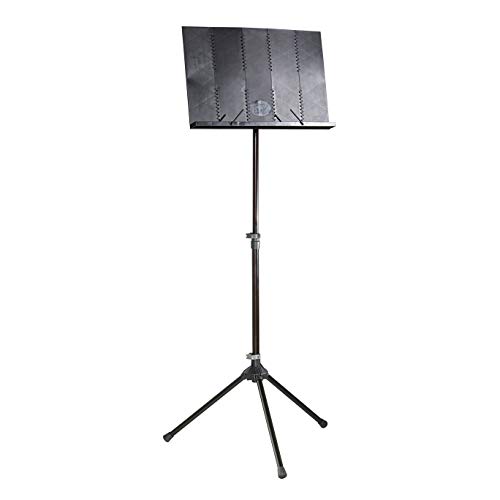

The Peak Music Stands SMS-20 is a favorite for those who prioritize a low profile without sacrificing structural integrity. It features a tripod base that provides enough stability to support a heavy, laminated master pattern or a thick binder filled with printed instructions.
This stand collapses down to a remarkably slim profile, making it easy to slide into a project bag or under a seat. The folding desk design means that even if a pattern page is slightly damp from blocking or stiff from high-twist wool notes, it stays flat and readable.
For knitters who often attend group crafting nights, the ease of setup is a major advantage. It avoids the awkward fumbling often associated with more complex folding mechanisms.
Manhasset Voyager 5201: The Toughest Traveler

The Manhasset Voyager 5201 is the gold standard for durability among portable stands. If a project requires a massive reference book—such as a complex stitch dictionary or an exhaustive collection of knitting technique manuals—this stand holds the weight without wobbling.
Its unique feature is the telescoping shaft that fits entirely inside the desk, creating a compact package for transit. Because the desk is made of high-grade, reinforced aluminum, it does not dent or bend easily when packed alongside sharp knitting needles or metal cable needles.
While it is slightly heavier than thinner wire stands, the trade-off is superior stability. It remains rock solid on uneven surfaces, such as a coffee shop floor or a soft carpet, preventing a pattern from sliding out of sight.
K&M 101 Music Stand: The Ultralight German Pick
K&M is renowned for engineering precision, and the 101 model is arguably the most reliable ultralight stand on the market. It is ideal for knitters who prioritize weight above all else, especially when traveling with limited luggage space.
Despite its lightweight construction, the 101 features a robust tensioning system that keeps the desk at the desired angle for hours. It handles standard paper patterns, lightweight booklets, or even a single tablet with ease.
The finish is exceptionally smooth, which protects delicate materials like silk-blend yarn if the yarn happens to catch on the stand. It is a minimalist choice for those who want their tools to be functional without taking up physical or visual space.
On-Stage SM7211B: Best Budget-Friendly Option
The On-Stage SM7211B offers essential functionality without unnecessary bells and whistles. It is the perfect entry-level choice for a new knitter who isn’t ready to invest in high-end gear but wants the ergonomic benefits of an elevated pattern.
It is surprisingly sturdy for its price point and includes rubber feet to protect hardwood floors from scratches. The height adjustment is intuitive, allowing for quick transitions from a seated position on a sofa to an upright chair.
While it lacks the heavy-duty engineering of professional touring stands, it performs perfectly for standard pattern sheets or lightweight plastic sheet protectors. It is an honest, utilitarian tool that fulfills the core requirement of holding a pattern at eye level.
Hola! Music HPS-101TB: The Best All-in-One Kit
The Hola! Music HPS-101TB stands out because it typically includes essential extras like a carrying bag and page clips. For a knitter, these accessories are not just bonuses—they are essential for keeping patterns secure in breezy environments.
The included clips are strong enough to hold down thick pattern booklets or multiple sheets of cardstock used for charting. This ensures that even if a window is open or a fan is running nearby, the pattern remains stationary.
This kit is designed for the knitter who wants a complete solution immediately. It removes the need for separate purchases and provides a cohesive system for taking complex projects on the road.
Vekkia Tabletop Stand: Most Versatile for Crafters
For those who prefer to knit at a desk or a dining table, the Vekkia tabletop stand is an excellent alternative to a floor model. Its compact size makes it perfect for smaller living spaces where a full tripod base would simply be in the way.
It is particularly useful for intricate stranded colorwork where the knitter needs to refer to a small, dense chart frequently. Being at eye level on a table surface keeps the eyes from needing to constantly refocus between the work and a distant wall.
The stand is lightweight and folds flat for storage in a drawer between projects. It is a highly portable, space-saving solution that prioritizes ergonomics in tight quarters.
Why a Music Stand Beats a Pattern on Your Lap
Relying on a lap for a pattern often forces a hunched posture, which leads to chronic neck and shoulder tension. When the neck is bent for hours, the muscles tighten, which can eventually impact the fluidity of the knitting stitch.
An eye-level stand forces a neutral, upright posture that keeps the spine aligned. This simple change allows for longer, more comfortable knitting sessions, especially when working on detailed lace or complicated cables that require constant visual cross-referencing.
Furthermore, a stand keeps the pattern clean. A lap is prone to shedding wool fibers, accidental spills, or the weight of a heavy knitting project, all of which can damage or obscure a pattern over time.
What to Look For in a Knitting Pattern Stand
Stability is the primary factor, as a wobbling stand is more distracting than helpful. Look for rubberized feet or non-slip tips that will stay put on various flooring types, especially if the knitting happens on smooth tile or wood.
Consider the desk width and the strength of the page holders. Knitting patterns are often printed on thick paper or placed inside plastic sheet protectors, which require stronger clips to stay open compared to thin musical sheets.
Portability is the secondary consideration. A stand should collapse easily and fit into a bag without forcing the knitter to remove other essentials like yarn or project-specific notions.
Accessorizing Your Stand for Knitting Success
Adding small accessories to a stand can significantly improve the workflow. Magnetic strips are excellent for keeping track of rows on a complex chart, as they can be moved up the page without disturbing the pattern.
Consider attaching a small LED book light to the top of the stand. This provides direct illumination on the chart, which is vital when working with dark-colored yarns or in low-light environments.
Small, adhesive hooks can also be placed on the side of the desk to hold essential tools. Keeping a stitch marker, a darning needle, or a small pair of scissors within arm’s reach prevents the need to stand up and break the knitting flow.
Stand vs. Tablet Holder: Which is Best for You?
Choosing between a stand and a tablet holder depends entirely on the preferred format of the pattern. A traditional music stand is far more versatile, as it can hold both physical paper patterns and tablets alike.
Tablet holders are often smaller and more specialized, designed specifically to grip the edges of a device. If the knitter exclusively uses digital patterns, a dedicated tablet arm might offer more flexibility in positioning.
However, paper patterns still offer advantages, especially when it comes to making hand-written notes or highlighting rows. A sturdy music stand remains the most adaptable tool for a knitter who switches between digital and paper mediums depending on the project.
Selecting the right stand is an investment in the longevity of the hobby and the comfort of the maker. By prioritizing stability and portability, any knitter can create a personalized, ergonomic environment that turns complex patterns into a joy to follow.