7 Best Tie Hangers For Ribbon And Yarn Organization
Struggling to manage your craft supplies? Discover the 7 best tie hangers for ribbon and yarn organization to declutter your space. Shop our top picks today!
Finding a practical way to store yarn is often the final hurdle between a relaxing knitting session and a frustrating afternoon of untangling. While tie hangers are marketed for neckwear, their multi-tiered design provides the perfect structure for keeping hanks and skeins accessible, visible, and orderly. Choosing the right hanger requires balancing the weight of the fiber with the available storage footprint. By repurposing these closet staples, precious stash items remain free from dust and accidental snags.
The Container Store Cedar Hanger: Best for Wool


Cedar is a natural choice for storing protein-based fibers like wool, alpaca, and cashmere. These woods contain natural aromatic oils that deter common fabric-eating pests, providing a subtle layer of protection for high-end stash investments.
Because wool fibers are prone to felt if trapped in humid, stagnant air, the breathable nature of cedar is a significant advantage. This hanger’s structure allows for consistent airflow around the yarn, preventing the moisture buildup that leads to musty odors.
When selecting this hanger, consider the weight of the yarn. Heavy, worsted-weight wools benefit from the robust support of cedar, but be mindful not to overcrowd the bars, as compression can alter the loft and texture of delicate hand-dyed yarns.
IKEA Komplement Hanger: Best Budget-Friendly Pick

Efficiency in a craft room does not always require a high financial investment. The IKEA Komplement is a utilitarian staple that features a series of circular cutouts, making it an excellent candidate for hanging individual skeins of yarn or organizing small notions bags.
The plastic construction is inherently snag-free, which is crucial when handling mohair, angora, or any yarn with a high halo. There is no risk of the wood splinters often found in cheaper timber hangers catching on loose fibers.
However, the fixed circular design is best suited for yarn that has been wound into neat cakes or kept in its original paper band. If the goal is to store long, unwound hanks, these openings may be too restrictive for effective use.
Hivory 360° Rotating Tie Rack: Best for Easy Access
Visibility is the primary driver of a productive knitting habit. When yarn is hidden in deep bins, projects are frequently forgotten, but a 360-degree rotating rack brings every colorway within immediate reach.
This design is particularly beneficial for colorwork enthusiasts who need to compare multiple shades of fingering-weight yarn side-by-side. Being able to spin the rack allows for quick palette matching without having to dismantle an entire storage shelf.
The primary trade-off is the height requirement. Ensure the closet or storage area has sufficient clearance for the rotating mechanism, as it occupies more vertical space than a standard flat hanger.
Proman Kascade Wooden Hanger: Best for Small Spaces
Small-space living necessitates creative storage solutions that prioritize verticality. The Proman Kascade excels by using a tiered, cascade design that maximizes the capacity of a single closet hanger rod.
This hanger is exceptionally sturdy, making it a reliable choice for holding multiple skeins of heavier yarns like cotton or superwash wool blends. Its wooden frame provides a solid anchor, ensuring that a full rack of yarn does not buckle or tilt under the combined weight.
Use this option to group yarn by project rather than fiber type. Having a project’s main color and contrasting yarns stored on one cascade keeps everything organized until the cast-on day arrives.
Richards Homewares Scarf Hanger: Best for Delicate Fibers
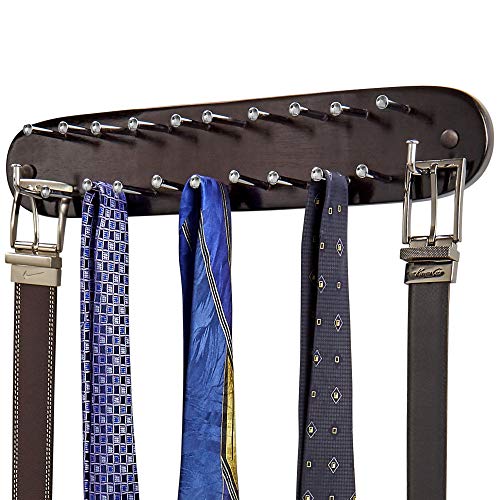
Delicate fibers require smooth surfaces and rounded edges to prevent the yarn from snagging. This specific hanger style utilizes soft, non-slip coated rings that are ideal for hanging fine lace weight or hand-spun yarns.
Unlike rigid metal racks, the design of these scarf rings ensures that yarn stays securely in place without sliding off during closet movement. This is a critical feature when storing slippery silk-blend yarns that are notorious for slipping off standard hangers.
If the yarn is stored in mesh bags to keep it dust-free, the rings provide a perfect anchor for the bags’ drawstrings. This prevents the bags from sliding into a pile at the bottom of the closet.
My-Handy-Design Wall Rack: Best Wall-Mounted Option
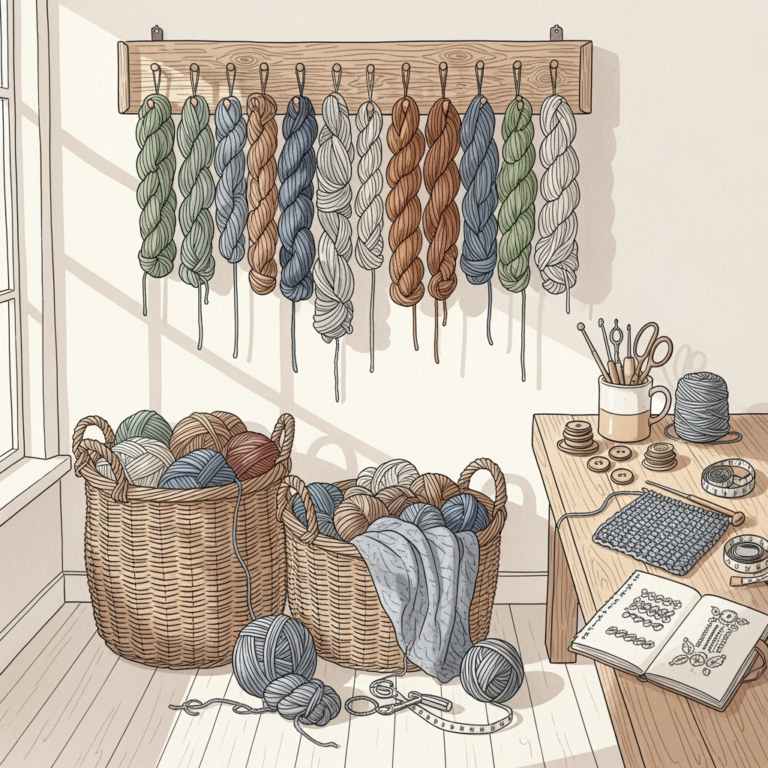
Sometimes, the best way to protect yarn is to showcase it as art. A wall-mounted rack keeps the stash off the floor, far away from potential moisture or pets, while doubling as an inspirational display for the maker.
Wall-mounted options are superior for high-traffic rooms where closet space is at a premium. By installing a rack at eye level, yarn becomes a decorative element that reminds the user of upcoming projects every day.
Ensure the rack is mounted securely into studs, especially when holding larger quantities of wool. A full rack of bulky-weight yarn is deceptively heavy, and wall anchors must be rated for the cumulative weight of the yarn plus the hardware itself.
Yarl-agizer Motorized Rack: The Ultimate Splurge
For the dedicated knitter with a significant, high-turnover stash, a motorized rack is the pinnacle of convenience. These systems remove the need for manual searching by automatically cycling through the entire inventory at the push of a button.
This system is ideal for those who manage large quantities of commercial yarns that remain in their factory-wound state. It simplifies the inventory process and ensures that even the yarn stored at the very back of the rack remains accessible and ready for use.
Consider the complexity of installation and the potential for mechanical failure over time. While the convenience is unparalleled, it is an investment that requires careful planning to ensure the electrical components are safely integrated into the craft room layout.
How to Choose a Hanger for Your Yarn Stash
Selecting the right tool starts with an inventory of the fiber types currently in the stash. Natural fibers like wool and alpaca respond well to wood or cedar, while synthetic or superwash yarns are durable enough for plastic or metal rings.
Consider the physical state of the yarn as well. Skeins that are still in their original loop or “hank” format require wide, smooth hooks to prevent the yarn from creating tension kinks.
Always check the weight capacity of the hanger. A single hanger overloaded with five pounds of heavy, water-absorbent cotton will eventually bend or break, potentially ruining the yarn’s structure in the process.
Wall-Mounted vs. Hanging Racks: Which Is Best?
Hanging racks are the superior choice for portability and maximizing closet efficiency. They move with the user, making it easy to shift the entire stash to a new location if the craft room is relocated or reorganized.
Wall-mounted racks are the better choice for long-term organization and aesthetic appeal. They are fixed, stable, and create a centralized “command center” for the fiber arts hobby, provided there is enough wall surface area to dedicate to the setup.
Balance the decision based on the longevity of the current living situation. Renters or those who frequently reorganize may find more value in mobile, hanging solutions, while homeowners with a dedicated studio space often benefit from the permanence of wall-mounted systems.
Tips for Organizing Yarn to Prevent Tangling
The golden rule of yarn storage is to keep every item contained. Whether using mesh bags, project sleeves, or simply looping the yarn through the hanger securely, ensure that loose ends are tucked away to prevent accidental unraveling.
Organize by fiber weight and then by color. This makes it significantly easier to find a matching strand when finishing a garment or preparing for a new colorwork chart.
Finally, keep the yarn away from direct sunlight. Even if a hanger looks decorative in a window, ultraviolet light will fade natural and synthetic dyes over time, potentially leading to noticeable color differences when finishing a larger project.
Properly managing a yarn stash is an investment in the longevity and quality of every finished garment. By selecting a hanger that respects the unique needs of the fiber, every knitter ensures that their materials remain in pristine condition until the needles are ready.