6 Best Wood Frames For Mounting Lace Art Worth Using
Discover the 6 best wood frames for mounting lace art to preserve your delicate projects perfectly. Shop our top selections and elevate your display today.
Lace is the culmination of hundreds of hours spent mastering tension, managing fine-gauge yarn, and perfectly executing delicate cables or yarn-overs. Once a piece is blocked to perfection, the final step of framing transforms a simple swatch or shawl into a preserved work of art. Choosing the wrong mount can flatten the fiber’s natural texture or, worse, cause long-term damage through improper materials. Finding the balance between aesthetic appeal and archival safety ensures the hard work invested in every stitch remains visible for years to come.
Studio Decor Shadow Box: Best for Added Depth


Shadow boxes provide the necessary breathing room for lace projects that feature three-dimensional elements like bobbles, nupps, or dimensional lace motifs. Unlike standard frames that press against the fiber, the increased depth of these boxes prevents the crushing of delicate structures.
When mounting a piece inside, utilize the depth to add a backing board wrapped in a complementary fabric. This ensures the lace stands proud against the frame’s background, creating a professional, gallery-style effect.
Be mindful that a deeper frame requires more careful pinning to ensure the lace does not slump over time. Always secure the piece with stainless steel pins or archival-safe thread to prevent rust from moisture trapped within the enclosed space.
Umbra Floating Frame: A Modern Display Option
Floating frames utilize two panes of glass to sandwich the lace, creating an illusion of the art suspended in thin air. This is a stellar choice for showing off the intricate edges of a circular doily or a delicate, star-shaped lace medallion.
Because the lace is held between glass, there is no need for a backing board that might obscure the beauty of the lace’s negative space. This minimalist approach allows the light to pass through the stitches, highlighting the clarity of the yarn’s twist and the precision of the pattern.
Consider the potential for fiber movement, as these frames do not typically allow for traditional mounting pins. If the lace is particularly lightweight, a tiny dab of fabric-safe adhesive at the center or top edge may be necessary to prevent gravity from pulling the design downward.
Nurge Beechwood Hoops: The Easiest Round Frame

For many knitters, a high-quality embroidery hoop is the most natural way to present lace, as it mirrors the shape of the needles used to create it. Beechwood offers a smooth, sturdy surface that won’t snag fine-gauge yarn or delicate silk fibers.
These hoops are incredibly practical for those who want a quick, changeable display. Because the tension can be adjusted via a screw at the top, it is easy to re-center the piece if the fabric shifts after the initial mounting.
Always select a hoop with a deep profile to ensure the lace sits flush against the inner ring. If the lace feels too loose, consider backing the project with a piece of linen to provide the structural support needed for a crisp, taut presentation.
Magnetic Poster Hanger: For a Minimalist Look
Magnetic hangers offer a clean, Scandinavian-inspired way to display rectangular lace wall hangings or long, narrow scarves. They rely on strong magnets to grip the top and bottom of the lace, meaning there is zero piercing of the delicate yarn.
This method is ideal for pieces that have been blocked into a crisp, linear rectangle, as the weight of the bottom magnet helps keep the lace from curling. It is the most reversible option, making it perfect for displaying seasonal lace projects that get rotated throughout the year.
The main tradeoff is that these hangers provide no protection against dust or environmental oils. They are best suited for areas with minimal foot traffic where the lace is unlikely to be touched or snagged by passing movement.
Ornate Gold Leaf Frame: For a Vintage Feel
Vintage frames bring a sense of historical gravitas to lace, honoring the heritage of traditional lace-making techniques like Shetland or Orenburg lace. The juxtaposition of a metallic finish against the soft, matte texture of natural fibers like wool or cotton creates a striking visual contrast.
When using an ornate frame, it is essential to ensure the glass is UV-protected to prevent the delicate fibers from fading over time. Lace is particularly susceptible to sunlight, and a frame that looks beautiful but lacks protection can ruin a project’s integrity within a few seasons.
Always measure the inner dimensions of the frame carefully before beginning the final blocking process. You want the lace to fit perfectly within the gilded borders without looking cramped or leaving too much awkward negative space.
Framebridge Custom Frame: The Heirloom Choice
Custom framing is the gold standard for precious, one-of-a-kind lace projects such as a christening gown or a family heirloom shawl. Professional framers use acid-free matting and mounting boards that prevent the chemical breakdown of natural fibers over decades.
The primary advantage here is the precision of the fit, which is tailored specifically to the dimensions of the blocked lace. Professional mountings often include specialized techniques that distribute the weight of the lace evenly, preventing the fabric from distorting under its own weight.
While this represents a significant financial investment, it is the safest route for long-term preservation. A custom frame ensures that your stitches remain undisturbed and protected from humidity, dust, and handling for generations.
How to Choose the Right Frame For Your Lace
The selection process should always begin with the weight and fiber content of the project. A heavy, wool-blend lace scarf requires a different support structure than a light, ethereal cobweb-weight silk doily.
Always prioritize the preservation of the yarn’s structure over the decorative elements of the frame. If a piece requires significant stretching to fit a frame, reconsider the size; forcing a lace project to fit an undersized space will cause permanent distortion of the stitches.
Think about the environment where the piece will live. Areas with high humidity, such as bathrooms or kitchens, require sealed glass frames to prevent the lace from absorbing moisture, which can lead to mildew or fiber rot.
Mounting Your Lace: The Acid-Free Method
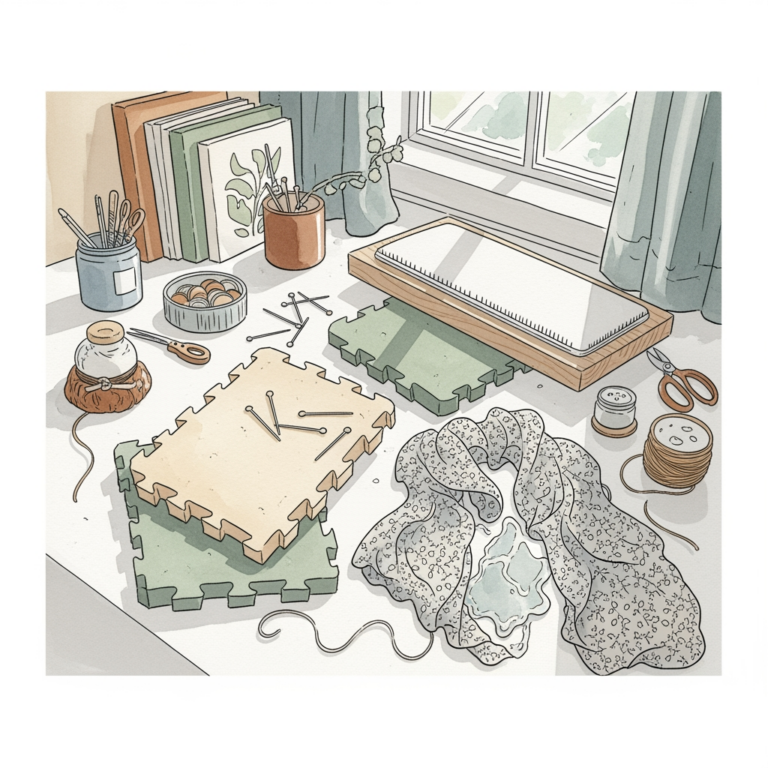
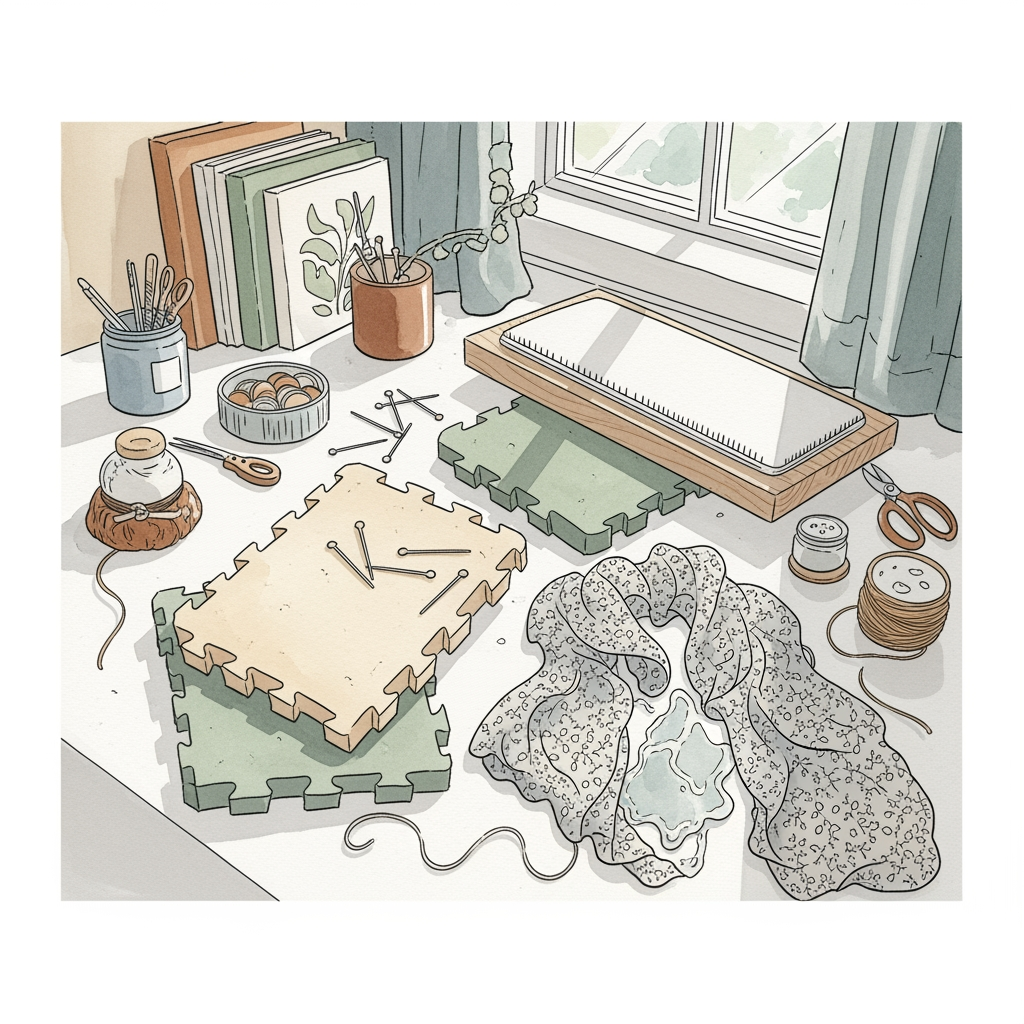
Whatever frame you choose, the mounting process must be archival to protect the fiber. Never use standard masking tape or household glues, as the acidic properties will eventually discolor and weaken the yarn.
Utilize acid-free mounting boards and stainless steel T-pins or cotton thread for securing the edges. If the lace is thick, create a small ‘cushion’ by wrapping the mounting board in acid-free tissue paper or unbleached muslin.
This acts as a buffer between the hard backing and the delicate stitches, providing a soft surface that accommodates the texture of the knitting. Avoid plastic or synthetic backings, as they do not allow the fiber to breathe and can trap condensation.
Choosing a Fabric Background For Your Frame
The background fabric is the canvas upon which the pattern of the lace truly comes to life. A dark, solid background provides the best contrast for intricate white or natural-colored lace, allowing the stitch definition to pop.
Select natural fibers like cotton, linen, or silk for the background, as they share the same physical properties as the lace. Avoid synthetic satins or polyesters, which can create static electricity and attract dust to the lace fibers.
Before finalizing the mount, experiment with different textures and colors by placing the lace on various swatches. A subtly textured linen adds a rustic, organic quality, while a smooth, high-quality cotton emphasizes the sharpness of every yarn-over.
To Stretch or Not to Stretch Your Lace Art
Stretching is a vital part of the finishing process, as it opens up the stitches and reveals the intended design, but it must be done with caution. For some pieces, particularly those with complex cables, aggressive stretching can destroy the architectural integrity of the design.
Light blocking is often enough for most frames; simply ensure the piece is pinned symmetrically and is flat. If you decide to stretch, do so gradually over several hours rather than forcing the shape into place all at once.
Once the lace is pinned to the board, allow it to set for at least 24 hours in a room with stable humidity. This ensures the fibers have ‘relaxed’ into their new shape, preventing the lace from sagging or puckering once it is sealed behind glass.
Selecting the right frame is just as much a part of the craft as the final bind-off. By combining careful mounting techniques with thoughtful hardware choices, any lace piece can be transformed into a lasting display of technical skill and artistic vision.