6 Best Storage Rolls For Shear Protection Worth Owning
Protect your professional tools with our top 6 storage rolls for shear protection. Discover the best organizers to keep your blades safe and shop your favorite.
A sharp pair of shears is the backbone of any precise fiber arts studio, yet these precision instruments are frequently tossed into project bags or left exposed on work tables. Dull blades, nicked tips, and rust from accidental moisture are the primary enemies of a clean snip through delicate natural fibers like mohair or silk. Proper storage is not merely about organization; it is a critical investment in the longevity of tools that dictate the finishing quality of every project. Choosing the right storage solution ensures that the next time a yarn tail needs trimming or a swatch needs cutting, the experience is seamless rather than a struggle against a compromised edge.
Gingher Knife Edge Shear Case: Best for Tailors


Professional-grade shears demand professional-grade protection, and this case provides exactly that. Designed for the iconic heavy-duty shears used by serious tailors and quilters, it features a structured form that keeps the blades perfectly aligned and immobilized.
When shears are allowed to rattle around in a drawer, the pivot screw can loosen and the delicate cutting edges may strike one another. This case prevents that metallic clatter and ensures the tension remains consistent. If you own high-end carbon steel shears, the interior lining is essential for preventing oxidation.
The bottom line: invest in this case if you are protecting a premium instrument that requires precise blade alignment for cutting heavy wools or dense felt.
Della Q Shear Roll: The Stylish Crafter’s Choice

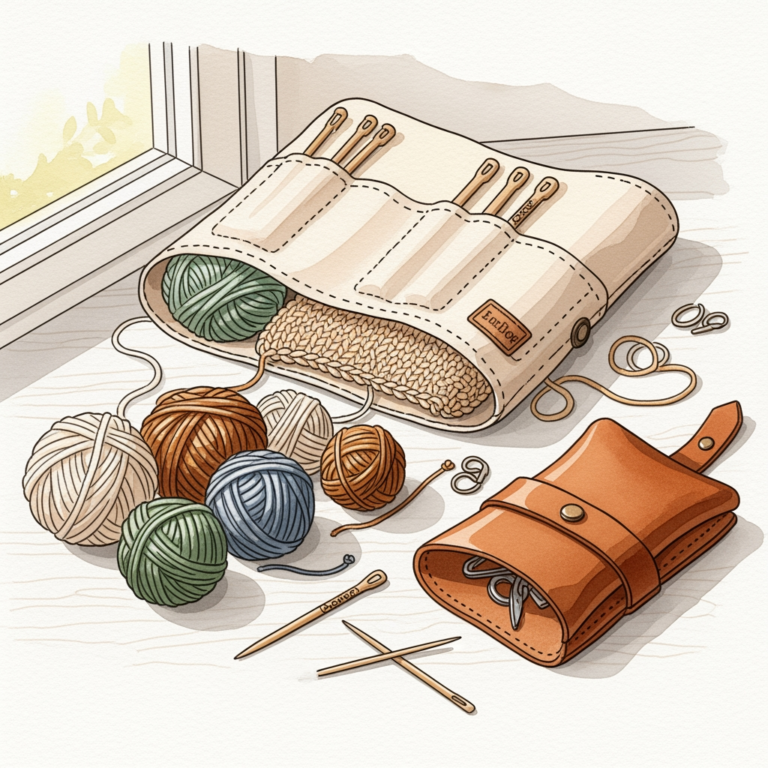
For those who view their tools as an extension of their aesthetic, the Della Q roll offers a blend of durability and design. The wax canvas construction is naturally water-resistant, which is a major advantage when storing metal tools in humid craft rooms where rust is a constant threat.
The interior pockets are sized to accommodate a variety of shear lengths, ranging from small snips for fine lace work to larger shears for cutting fabric yardage. Because it rolls up, it takes up minimal space in a project bag, making it ideal for makers who frequent retreats or knitting circles.
The takeaway: this is the best choice for the mobile maker who refuses to sacrifice style for functionality.
Olfa Rotary Cutter Case: Best for Quilting Safety
Rotary cutters present a unique set of safety risks compared to traditional shears because the blade is inherently exposed and razor-sharp. A dedicated case for these tools is non-negotiable, as even a minor bump can cause a blade to roll and create a jagged nick.
This storage solution focuses on shielding the blade from accidental contact while keeping the handle easily accessible. By securing the cutter in a dedicated slot, you avoid reaching into a bin and accidentally grazing the edge.
For those who transition between garment sewing and quilting, this case is an essential safety upgrade that prevents both dulling the expensive blades and harming the user.
Fiskars Universal Scissor Caddy: Most Versatile
Sometimes, a project desk requires a hybrid solution that holds more than just a single pair of shears. The universal caddy functions as both a storage unit and a workspace organizer, keeping scissors, seam rippers, and measuring tapes within arm’s reach.
This is particularly useful for those who manage multiple ongoing projects, such as a sweater on the needles and a separate sewing project on the cutting mat. Having a dedicated “home” for every tool prevents the common issue of losing your favorite embroidery scissors under a pile of yarn scraps.
While it lacks the portability of a roll, it excels in the permanent studio environment where efficiency is the primary goal.
Thread & Maple Shearling Roll: Luxury Protection
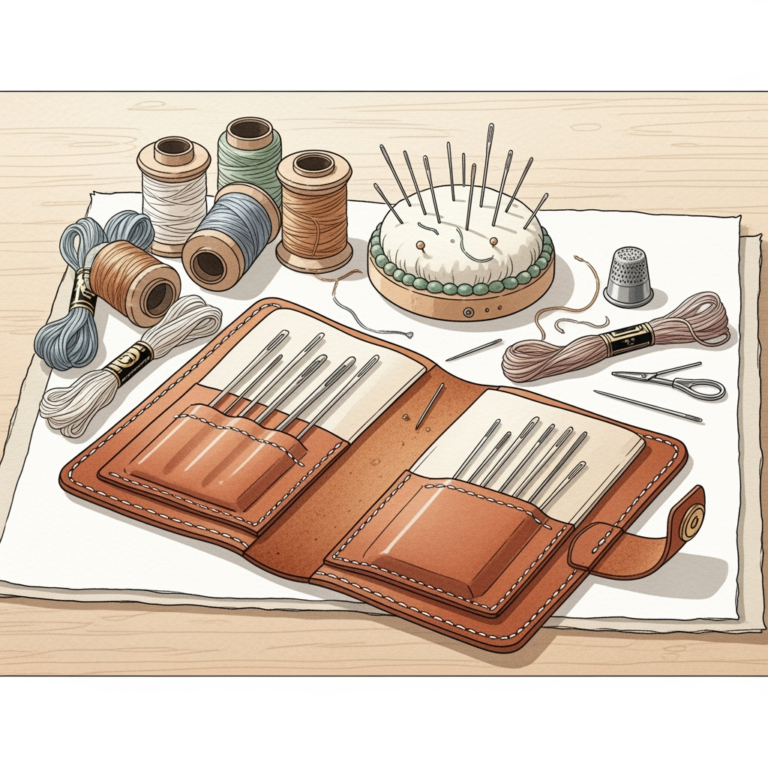
Leather is a superior material for shear storage because it provides a natural, soft barrier that protects the metal from scratches while allowing it to breathe. The Thread & Maple roll elevates this concept, offering a tactile, artisanal experience that matches the quality of high-end, hand-forged scissors.
The natural oils in the leather help maintain the metal, acting as a secondary line of defense against moisture. Using this roll feels like a ritual, signaling the start of a focused crafting session where precision is the priority.
If you are committed to the long-term care of your tools, this is a luxury investment that pays off by preserving the factory edge of your shears for years.
Harbor Freight Tool Roll: A Budget-Friendly Hack

Not every storage solution needs to be a specialized product, and tool rolls from hardware stores often perform the job just as well as craft-branded items. These rolls are built for heavy-duty industrial use, meaning the stitching is usually far more rugged than standard sewing accessories.
While they may lack the visual appeal of designer options, they provide excellent physical protection for a collection of shears. They are typically made from durable, heavy-weight canvas that can withstand years of abuse without fraying.
The bottom line: if functionality is the only metric that matters, a hardware store tool roll is an unbeatable, cost-effective alternative.
How to Choose a Shear Roll for Your Craft Tools
Choosing the right roll starts with an inventory of your current tools. Small snips require snug, narrow pockets to prevent them from sliding out, while large shears need wide, sturdy slots that distribute weight evenly.
Consider the material of the blades when selecting a case. Carbon steel is prone to rust and benefits from wax canvas or treated leather, whereas stainless steel is more forgiving but still requires protection against dulling.
Always prioritize: * Closure security: Ensure the tie or strap keeps the roll tightly closed during transport. * Pocket depth: Deep pockets keep the pivot point of the shears secure. * Material integrity: Avoid thin plastics that may tear when punctured by a sharp tip.
Hard Case vs. Soft Roll: Which Is Best for You?
The decision between a hard case and a soft roll depends entirely on your workspace and travel habits. Hard cases provide crush-proof protection, making them ideal for throwing into a heavy gear bag full of metal needles and notions.
Soft rolls, conversely, are flexible and adapt to the amount of space available in your knitting basket. They are generally quieter and less bulky, though they offer less protection against being crushed under a heavy pile of yarn.
Ultimately, choose a hard case for travel to protect against impact and choose a roll for studio organization to keep tools accessible.
Maintaining Your Shears: Storage Is Just Step One
A storage roll cannot fix a tool that has already been neglected. Before putting your shears away, always wipe the blades with a dry, lint-free cloth to remove dust, fiber debris, and any lingering moisture from your hands.
For high-carbon steel, consider applying a drop of sewing machine oil or a specialized tool lubricant to the pivot point once a month. This ensures the action remains smooth and prevents the screw from locking up.
Remember, storage is a protective measure, not a cleaning method. Regularly checking your blades for nicks and keeping them clean is what truly maintains the cutting performance.
Do You Really Need a Dedicated Shear Storage Roll?
The short answer is yes, if you care about the precision of your craft. While it is tempting to settle for a drawer or a cup, storing shears in a dedicated roll prevents the microscopic damage that turns a sharp tool into a frustrating one.
When you treat your scissors as professional instruments rather than office supplies, your work improves. The consistency of a sharp, clean cut translates directly into higher-quality finished projects, from perfectly trimmed colorwork floats to crisp seam allowances.
A dedicated storage roll is a small price to pay for the assurance that your shears will be ready to perform the moment inspiration strikes. Investing in this simple accessory effectively eliminates one of the most common, yet avoidable, hurdles in the fiber arts.