6 Best Surface Plates For Flat Measurement To Consider
Find the 6 best surface plates for precise flat measurement in our expert guide. Compare top-rated tools and upgrade your workshop accuracy. Read our review now.
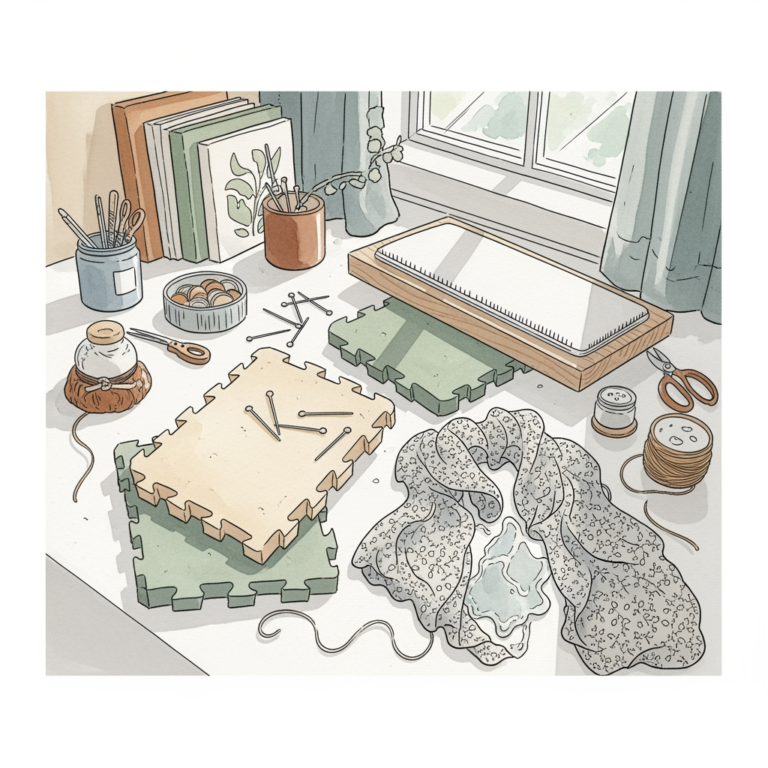
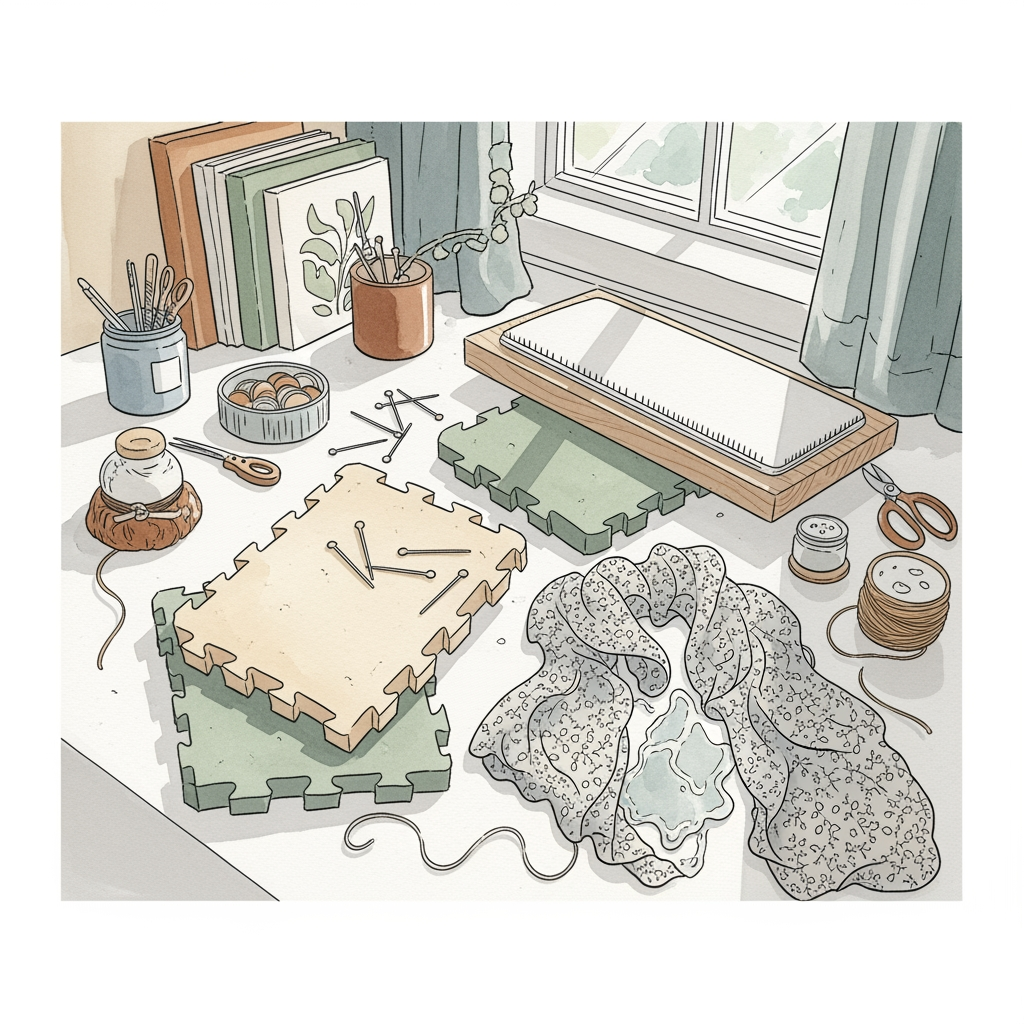
Precision in blocking is the final, most critical step in transforming a pile of loops into a professional-grade garment. Without a perfectly flat surface, even the most meticulous stranded colorwork or delicate lace can lose its intended drape and stitch definition. Choosing the right blocking surface requires balancing the size of the project against the firmness of the base. This guide breaks down the best options to ensure your hand-knits achieve their full potential.
KnitPicks Blocking Mats: The All-Around Winner


KnitPicks blocking mats provide a sturdy, high-density foam foundation that strikes the ideal balance between grip and portability. The interlocking design allows for custom layouts, making them as useful for a small pair of lace socks as they are for a massive circular shawl.
These mats feature a consistent thickness that prevents the “sagging” effect common with cheaper, low-density foam. When pinning, the material holds T-pins securely without crumbling, a vital feature when tensioning wet wool.
The bottom line is simple: if you need a reliable, modular system that handles everything from everyday garments to complex lace, these mats are the gold standard. They offer the necessary resilience to withstand years of moisture exposure without warping.
Cocoknits Mat Kit: The Ultimate Luxury System
The Cocoknits Mat Kit elevates the blocking process by incorporating a functional grid printed directly onto the moisture-resistant tiles. This allows for precise measurements without needing to scramble for a separate tape measure or ruler.
The inclusion of magnetic components and specialized T-pins makes this the most sophisticated system available. It is specifically designed for the knitter who values process as much as the result and wants to ensure perfect symmetry in intricate lace repeats.
While the price point is higher, the investment is justified for those tackling large, heirloom-quality projects. The added convenience of the grid saves significant time during the final, often tedious, stages of shaping.
Boye Interlocking Boards: Best Budget-Friendly Set
Boye interlocking boards offer a straightforward, no-frills solution for those just beginning their journey into professional finishing. They provide a functional surface that performs exactly as expected without unnecessary bells or whistles.
These are best suited for smaller projects like cowls, hats, or delicate baby garments. Because they are generally thinner than premium options, they may require a bit more care when used with heavier, water-saturated sweaters.
For the budget-conscious maker, these boards represent a smart entry point. They get the job done effectively, leaving extra room in the budget to invest in higher-quality yarn or specialized blocking wires.
OLFA Gridded Cutting Mat: A Dual-Purpose Surface
While primarily designed for quilting, a large-format OLFA mat is a hidden gem for knitters who lack dedicated craft space. The rigid, self-healing surface provides a perfectly flat plane that is remarkably stable.
Because these mats are not made of porous foam, they aren’t ideal for direct pinning. Instead, they serve best as a base for flat-drying delicate sweaters that don’t require aggressive tensioning, or as a reliable surface to measure gauge swatches.
If you have a multifunctional craft room, this is a space-saving powerhouse. It transitions seamlessly from cutting fabric to providing a professional, flat foundation for your knitwear.
Grizzly Granite Plate: For The Precision Crafter

A granite surface plate is the professional’s choice for absolute, uncompromising flatness. Originally intended for machining, its weight and rigidity ensure that nothing shifts while a piece is being blocked.
This is the ultimate tool for heavy-duty garments or pieces that require precise geometric alignment, such as modular knits or complex cables. It is entirely non-porous and will never degrade, warp, or change shape over time.
However, the sheer weight of granite makes it impractical for those who need to move their workspace frequently. It is best suited for a permanent, dedicated “blocking station” in a home studio.
LCL Beauty Floor Mats: A Smart, Thrifty Hack
LCL Beauty mats, often marketed for salon or workshop flooring, are the best-kept secret for knitters working on large-scale blankets. Their massive coverage area allows for pinning an entire queen-sized afghan in one go.
These mats are typically thicker than standard blocking tiles, providing excellent insulation and protection for the floors beneath. The trade-off is their sheer physical footprint, which can dominate a small living space.
If you produce large home-goods projects regularly, these mats provide a massive surface area at a fraction of the cost of dedicated craft brands. Just ensure the surface is clean before pinning your precious, damp alpaca or merino fibers.
What to Look For in a Blocking Mat or Surface
The most important factor is density. If a mat is too soft, it will buckle when you apply the tension required to open up lace stitches, leading to uneven edges.
Look for a surface that is moisture-resistant and free of dyes that could bleed into light-colored yarns. Always check the chemical composition of foam mats to ensure they won’t react with the oils in natural fibers.
- Size: Consider the dimensions of your largest intended project.
- Grid: A built-in grid is a massive time-saver for shaping.
- Pin Retention: The material must hold pins firmly without sliding or letting go.
Foam vs. Other Materials: Which Is Right for You?
Foam is the industry favorite because it is lightweight, affordable, and holds pins perfectly. It is forgiving for beginners and versatile enough for most wool-based projects.
Hard surfaces like wood, cork, or stone offer more stability but lack the ability to accept pins. These are best used in conjunction with a towel or a thin foam layer to allow for pinning.
Consider the fiber content of your project. Delicate, high-loft fibers like mohair or cashmere require a gentle touch and breathable surfaces, whereas dense, superwash wools demand a firmer, more structural blocking base.
How to Properly Use Your Mat for Wet Blocking
Before placing your knit on the mat, gently squeeze out excess moisture using a thick towel. Never wring or twist the fabric, as this can permanently distort the stitch structure.
Lay the piece flat on the mat and begin pinning from the center outward. Use rust-proof pins, such as stainless steel T-pins, to avoid leaving permanent dark spots on your finished work.
If you are blocking a sweater, ensure that the front and back are blocked separately or use a barrier to prevent colors from migrating between layers. Once pinned, allow the piece to dry completely in a room with steady airflow.
Getting Your Gauge Swatch Perfectly Flat & True
A gauge swatch is the most important measurement you will ever take. To get a true reading, the swatch must be blocked exactly as the finished garment will be blocked.
If you pin the swatch aggressively, you are inflating your stitch count and will end up with a garment that is much larger than intended. Pin the swatch to its natural, relaxed dimensions rather than stretching it into submission.
Measure your stitches and rows only after the swatch is completely dry. This ensures that the yarn has had time to “bloom” or settle into its final position, giving you the most accurate data for your project planning.
Proper blocking is not merely a final task; it is the fundamental bridge between a set of loose loops and a finished piece of art. Selecting the right surface ensures your hard work remains flat, true, and ready to be worn or gifted with confidence.