

6 Best Bead Trays For Multi-Strand Designs To Organize
Struggling with complex jewelry projects? Discover our top 6 bead trays for multi-strand designs to organize your workspace efficiently. Shop the best picks today.
Beaded knitting projects require a disciplined approach to organization, especially when working with multi-strand designs or intricate colorwork. Whether incorporating tiny glass seed beads into a delicate lace shawl or adding weighted embellishments to a heavy-gauge sweater, the stability of the workspace dictates the flow of the creative process. Without a proper tray, beads become scattered, lost, or misplaced, turning a meditative knitting session into a frustrating hunt for supplies. Choosing the right surface transforms these tiny components from a storage nuisance into an extension of the needlework itself.
The Beadsmith Sticky Bead Mat: Best for Simplicity


This mat relies on a proprietary non-slip material that prevents beads from rolling away during intense knitting sessions. It acts as a static-free zone for glass beads that might otherwise skitter across a hardwood floor or get lost in the fibers of a wool project.
The simplicity of this tool lies in its lack of rigid borders, which allows for total flexibility when arranging multiple color groups side-by-side. If a project requires switching between 6/0 and 8/0 beads frequently, the surface keeps them separated without requiring complex compartments.
Because it is thin and lightweight, it can be folded and stored alongside knitting patterns or circular needle cases. It remains a top choice for those who value a minimalist, clutter-free workspace over structured storage.
Darice Flocked Bead Board: For Complex Layouts

The flocked surface of this board provides a soft, velvet-like texture that gently cradles beads in place. Its primary advantage is the presence of U-shaped channels, which allow for the precise arrangement of multi-strand beaded patterns before they are threaded onto the yarn.
For knitters planning long, beaded edgings, the board offers a visual roadmap of how the design will look once integrated into the fabric. The depth of the channels keeps beads from migrating, ensuring that complex color sequences remain intact throughout the knitting process.
However, the size of these boards can be cumbersome for small travel kits. They serve best as a dedicated station for large-scale projects where space is plentiful and organization requires a high level of structural support.
Bead On It Board: Your Best Portable Bead Surface
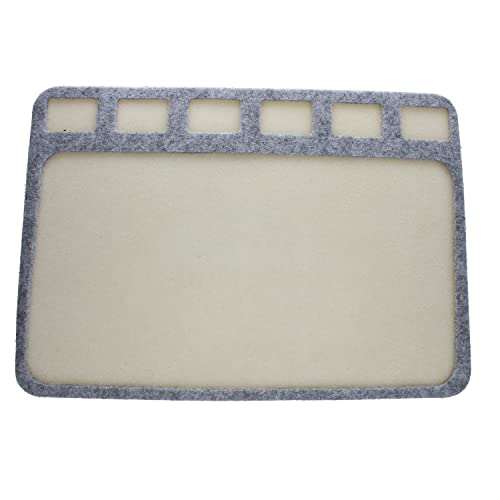
Portability is the hallmark of this design, as it functions like a miniaturized, secure workstation. The foam-padded surface is firm enough to keep beads stable but soft enough to allow for easy pickup with a crochet hook or beading needle.
The board often features a raised edge that keeps errant beads from rolling off onto the sofa or into the pile of a high-loft mohair yarn. This design is particularly useful for knitters who move between the chair and the desk, as it stays secure even when tilted slightly.
Because it retains its shape during travel, it is perfect for taking beaded projects to knitting guilds or social gatherings. The construction is durable enough to withstand the wear of frequent transit inside a knitting bag.
Tulip Beading Mat with Case: The Premium Choice
Precision is the core feature of this system, which pairs a high-quality, slip-resistant mat with a secure, protective case. The mat material is engineered to hold beads in a way that minimizes jumping and accidental spills, even if the case is bumped.
The inclusion of a hard-shell case makes this an investment piece for those who maintain expensive glass or gemstone beads for luxury fiber projects. The case prevents dust and fiber shedding from contaminating the beads, a common issue when working with fuzzy alpaca or angora blends.
While more expensive than basic mats, the longevity of the Tulip system pays off for the regular user. It provides a level of security that cheaper alternatives often lack, particularly when project storage spans several weeks.
Bead Buddy Design Save’n Go: Best for Project Storage
The design of this tool focuses on the “Save’n Go” philosophy, featuring a lid that seals the project for future sessions. This is ideal for long-term beaded knitting projects, such as a bridal veil or a heavily embellished wedding shawl, that cannot be completed in one sitting.
The interior surface maintains the arrangement of beads exactly as left, shielding them from stray yarn ends and cat hair. It acts as both a workspace and a vault, ensuring that no progress is lost if the project needs to be cleared away for household tasks.
It is slightly bulkier than a simple mat, but the trade-off is the total security of the bead layout. It is the most practical solution for knitters who are prone to stopping mid-row and needing to pack their gear quickly.
The Bead Tray by The Beadsmith: Compact & Efficient

This tray is designed for maximum efficiency in a small footprint, offering specialized compartments for keeping different bead sizes organized. For projects involving varied bead counts, these partitions prevent colors from bleeding into one another.
The size is perfect for placing directly beside a knitting pattern or a ball of yarn without crowding the lap. It is essentially a workhorse tool, designed for functionality rather than luxury, making it an excellent starting point for those new to beaded knitting.
While the plastic can be static-prone depending on the humidity, a quick swipe with a dryer sheet usually resolves the issue. It remains a reliable, cost-effective staple for any serious fiber artist’s studio.
How to Pick the Right Bead Tray for Your Project
Choosing the right tray depends entirely on the project scale and the environment. If the workspace is stationary and the project involves a complex, multi-strand beaded pattern, a flocked board with channels provides the best structural support.
Conversely, for mobile knitters, a compact, lidded tray or a simple sticky mat is far superior. Consider the size of the beads being used; smaller seed beads are more prone to spilling and require a mat with higher “grip” or raised edges.
Finally, match the tray to the project duration. A long-term project that requires storage between sessions demands a lidded system, whereas a quick beaded bind-off can be handled by a simple, open mat.
Flocked vs. Sticky Mats: Which Surface Is Best?
Flocked mats excel at holding beads in place due to their textured, velvet-like fibers, which provide friction. This surface is ideal for those who are worried about beads rolling around when a needle accidentally knocks the mat.
Sticky mats, however, use a non-slip silicone or rubber-like finish that prevents rolling without the use of fibers. These are often easier to clean and less prone to collecting lint from the yarn being knitted.
If working with delicate, porous beads, avoid sticky mats that rely on chemical adhesives, as they may leave residue. Always verify the cleaning requirements for each, as lint build-up can eventually diminish the effectiveness of both surfaces.
Using Your Tray with Yarn: A Quick How-To Guide
When prepping for a beaded row, place the tray within reach but ensure it is on a stable, flat surface to prevent accidental tipping. If using a multi-strand pattern, arrange the beads in the tray in the exact order they will be picked up by the crochet hook or needle.
Be mindful of static electricity, as the friction between synthetic yarn and a dry environment can cause beads to jump. Keeping a humidifier in the room or lightly misting the air can help stabilize the environment for tiny, lightweight glass beads.
Always check the tray for stray beads before moving it to avoid scattering them across the floor. When transferring beads to the yarn, use a steady, rhythmic motion to keep the bead tension consistent with the knitting gauge.
Tips for Organizing Multiple Bead Colors and Sizes
When working with a palette of colors, utilize the compartments of a partitioned tray to keep them visually distinct. If a tray lacks enough compartments, use small silicone cups or individual bowls to house secondary colors, reserving the mat for the current active color.
Labeling is often overlooked but proves invaluable for complex patterns. A small piece of painter’s tape on the edge of a tray section can identify the bead size or color code associated with the pattern instructions.
Consistency is key; always return beads to their designated spot on the tray after completing a row. Keeping the workspace tidy prevents the “bead soup” phenomenon, where mixed sizes become impossible to separate without tedious manual sorting.
Integrating beadwork into knitting adds a layer of depth and texture that elevates even the most basic stockinette stitch into a piece of wearable art. By selecting the tray that best matches the workflow and storage needs, the technical challenges of beaded knitting vanish, leaving only the joy of the craft. With the right tools and a bit of organizational discipline, managing dozens of strands becomes as seamless as the knitting itself.

