6 Best Beginner Sewing Kits For Costume Repairs
Save your cosplay with our top 6 beginner sewing kits for costume repairs. Browse our expert-vetted recommendations and fix your gear like a pro today.
Costume malfunctions are the silent enemy of any performance, whether it is a debut on stage or a high-stakes cosplay event. A stray loose thread or a popped seam can compromise hours of hard work, making a compact repair kit an absolute necessity in every maker’s toolkit. Navigating the sea of basic sewing supplies can be daunting, especially when quality varies wildly between mass-produced sets. Choosing the right kit ensures that quick fixes don’t turn into permanent structural failures.
Singer Sew-It-Goes Kit: Best All-in-One Pick
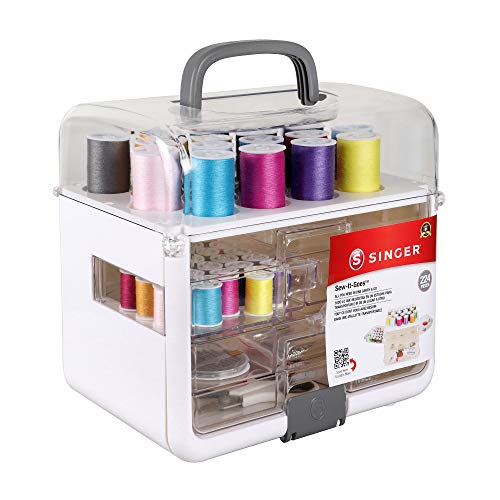

The Singer Sew-It-Goes kit functions as a reliable workhorse for those who need a comprehensive solution without scouting individual components. It provides a balanced selection of thread colors and needles that accommodate most common weight variations found in costume fabrics.
While many generic kits prioritize quantity over quality, this set maintains a standard of durability suitable for securing loose buttons or fixing small tears in standard cotton or polyester blends. It is an excellent choice for a dedicated sewing box that stays in a single location, like a craft room or a permanent costume trunk.
The bottom line: Choose this kit if you want a reliable, no-nonsense selection that covers 90% of basic maintenance needs. It avoids the clutter of unnecessary gadgets while focusing on the essential tools required to keep a garment intact.
Coquimbo Mini Kit: Best for On-the-Go Fixes

Portability is the primary metric for a kit that must travel to events, rehearsals, or backstage areas. The Coquimbo Mini Kit excels here, fitting easily into a small handbag or a project bag pocket without adding significant weight or bulk.
Despite the compact size, it does not skimp on the essentials, such as sharp needles and a sturdy pair of snips. It is perfect for those emergency moments when a strap snaps or a hem unravels just minutes before a presentation.
The trade-off is limited thread length; it is not meant for heavy-duty tailoring or reconstructing entire seams. Treat this as a tactical repair tool rather than a primary sewing supply source.
Embroidex Sewing Kit: Best Quality Starter Tools
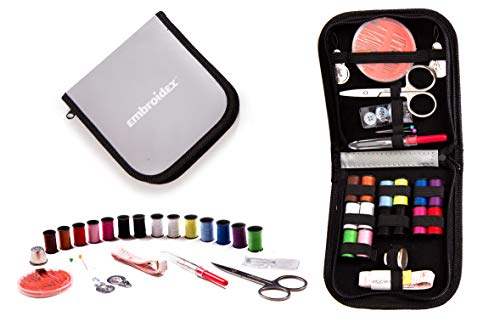
When the quality of the tool impacts the ease of the stitch, the Embroidex kit stands out for its superior hardware. The needles are notably sturdier and less prone to bending, which is critical when working with heavier costume materials like stiff felt, brocade, or synthetic leathers.
Higher-quality tools reduce frustration, especially for those who are still developing hand-sewing dexterity. When a needle glides through a dense fabric without catching or snapping, the repair process becomes significantly more precise.
This is the preferred choice for the serious maker who values the longevity of their tools. While it carries a slightly higher price point, the consistency of the components justifies the investment over cheaper, disposable alternatives.
ARTEZA Sewing Kit: The Ultimate Budget Option
Budget kits often suffer from flimsy components, but the ARTEZA kit surprises with a thoughtful inventory at a competitive price. It provides a wide array of thread spools and basic accessories that allow for color-matching across a diverse costume wardrobe.
It serves as an excellent “starter pack” for a household that occasionally needs to mend clothing or attach embellishments. The inclusion of a wide range of colors means fewer trips to the fabric store when a specific shade is required for a seamless repair.
If the goal is to build an inventory of supplies without a large upfront cost, this kit provides the most value. It is best suited for light repairs rather than heavy-duty structural work.
VelloStar Premium Kit: Best for Organization

A disorganized kit is the quickest way to lose a needle or tangle thread into a hopeless knot. The VelloStar Premium Kit features a structured layout that keeps every item in its designated place, making it easy to inventory supplies at a glance.
The organizational layout is particularly helpful for those who work on elaborate costumes with multiple layers and trims. Having quick access to the right needle size or thread color saves critical time during a high-stress repair.
Select this kit if you value order and efficiency above all else. The sturdy case ensures that everything stays protected during travel, preventing the accidental loss of small but vital components.
Dritz Sew-You! Kit: Best for Young Crafters
Introducing younger makers to sewing requires tools that are approachable, safe, and easy to handle. The Dritz Sew-You! kit focuses on simplicity, removing the intimidation factor of more complex sewing sets.
The components are sized appropriately for smaller hands, making it easier to grip needles and manage thread without constant slippage. It is a fantastic entry point for teaching the basics of garment maintenance and repair.
Use this for beginners or children learning the craft who need a gentle introduction to sewing. The focus is clearly on usability and foundational skill-building rather than professional-grade tailoring.
What to Look For in a Beginner Sewing Kit
A quality kit should always prioritize the sharpness and variety of the needles included. Avoid kits that contain plastic needles or those with blunt, cheap tips that will tear delicate fibers like silk or fine synthetic blends.
Look for a range of thread weights, as costume repairs often require switching between delicate decorative thread and sturdy polyester for structural seams. A good kit should also include a seam ripper; it is the most important tool for fixing mistakes made during the repair process itself.
Always inspect the storage case to ensure it closes securely. A spilled box of needles is both a safety hazard and a massive frustration that can lead to lost supplies.
Must-Have Tools for Any Costume Repair Job
Beyond the basics, certain tools elevate a repair job from a “temporary fix” to a professional-looking mend. A pair of sharp, fine-tipped embroidery scissors is essential for trimming stray threads and reaching into tight spaces like armscyes or necklines.
A thimble is another non-negotiable item, particularly when pushing needles through thicker materials or multiple layers of fabric. It protects fingers from injury and allows for better control when applying pressure.
Finally, keep a small stash of straight pins with heat-resistant heads. These allow for precise placement of patches or hems, ensuring the fabric is properly aligned before the permanent stitches are made.
Three Essential Stitches for Quick Fixes
The running stitch is the foundation of all sewing and is perfectly adequate for holding two pieces of fabric together temporarily. Keep the stitches small and consistent to maximize the strength of the repair.
The whip stitch is indispensable for closing seams that have popped open or attaching decorative trim to the edge of a costume. It wraps around the edge of the fabric, creating a secure, locked hold that resists pulling.
The backstitch provides the strongest hold of all, mimicking a machine-made seam with hand-sewn precision. Use this for areas of a costume that experience high tension, such as underarms or waistbands, to prevent the repair from failing mid-performance.
Handling Tricky Costume Fabrics: A Quick Guide
Costume fabrics often behave differently than the standard cotton used in home sewing. When working with slick, synthetic satins or velvets, use very sharp, thin needles to avoid leaving visible puncture holes.
If a fabric is prone to fraying, use a small amount of fray-check or a tiny dab of clear nail polish on the raw edges before stitching. This prevents the fabric from unraveling further and stabilizes the repair zone.
Test any repair method on a scrap piece of the same fabric first. Understanding how the fibers respond to heat, tension, and needle piercing will ensure the final repair is invisible and durable.
Effective costume repair is as much about having the right mindset as it is about owning the right tools. By selecting a kit that balances portability, organization, and quality, you ensure that every repair is a success. Keep these tools accessible, practice your foundational stitches, and never let a loose thread ruin the show.