6 Best Stitch Holders For Keeping Live Stitches Safe
Keep your knitting projects secure with our guide to the 6 best stitch holders. Explore top-rated options and pick the perfect tool for your live stitches today.
Safeguarding live stitches is a rite of passage for every knitter, whether pausing a sweater yoke to try on the garment or moving sleeve stitches to waste yarn to finish the body. An insecure stitch holder can lead to dropped stitches, laddering, or even a total project disaster if the mechanism pops open unexpectedly. Choosing the right tool depends entirely on the weight of the yarn, the length of the hold, and the construction of the garment. Selecting the correct method prevents the heartache of picking up a project only to find a series of runaway loops.
Clover Locking Stitch Holder: The Trusty Classic


The Clover locking stitch holder remains a staple because of its simple, secure pin-style mechanism. It functions much like a large safety pin, effectively corralling stitches without the bulk of rigid plastic arms.
These holders are ideal for small stitch counts, such as holding the thumb stitches on a mitten or the neck stitches on a baby sweater. The locking mechanism stays closed firmly, provided the gauge isn’t so dense that it forces the pin to strain against the yarn.
Be mindful that metal pins can sometimes catch on delicate fibers like mohair or single-ply wool. Use these for sturdy, plied yarns where the smooth metal won’t snag or fray the strand while sitting in a project bag.
The Knitting Barber Cords: Best for Big Projects
The Knitting Barber Cords represent a modern shift toward flexibility in knitting accessories. By replacing rigid metal with a soft, hollow silicone tube, these cords allow stitches to rest in a relaxed, natural position without distorting the fabric.
Simply push the tapered end of the cord onto the tip of the needle and slide the stitches across. Once the stitches are secure, tie the ends of the cord together to form a loop that keeps the live stitches completely contained.
These are particularly effective for large-scale projects like sweater bodies or complex shawls. Because they are flexible, they do not weigh down the fabric or create uneven tension, which is a common complaint with rigid metal holders.
Scrap Yarn: The Ultimate No-Cost Stitch Holder
Scrap yarn is perhaps the most reliable tool in a knitter’s kit, often outperforming expensive accessories. Using a smooth, high-contrast yarn in a weight slightly thinner than the project yarn ensures that the stitches remain safe and visible.
A tapestry needle is all that is required to thread the scrap yarn through the live loops. Once threaded, tie the ends of the yarn together, leaving enough slack for the stitches to move freely without being cramped.
The primary benefit here is the ability to customize the length to the exact stitch count. Whether holding two stitches or two hundred, scrap yarn adapts perfectly to the job at hand without adding bulk or sharp points.
Interchangeable Cables: A Smart, Versatile Hack
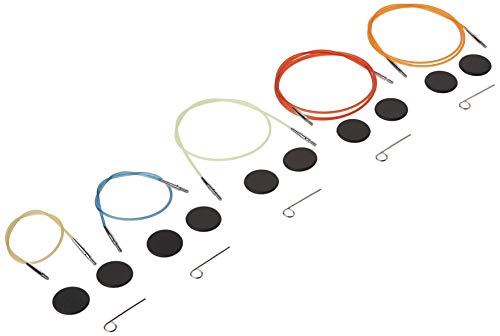
If an interchangeable needle set is already in use, the spare cables are an invaluable resource for holding stitches. Many sets include end caps that screw onto the cables, effectively turning them into long, flexible stitch holders.
This method is superior for long holds, such as when putting aside the entirety of a sweater’s sleeve stitches. The cable is identical to the one currently knitting the project, ensuring that the transition from needle to holder is seamless and snag-free.
Always ensure the end caps are tightened securely with the provided key or tool. If the cap works itself loose, the stitches may migrate off the end of the cable, resulting in an emergency pick-up session.
Clover Cable Stitch Holders: For Small Stitch Groups
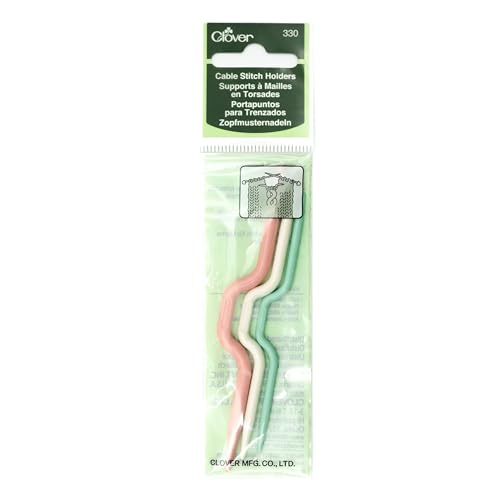
Designed specifically for cabling, these U-shaped holders are excellent for keeping a small number of stitches held to the front or back of the work. They are often chosen by knitters who find standard straight holders cumbersome when working intricate cross-over patterns.
The U-shape allows the stitches to sit deep in the holder, preventing them from sliding off accidentally. They are particularly effective when working with heavier weight yarns that might struggle to stay on a flat, straight needle.
While they are excellent for cabling, they are less versatile for long-term storage of stitches. Limit their use to active project work where the stitches are only off the needles for a matter of moments.
Susan Bates Stitch Holders: Best Budget Multi-Pack
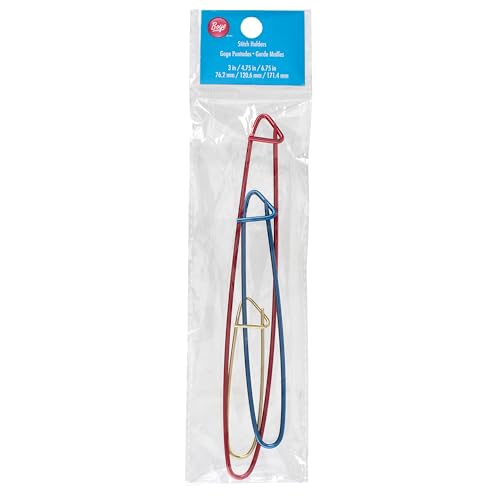
These traditional metal holders are the quintessential “workhorse” accessory found in almost every craft store. They feature a simple sliding locking mechanism that secures the stitches by capping the pointed end of the metal holder.
Available in various lengths, they are best suited for knitters who need a specific, rigid structure to hold a fixed number of stitches. They are durable, inexpensive, and rarely break, making them a safe long-term investment for a basic kit.
However, they are rigid, which can cause the stitches to become cramped if the holder is filled to capacity. When choosing these, always select a length slightly longer than what is strictly needed to allow the stitches some “breathing room.”
How to Choose the Right Stitch Holder for Your Need
Selecting the right holder requires matching the tool’s mechanics to the project’s requirements. For garments that need to be tried on, flexibility is the priority, making cords or scrap yarn the clear winners.
If the stitches need to be held for a long duration, consider whether the material will leave a permanent crease in the yarn. Natural fibers like wool often recover, but delicate silk or alpaca may show impressions from rigid metal holders.
Always account for stitch weight and density. If the project is heavy, such as a chunky cabled cardigan, a flimsy plastic holder may bend or snap; in these cases, rely on sturdy metal pins or thick, durable cords.
Tips for Moving Stitches Without Stretching Them
Moving stitches is a high-risk moment for yarn tension, particularly in delicate lace or brioche work. Always use a needle size slightly smaller than the working needle when transferring stitches onto a cord or scrap yarn to prevent stretching the loops.
When transferring to a cord, keep the cord length generous. A cord that is too short will pull at the stitches, distorting the gauge and potentially causing the yarn to snap if the fiber is particularly fragile or low-twist.
If using a pin-style holder, ensure the pin is pushed through each loop cleanly without splitting the yarn. Splitting a ply during the transfer can create a permanent twist or weakness in the stitch once it is returned to the needles.
Rigid vs. Flexible Holders: Which One Is Better?
Rigid holders offer stability, making them the preferred choice for knitters who find flexible tools “fiddly” or difficult to manage. They are excellent for keeping small stitch groups organized and prevent the “tangling” that can occur with long lengths of scrap yarn or cord.
Flexible holders win in the category of garment construction and fit. They allow the fabric to drape exactly as it will when finished, which is critical when checking the sleeve length or body fit of a garment during the process.
The ideal kit should contain a mix of both. Keep rigid holders for short, functional tasks and maintain a supply of flexible cords or scrap yarn for shaping, fitting, and long-term project storage.
Using Stitch Holders to Try On Your Garments
Trying on a work-in-progress is the best way to ensure a custom fit, but it requires moving live stitches off the needles. Before transferring, always knit a “safety row” or ensure the current row is complete to avoid complex re-positioning later.
Use flexible cords for this purpose, as they allow the garment to conform to the body without the jagged protrusions of rigid pins. Once the stitches are on the cord, tie the ends firmly but leave enough length to allow the fabric to stretch slightly as it moves over the shoulders or hips.
When re-knitting from the cord, be extremely careful not to twist the stitches as they move back onto the needles. A single twisted stitch, though small, will be highly visible in stockinette fabric, so double-check the orientation of every loop before beginning the next row.
Choosing the right stitch holder is an investment in the long-term success of every project. By selecting the tool that best suits the weight of your yarn and the specific needs of your construction, you protect your hard work from the frustration of dropped stitches. Whether you prefer the simplicity of scrap yarn or the modern utility of flexible cords, keeping your stitches safe ensures that every knitting session starts with confidence and ease.