6 Best Blue Light Filters For Night Sewing To Use
Protect your eyes while crafting after dark. Discover the 6 best blue light filters for night sewing to improve focus and comfort. Read our guide to choose yours.
Late-night sessions are often when the most intricate design work happens, but the harsh glare of modern LED lighting can turn a relaxing evening of sewing into an eye-straining marathon. Whether you are quilting delicate patchwork or finishing a high-stakes embroidery project, the quality of light directly influences your precision and comfort. Protecting vision while maintaining color accuracy is a delicate balance, especially when working with high-contrast fabrics or complex thread work. Selecting the right filter or light source ensures that the focus stays on the needle and thread rather than the developing headache.
J+S Vision Blue Light Shield: Best Overall


When clarity and precision are non-negotiable, these glasses provide a reliable middle ground between protection and visual fidelity. They offer a significant reduction in blue light exposure without distorting the vibrant hues of high-end wools or colorful cotton prints.
For projects involving dark fabrics—where finding the stitch line can be notoriously difficult—this balance is critical. Unlike heavily tinted options that make deep navy or black fabric appear muddy, these maintain enough spectrum integrity to distinguish between similar tones.
The frame design is lightweight enough to wear for hours during a marathon binding session without causing pressure points behind the ears. For those who switch between the sewing machine and a hand-finishing task, they offer a consistent, professional-grade solution.
Gamma Ray Optics Amber Lens: Top Budget Pick

These amber-tinted frames are the go-to for late-night sessions where eye fatigue is the primary concern, rather than perfect color matching. The distinct yellow hue actively blocks a higher percentage of the blue spectrum, which helps prevent that jittery feeling often associated with late-night screen or light exposure.
They are an excellent choice for repetitive tasks like straight-stitching long seams or machine quilting where subtle color shifts are less critical than overall contrast. If you are working with high-visibility threads, the amber tint can actually make the thread pop against the fabric.
While the tint might throw off your perception of true color, the trade-off in comfort is significant for the price. They are a sensible investment for keeping a pair in the sewing room specifically for long, non-critical stretches.
Cyxus Blue Light Filtering Glasses: Most Stylish
Functionality should not preclude aesthetic appeal, and these frames bridge the gap between effective protection and modern design. They utilize a subtle, clear-lens technology that filters blue light without casting a yellow veil over your workspace.
This is particularly useful when working on projects where color accuracy is the priority, such as matching variegated threads or selecting coordinating fabrics for a quilt top. Being able to see the true undertones of a fabric swatch prevents frustrating errors that only become visible in broad daylight the next morning.
The frames are durable and well-fitted, ensuring they don’t slide down the nose while leaning over a machine. If you value a professional look that transitions easily from the studio to daily wear, these are a highly capable choice.
Livho Clip-On Lenses: Best for Glasses Wearers
For those who already wear corrective lenses, adding a second pair of glasses is often a recipe for discomfort and constant adjustment. These clip-ons allow for seamless integration, letting you use your existing prescription while gaining the benefits of blue light filtering.
They are incredibly lightweight, preventing the extra drag that often makes glasses feel heavy during a multi-hour project. Because they flip up easily, you can quickly clear your vision for moments that require extreme detail work, like re-threading a needle or cleaning out the bobbin case.
The convenience factor here is massive; there is no need to balance two pairs of glasses or deal with glare between layers. They are the most practical solution for the seasoned maker who has long-term vision requirements built into their daily routine.
OttLite Wellness Glow LED Lamp: Best Task Light
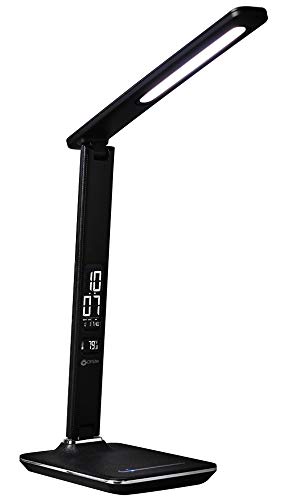
A dedicated lamp acts as a primary barrier against eye strain, often doing more work than wearable filters. This particular model mimics natural daylight, which is essential for identifying subtle color nuances in thread that artificial office lighting often masks.
The “Wellness” aspect of the light is designed to reduce the harsh blue spikes common in standard LEDs, making the glow softer on the eyes during late-night hours. Having a stable, focused beam directly over your presser foot reduces the need to squint, which is the leading cause of tension-related headaches while sewing.
Because the lamp is adjustable, you can direct the light precisely where it is needed—like the needle entry point—without creating glare on the glossy surface of your machine. It is a foundational tool for any dedicated sewing station.
Bedtime Bulb Low-Blue Light: Best Ambient Bulb
Replacing the overhead bulb in your sewing room with a low-blue version creates a soothing environment for the entire space. This is a game-changer for those who find that harsh overhead lights disrupt their ability to wind down after a long night of pattern drafting or cutting fabric.
It doesn’t replace the need for a focused task lamp, but it does eliminate the background “blue hum” that keeps the brain alert. The warmer color temperature is much easier on the eyes during long sessions and mimics the cozy feel of a traditional incandescent bulb while maintaining modern energy efficiency.
When ambient light is softer, the contrast between the workspace and the rest of the room is minimized. This significantly reduces the strain on your eyes as they move back and forth between your project and the room at large.
Why Blue Light Matters for Your Late-Night Sewing
Blue light emitted by LEDs and digital screens suppresses melatonin, which is the hormone responsible for signaling to the body that it is time to sleep. For those working on projects late into the night, this creates a biological paradox where the brain stays alert even as the eyes grow exhausted.
Beyond the sleep cycle, high-energy visible (HEV) light—blue light—can cause physical fatigue in the eyes. When focused on minute details like fine-gauge thread or small needle eyes, the eye muscles are already working at their limit; blue light scatter adds unnecessary noise to the visual input, forcing the eyes to work even harder to find focus.
Minimizing this exposure helps keep the eyes feeling fresh for longer. By filtering out the harshest wavelengths, you extend the amount of time you can work without experiencing the “tired eyes” that typically lead to stitching errors or seam-ripping frustration.
Glasses vs. Lamps: Which Filter Is Right for You?
Choosing between glasses and lighting depends entirely on your specific sewing environment and project type. Glasses offer portable protection, which is ideal if you move between a sewing room, a computer for pattern printing, and a couch for hand-sewing.
Lamps, on the other hand, provide a systemic solution that improves the quality of your workspace without requiring you to wear anything on your face. A high-quality task lamp is non-negotiable for precision work, whereas glasses are more about personal physiological comfort.
Many advanced makers find that a combination is the most effective approach. Using a daylight-balanced lamp for the primary light source and wearing glasses for ambient protection creates a comfortable, high-accuracy environment that is difficult to beat.
Understanding Lens Tints: Amber vs. Clear Filters
The tint of your lens is a direct indicator of its filtering efficiency. Amber lenses are aggressive; they block a significant portion of the blue spectrum, which makes them highly effective for late-night work but shifts the color of your fabric.
Clear lenses use modern coatings to reflect or absorb blue light while letting more of the visible spectrum through. They provide a much more natural color rendering, which is essential if you are matching thread colors for a quilt or working with specific shades of yarn.
If you are struggling with chronic eye strain, the amber tint is usually the more effective choice for relief. If your frustration stems from color-matching errors or “off” fabric tones, clear lenses are the necessary compromise.
More Tips to Reduce Eye Strain While Night Sewing
- Implement the 20-20-20 rule: Every 20 minutes, look at something 20 feet away for at least 20 seconds to reset your eye muscles.
- Optimize your background: Ensure the wall behind your machine is a neutral, matte color to prevent light reflections from bouncing back into your eyes.
- Maintain your tools: A dull needle or a sewing machine in need of oiling makes the process more difficult, forcing you to focus harder and blink less, which increases dryness and strain.
- Monitor your posture: Eye strain is frequently exacerbated by neck and shoulder tension; keep your sewing surface at a height that allows you to maintain a neutral spine.
Protecting your eyes during late-night sewing is not merely a luxury; it is a vital part of maintaining your longevity as a maker. By thoughtfully integrating the right filters, lighting, and habits, you can ensure that your passion for fiber arts remains a source of joy rather than physical discomfort.