
6 Best Watercolor Sponges For Lifting Color From Paper
Discover the 6 best watercolor sponges for lifting color from paper effectively. Master your painting technique and improve your lifting results—read our guide now.
Much like selecting the perfect needle for a delicate lace project, choosing the right watercolor sponge requires understanding the interplay between tool texture and paper surface. Lifting pigment is a subtractive process that demands the same finesse used when tinkling back a dropped stitch in a complex cable pattern. A high-quality sponge can salvage a wash or create soft, ethereal highlights that brushes simply cannot replicate. Mastering these tools elevates a painting from a flat application of color to a piece with depth, texture, and light.
Winsor & Newton Sea Sponge: Best Natural Option
The Winsor & Newton Sea Sponge is the gold standard for artists who prioritize texture and organic shape. Because these are harvested from the ocean, each piece features a unique, irregular structure that mimics the varied, unpredictable nature of natural fibers like hand-spun wool.
These sponges possess an incredible capacity to hold water, making them ideal for lifting large areas of pigment without leaving harsh, mechanical edges. Much like choosing a high-twist, rustic wool for a durable sweater, these sponges offer a tactile, robust experience that synthetic alternatives often lack.
The trade-off, however, lies in their durability. Natural sponges will eventually break down, and they require meticulous rinsing to prevent pigment from staining the interior fibers.
Pro Arte Sponge Brush Set: Most Versatile Choice
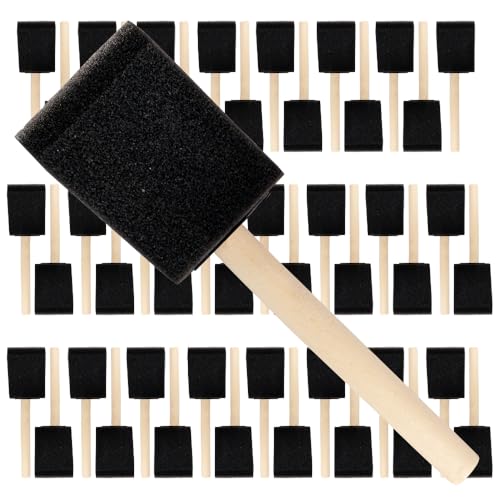

For the painter who prefers the control of a handle, the Pro Arte Sponge Brush Set acts as the fixed circular needle of the watercolor world. The sponge is firmly attached to a wooden handle, providing a degree of precision that allows for lifting color from specific, constrained shapes.
These are particularly effective when working on projects that require consistent, repeatable lifting, such as creating cloud formations or softening the edges of petals. When a project demands the uniformity of a machine-made yarn versus the chaos of a hand-dyed skein, these brushes provide that reliable, predictable outcome.
While they are excellent for control, they lack the soft, amorphous capabilities of a free-form sea sponge. They are a tool for structure, not for sweeping, atmospheric effects.
Jakar Artists Sponges: Top Pick on a Budget

Jakar Artists Sponges offer a cost-effective entry point for those just beginning to experiment with subtractive watercolor techniques. These are often sold in multipacks, providing different densities that allow for a range of lifting intensities.
Think of these as the reliable acrylic or nylon needles in a kit; they are durable, inexpensive, and get the job done without requiring significant investment. They are perfect for beginners who are still learning how much pressure to apply to cold-press versus hot-press paper.
One potential drawback is the tendency for these cheaper synthetics to have a uniform pore structure, which can occasionally leave behind a repetitive pattern. Always test them on a swatch of scrap paper before committing to a finished painting.
Mr. Clean Magic Eraser: The Ultimate Lifting Hack
While marketed as a household cleaner, the melamine foam of a Magic Eraser acts as a high-grit abrasive that can lift color with surgical precision. It is effectively the sandpaper of the watercolor toolkit, capable of cutting through layers of dried pigment that softer sponges would leave untouched.
Use this with extreme caution, as the material is abrasive enough to damage the sizing on high-quality cotton paper. It is the equivalent of using a metal needle on a delicate silk yarn; if the tension or pressure is off, the structural integrity of the base material is compromised.
Only use this tool for final highlights or mistakes that simply cannot be fixed through gentler methods. When used sparingly, it provides a level of brightness that is impossible to achieve with traditional sponges.
Loew-Cornell Natural Sponges: For Large Washes
Loew-Cornell Natural Sponges provide a soft, absorbent surface that is perfectly suited for sweeping, large-scale washes. These sponges are generally larger and more porous, holding a significant volume of water that helps rehydrate dried paint for easier removal.
For painters working on expansive landscapes, these act as a smoothing tool, much like a wide blocking mat helps keep a large shawl in shape during the drying process. They allow the artist to lift pigment gradually, preventing the surface of the paper from becoming “pilled” or damaged by repeated scrubbing.
Because of their size and natural softness, they are less effective for fine details. Keep these reserved for the initial stages of a painting where large-scale adjustments are necessary.
Trekell Fine Pore Sponges: For Precision Work
Trekell Fine Pore Sponges are the high-end, precision-engineered option for artists who need to lift color from tight, small areas. The tight pore structure minimizes the risk of leaving behind “dots” of unlifted pigment, resulting in a cleaner finish.
When working on intricate, detailed work, the fine pore is comparable to knitting with high-gauge lace weight yarn on 1.5mm needles; it is meticulous, deliberate work. This tool allows for the correction of mistakes that would be impossible to fix with a larger, coarser sponge.
The density of the material means these sponges offer more resistance, giving the artist more tactile feedback. This makes them ideal for artists who prefer a tool that fights back slightly, allowing for a controlled, deliberate lifting motion.
How to Choose the Right Watercolor Sponge
Selection should be based on the specific effect desired rather than a general desire to “lift.” Consider the texture of the paper, as rougher surfaces will require a more durable, absorbent sponge, while smooth surfaces demand a finer pore to prevent streaking.
If the goal is to remove a large wash, look for a soft, high-capacity natural sponge. If the goal is to add fine highlights, lean toward a dense, synthetic, or abrasive tool.
Always consider the weight of the paper as well. Heavier, 300lb paper can withstand the abrasive nature of a Magic Eraser, whereas 90lb paper will shred under anything but the softest touch.
Natural vs. Synthetic Sponges: Key Differences
Natural sponges are characterized by their varied pore sizes and irregular shapes, which lend an organic, unpredictable quality to the finished work. They are generally better at holding water and softening edges, but they require significant care to ensure they don’t rot or lose shape over time.
Synthetic sponges offer uniformity, durability, and a consistent level of firmness that can be relied upon for every project. While they may lack the artistic “character” of a sea sponge, they provide the technical reliability required for complex, repetitive tasks.
There is no objectively better material, only a better tool for the specific project at hand. A versatile studio will ideally contain a selection of both to address different stages of the painting process.
Lifting Techniques: From Softening to Erasing
Softening involves dabbing a damp, clean sponge over an area to blur a hard edge, essentially rehydrating the paint and gently lifting a portion of it. This is best achieved with a natural sponge that is moist but not dripping, ensuring that water doesn’t flood the paper and create unwanted blooms.
Erasing is a more aggressive process, often involving a drier sponge or a slightly abrasive material to pull pigment directly off the paper fibers. This requires a “lift and check” approach: work in small increments and constantly assess whether the paper surface is beginning to fray.
Always work from the center of the area being lifted toward the edges to maintain control over the shape. Never push the pigment back into the paper; always lift it cleanly away to prevent muddied colors.
How to Clean and Care for Your Art Sponges
Proper maintenance is the secret to a long-lived tool, much like washing and blocking a handmade garment correctly ensures it lasts for decades. After every session, rinse sponges thoroughly in cool water until the runoff is completely clear.
Avoid using harsh soaps, as residue can interfere with the way paint reacts to the paper during your next session. If using natural sponges, gently squeeze out excess water and allow them to air dry in a well-ventilated area to prevent mold growth.
Store sponges in a dedicated container where they aren’t crushed, as deformation will affect how they touch the paper surface. Treat these tools with the same respect as high-quality knitting needles, and they will remain consistent allies in your creative process.
Mastering the art of lifting pigment transforms how you approach watercolor, turning mistakes into opportunities for texture and light. With the right sponge in hand and a deliberate approach to technique, you can refine your work with the same precision and care found in any finely crafted textile.