6 Best Cotton Threads For Dress Assembly To Use
Upgrade your sewing projects with our expert guide to the 6 best cotton threads for dress assembly. Choose the right match for your fabric and start sewing today.
Selecting the right cotton thread is as critical to a successful garment assembly as choosing the correct needle size for a delicate mohair lace shawl. While many beginners prioritize the fabric itself, the structural integrity of a finished piece often rests on the performance of the thread holding the seams together. Understanding the fiber properties of cotton ensures that the seam matures gracefully alongside the garment. Use this guide to navigate the technical landscape of threads designed to complement natural fiber projects.
Gutermann Natural Cotton: Best All-Purpose Thread


Gutermann Natural Cotton is the standard for those who demand reliability without the risk of synthetic melt-back during pressing. Its mercerized finish provides a subtle sheen and prevents the surface fuzz often associated with lower-quality staple cottons.
This thread behaves consistently in both high-speed machine construction and delicate hand-sewing. Because it possesses minimal stretch, it is the ideal partner for stable woven fabrics or finishing seams on structured knit garments.
When working with natural fibers, synthetic threads can sometimes create a tension imbalance, leading to seam puckering after a wash. Gutermann eliminates this variable by offering a fiber that shrinks at a similar rate to the garment fabric.
Coats & Clark Cotton: The Reliable Budget Option
Coats & Clark serves as a dependable workhorse for projects that require long yardage without a significant financial investment. It is widely accessible and performs predictably, making it a safe choice for mock-ups or practice garments.
The fiber density of this thread is slightly lower than premium alternatives, resulting in a matte appearance that hides well within seams. It maintains enough strength to withstand the mechanical stress of a standard sewing machine feed dog.
If you are a student or a maker prototyping a new pattern, this thread is the logical choice. It provides enough structural support to test fit and drape without exhausting your budget on more expensive specialized options.
Aurifil Mako 50wt: The Premium Fine Fabric Pick

Aurifil Mako 50wt is crafted from long-staple Egyptian cotton, which results in a thread of exceptional strength and minimal lint accumulation. For makers who prioritize a flat, invisible seam, this is the gold standard.
The 50wt designation indicates a fine thread that sits perfectly in the needle plate without causing bulk. It is particularly effective for garment assembly involving lightweight linens or fine shirting fabrics where seam visibility must be kept to an absolute minimum.
Because the thread is so fine, it creates very little tension on delicate fabrics, effectively preventing the “bunching” that ruins crisp silhouettes. Invest in Aurifil when the quality of the finish is the most important component of the garment design.
Mettler Silk-Finish Cotton: For a Smooth Finish
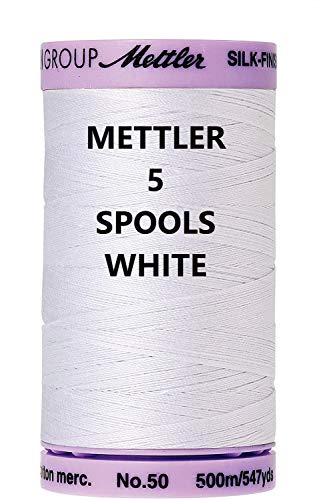
Mettler Silk-Finish Cotton earns its name through a proprietary process that results in a remarkably smooth, silk-like texture. This surface treatment reduces friction as the thread passes through the needle eye and fabric layers.
Reduced friction translates to fewer snapped threads and more consistent tension throughout the garment assembly. It is an excellent choice for complex patterns that require multiple rows of topstitching, where a smooth, even finish is aesthetically required.
Avoid using this thread for extremely heavy-duty tasks, as its primary advantage is refinement rather than brute strength. If the project demands a polished, professional look that rivals store-bought clothing, choose Mettler.
Scanfil Organic Cotton: The Top Eco-Conscious Pick
Scanfil offers a rare combination of industrial performance and ecological responsibility, utilizing 100% GOTS-certified organic cotton. For makers committed to a fully sustainable supply chain, this thread aligns perfectly with organic linen or cotton base fabrics.
The thread is surprisingly robust, offering a medium weight that functions well for everyday garment construction. Its natural, earthy texture blends seamlessly with the organic drape of unbleached or raw fiber textiles.
When selecting this thread, keep in mind that its organic nature means it lacks the chemical coatings found in high-shine industrial threads. This makes it a matte, understated choice that excels in projects emphasizing texture and natural beauty over decorative luster.
Gütermann Extra Strong Cotton: For Heavy Fabrics
Gütermann Extra Strong Cotton is designed to handle the mechanical demands of denim, heavy canvas, and structured outerwear. It resists breaking even under the high-tension requirements of heavy-duty needles and thick, multi-layered seams.

Using a thread that is too thin for heavy work often results in popped seams and frustration after only a few wears. This thread provides the necessary bite to hold together heavyweight fibers without compromising on the natural cotton aesthetic.
When working with this thread, ensure your sewing machine tension is calibrated for the increased diameter of the fiber. It is a specialized tool that provides security for heavy-duty projects that standard all-purpose threads simply cannot support.
How to Choose the Right Cotton Thread for Fabric
Selecting the correct thread starts with matching the weight of the thread to the weight of the fabric. A general rule is to ensure the thread is always slightly finer than the base material to avoid creating bulky or distorted seams.
- Lightweight fabrics: Use 50wt or higher for an invisible finish.
- Medium-weight fabrics: Stick to 40wt or 50wt for general assembly.
- Heavyweight fabrics: Opt for 30wt or Extra Strong varieties.
Always consider the potential for shrinkage in your fabric choice. If your base fabric is pre-washed and shrunk, using a 100% cotton thread ensures the entire garment moves, stretches, and launders as a single, harmonious unit.
Understanding Thread Weight: 50wt vs. 40wt vs. 30wt
Thread weight is a measurement of length per unit of mass, meaning the higher the number, the thinner the thread. A 50wt thread is physically thinner than a 30wt thread, a distinction that changes how a seam sits against the body.
- 50wt: Best for fine detailing, quilting, and delicate garments where discretion is key.
- 40wt: The standard all-purpose choice, providing a balance of strength and visibility for most sewing.
- 30wt: A thicker thread meant for topstitching, heavy fabrics, or decorative elements that require prominence.
Never assume a thicker thread is always “stronger.” While 30wt has more mass, modern 50wt threads made from high-quality fibers often offer superior tensile strength for smaller, tighter stitches.
Matching Your Needle and Tension to Cotton Thread
The relationship between the needle and thread is vital for preventing skipped stitches. Use the eye of your needle as the guide: the thread should pass through the eye with room to spare, allowing the thread to slide without excessive friction.
If you are sewing with a 50wt cotton, a size 70/10 needle is typically ideal. Moving up to a 30wt thread requires a larger needle, such as an 80/12 or 90/14, to prevent the thread from shredding as it is pulled through the fabric.
Adjust your tension dial based on the weight of the thread and the thickness of the fabric layers. Thicker threads require slightly lower tension to allow the stitch to lock properly in the center of the fabric rather than pulling to the top or bottom surface.
Caring for Garments Sewn With 100% Cotton Thread
Garments constructed with 100% cotton thread require the same mindful care as the fabrics they hold together. Cotton is naturally breathable and durable, but it lacks the elasticity of synthetic blends, making it susceptible to wear if handled improperly.
Wash finished garments in cool or lukewarm water to prevent unnecessary stress on the cotton fibers. Avoid high-heat tumble drying, as consistent exposure to extreme heat can cause the natural cotton thread to become brittle over time.
When pressing, use a moderate heat setting and ensure the iron is not left to dwell too long on a single seam. Proper care preserves the integrity of the seams and ensures the garment remains a staple in your wardrobe for years to come.
Selecting the right cotton thread is an investment in the long-term wearability of your handmade projects. By matching your fiber choice to the weight and texture of your fabric, you ensure that every seam remains as robust and beautiful as the day it was stitched.